A tourist cools off in front of a misting fan near a venue of the Hozuki-Ichi (Japanese lantern plant fair), at Sensoji temple, in Tokyo, Japan, on July 10, 2025. (Photo by Kim Kyung-Hoon/Reuters)
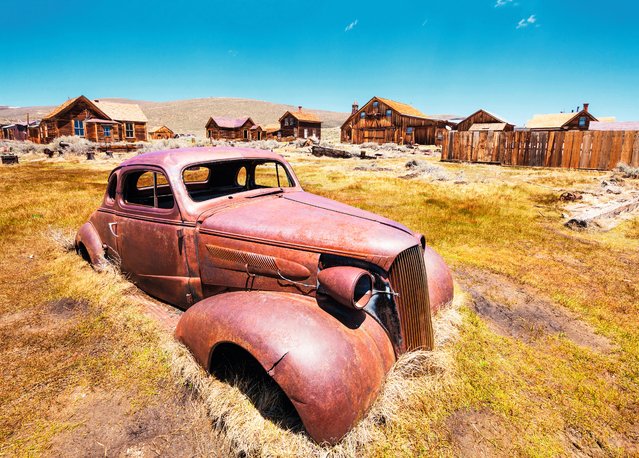
Kieron Connolly’s new book of photographs of more than 100 once-busy and often elegant buildings gives an idea of how the world might look if humankind disappeared. Here: Bodie, Mono County, California. Gold was discovered at Bodie in 1859 (just after the initial California gold rush) and it went from mining camp to boomtown. Its decline began in 1880, when word spread of new boomtowns elsewhere. The Standard Consolidated Mine closed in 1913, and four years later the Bodie Railway was abandoned. By 1940 the population was down to 40. Today, Bodie is maintained in a state of arrested decay as a visitor attraction. (Photo by Alamy Stock Photo)
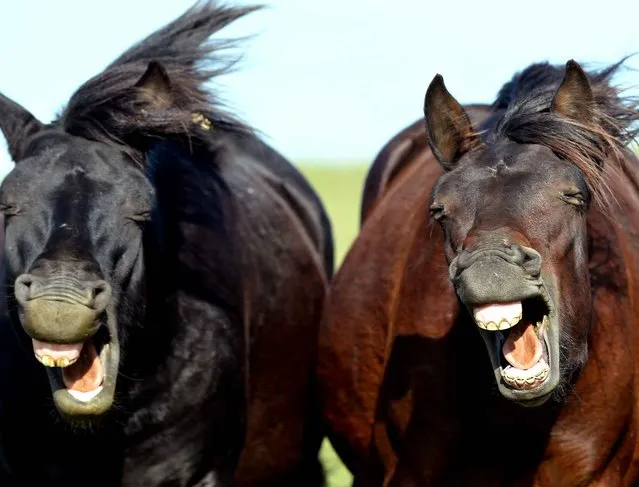
Hucul horses play in the wild meadows and forests near Odrzychowa in southeastern Poland on October 18, 2014. Huculs, a primitive breed of horse, escaped total extinction due to the efforts of scientists and Polish farmers. (Photo by Janek Skarzynski/AFP Photo)
Young Slovaks dressed in traditional costumes throw a bucket of water at a girl as part of Easter celebrations in the village of Trencianska Tepla, Slovakia, April 9, 2012. Slovakia's men splash women with water to symbolize youth, strength and beauty for the upcoming spring season. (Photo by Samuel Kubani/AFP)
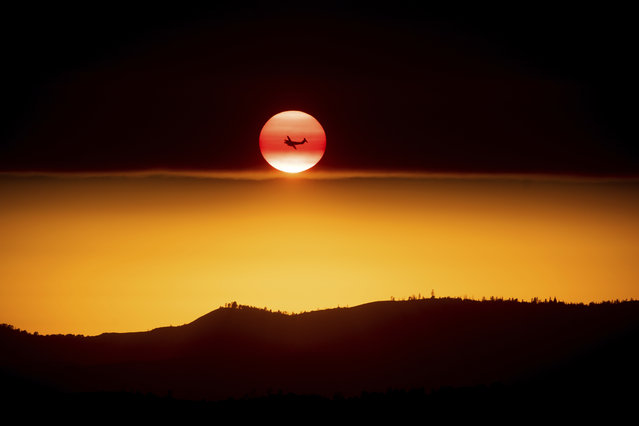
A plane battling the Ferguson Fire passes the setting sun in unincorporated Mariposa County Calif., near Yosemite National Park on Sunday, July 15, 2018. (Photo by Noah Berger/AP Photo)
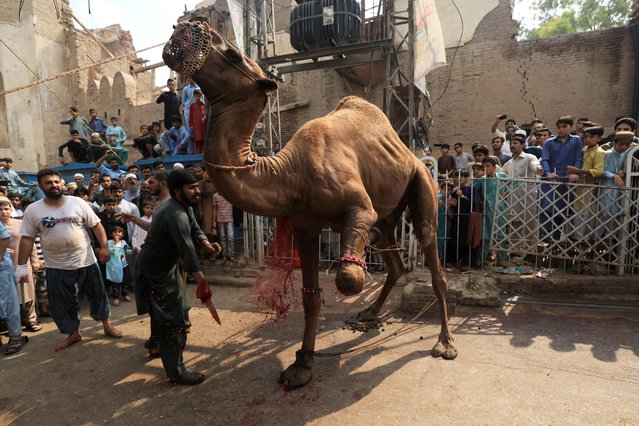
Men and children gather as a camel is being slaughtered in celebration of Eid al-Adha, in Peshawar, Pakistan on August 12, 2019. (Photo by Fayaz Aziz/Reuters)
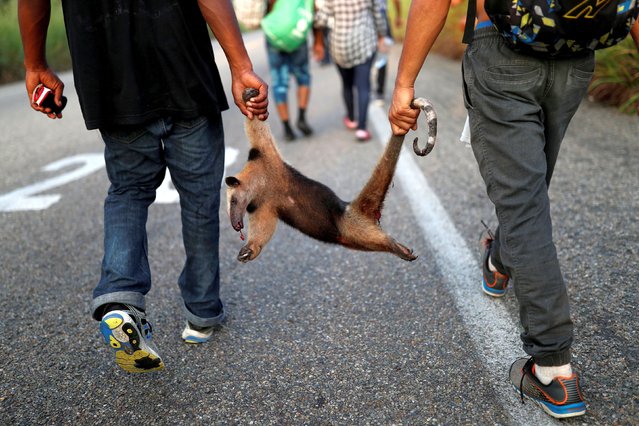
Migrants, part of a caravan traveling en route to the United States, carry an anteater that was hit by a car, according to them, as they walk on the road that links Arriaga and Tapanatepec, near Arriaga, Mexico, November 5, 2018. (Photo by Carlos Garcia Rawlins/Reuters)