Loading...
Done
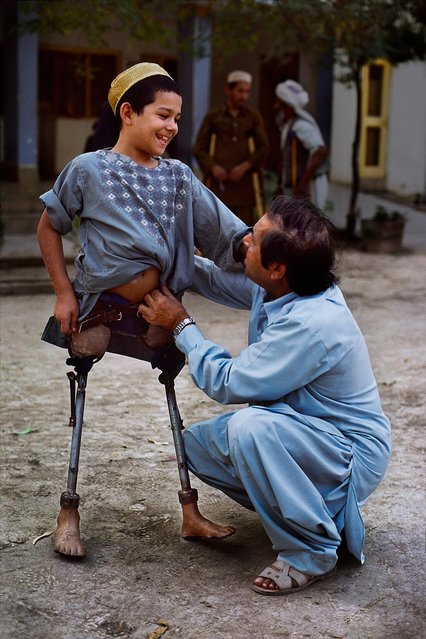
Afghanistan. (Photo by Steve McCurry)

Steve McCurry has been a photojournalist for over 30 years. He is the recipient of the Robert Capa Gold Medal, the National Press Photographers Award and four first prize awards in the World Press Photo contest. Photo: Afghanistan. (Photo by Steve McCurry)
Details
05 Sep 2013 11:36:00
Bikini-clad women sit as they operate a 3.6 metre-high custom-made female robot at the newly opened “Robot Restaurant” in Kabukicho, one of Tokyo's best known red light districts. (Photo by Tokyo Scum Brigade)

Bikini-clad women sit as they operate a 3.6 metre-high custom-made female robot at the “Robot Restaurant” in Kabukicho, one of Tokyo's best known red light districts, August 15, 2012. (Photo by Tokyo Scum Brigade)
Details
20 Sep 2013 08:47:00
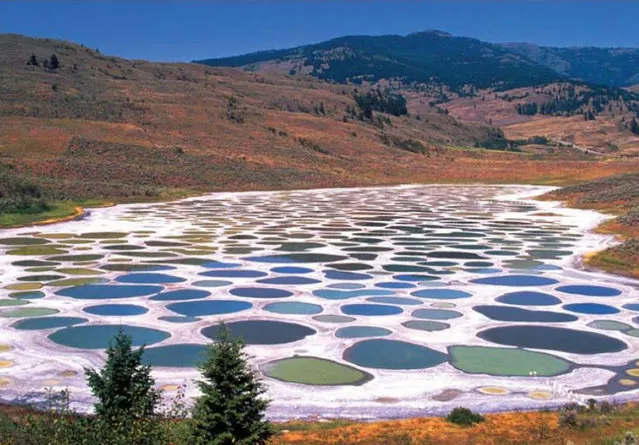
Kliluk, the Spotted Lake, Canada

Originally known to the First Nations of the Okanagan Valley as Khiluk, which was- and remains today revered as a sacred site producing therapeutic waters. During World War I the minerals of Spotted Lake were used in manufacturing ammunition. Later the area came under the control of the Ernest Smith Family, for a term of about 40 years. In 1979 Smith attempted to create interest in a spa at the lake. The First Nations responded with an effort to buy the lake; in October 2001 they finally struck a deal. First Nations arranged the purchase of 22 hectares of land for a total of $720,000, and contributed about 20% of the cost. The Indian Affairs Department paid the remainder.
Details
06 Mar 2015 12:59:00
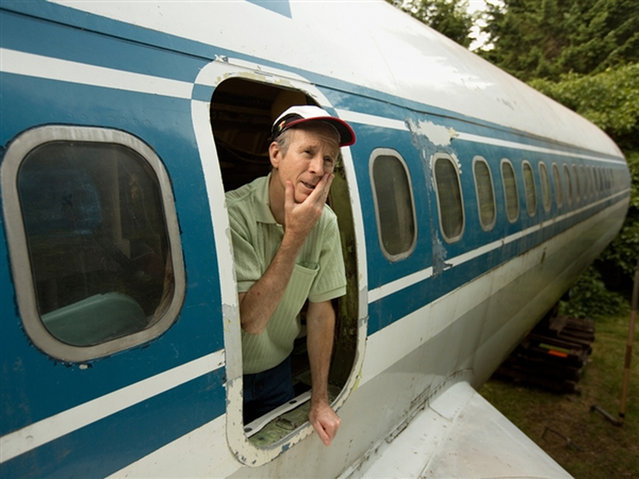
Bruce Campbell's 727 Home Project

Bruce Campbell doesn't just love planes, he lives inside of one. After purchasing a a Boeing 727-200 for $100,000, he placed it in his backyard, otherwise known as the middle of the woods in Oregon.
Campbell's startup costs were actually quite considerable. He paid $17,000 to move the plane from an airport to a staging site, $20,000 to rent the staging site for four months, $21,600 to remove the wings and tail, and $25,000 to finally move it to his house.
Details
15 Aug 2012 10:00:00
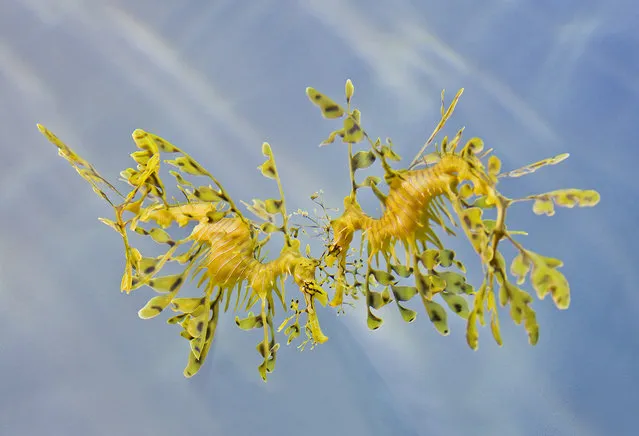
Leafy sea dragon

The leafy seadragon or Glauert's seadragon, Phycodurus eques, is a marine fish in the family Syngnathidae, which also includes the seahorses. It is the only member of the genus Phycodurus. It is found along the southern and western coasts of Australia. The name is derived from the appearance, with long leaf-like protrusions coming from all over the body. These protrusions are not used for propulsion; they serve only as camouflage. The leafy seadragon propels itself by means of a pectoral fin on the ridge of its neck and a dorsal fin on its back closer to the tail end. These small fins are almost completely transparent and difficult to see as they undulate minutely to move the creature sedately through the water, completing the illusion of floating seaweed.
Details
05 Sep 2012 08:51:00
Amazing Photos by Yann Arthus-Bertrand. Part Four

Yann Arthus-Bertrand (born March 13, 1946 in Paris) is a French photographer, journalist, reporter and environmentalist.


Part One Part Two Part Three

Details
24 Sep 2012 16:52:00
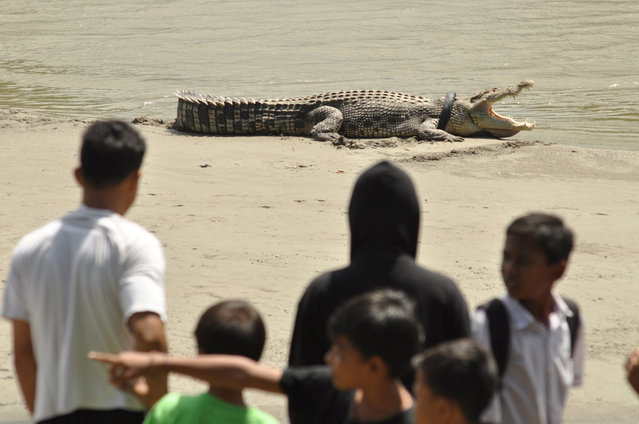
People watch a crocodile with a used motorcycle tyre around its neck on a river in Palu, Central Sulawesi province, Indonesia September 20, 2016 in this picture taken by Antara Foto. Residents suspect the tyre was garbage thrown into the river before it became trapped around the crocodile's neck, reported Antara. (Photo by Mohamad Hamzah/Reuters/Antara Foto)

People watch a crocodile with a used motorcycle tyre around its neck on a river in Palu, Central Sulawesi province, Indonesia September 20, 2016 in this picture taken by Antara Foto. Residents suspect the tyre was garbage thrown into the river before it became trapped around the crocodile's neck, reported Antara. (Photo by Mohamad Hamzah/Reuters/Antara Foto)
Details
29 Oct 2016 11:28:00
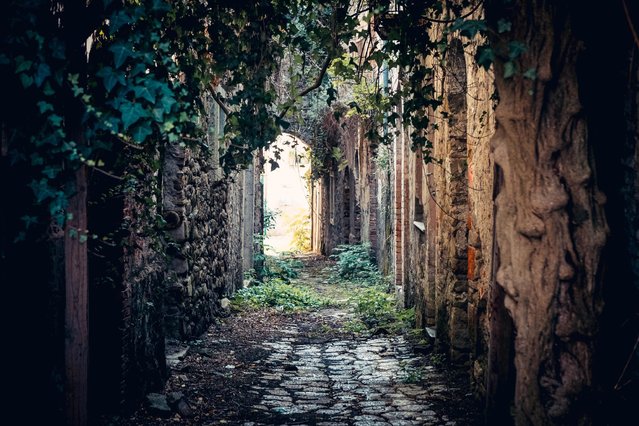
A deserted alley in the ghost town of Apice, in the province of Benevento, southern Italy, 22 November 2016. (Photo by Cesare Abbate/EPA)

A deserted alley in the ghost town of Apice, in the province of Benevento, southern Italy, 22 November 2016. After the Irpinia earthquake that took place in southern Italy on 23 November 1980, leaving at least 2,500 people dead, 8,000 injured and 250,000 homeless, the town in the heart of the Sannio area was evacuated and its residents moved into what has become the new Apice. Only recently the narrow streets and the tragically abandoned buildings have started, slowly, to repopulate. (Photo by Cesare Abbate/EPA)
Details
23 Nov 2016 11:30:00