Loading...
Done
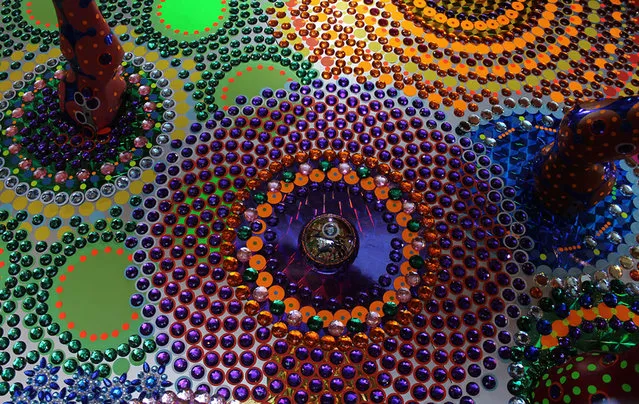
Kaleidoscopic Crystal Floor By Suzan Drummen

Dutch artist Suzan Drummen‘s large-scale floor installations are mesmerizing and complex circular patterns made out of mirrors and brightly colored glass. The fractal-like arrangements feature ornate and elaborate circles growing exponentially out of each other and vibrant rings of spiraling colors winding into the surface of the floor. They are composed of crystals, chromed metal, precious stones, mirrors and optical glass. A sensory experience, and visually stimulating, the glittering installations play with the architecture of the space — climbing up walls and sweeping across the surfaces — examining the idea of illusion and optical effects.
Details
27 May 2015 08:18:00
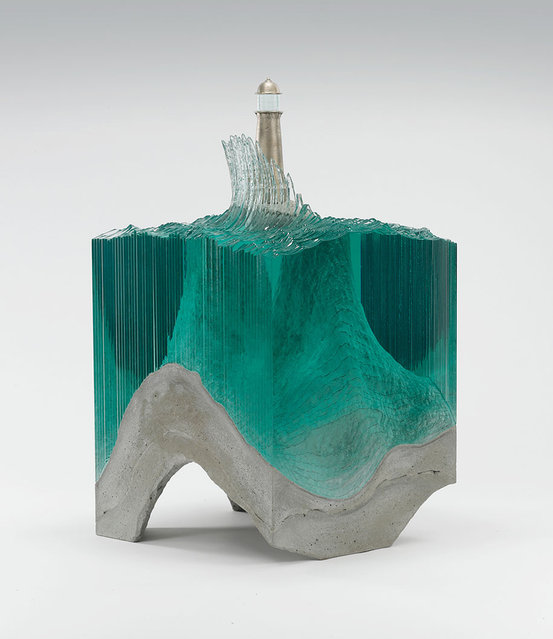
Glass Sculptures By Ben Young

Sculptor Ben Young (previously) just unveiled a collection of new glass sculptures prior to the Sculpture Objects Functional Art + Design (SOFA) Fair in Chicago next month. Young works with laminated clear float glass atop cast concrete bases to create cross-section views of ocean waves that look somewhat like patterns in topographical charts. The self-taught artist is currently based in Sydney but was raised in Waihi Beach, New Zealand, where the local landscape and surroundings greatly inspired his art.
Details
13 Jun 2015 10:08:00
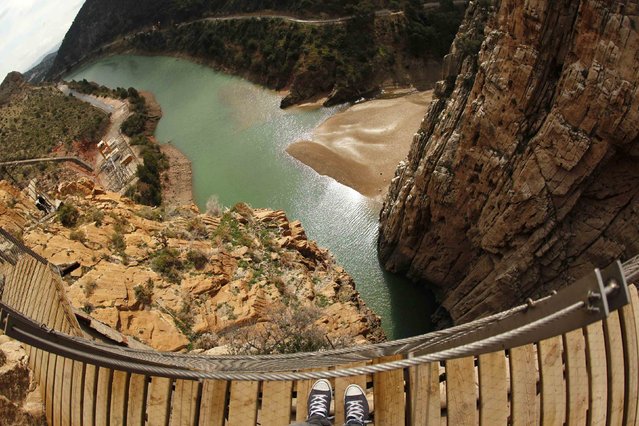
Journalists (L) walk along the new Caminito del Rey (The King's Little Pathway) in El Chorro-Alora, near Malaga, southern Spain March 15, 2015. (Photo by Jon Nazca/Reuters)

Journalists (L) walk along the new Caminito del Rey (The King's Little Pathway) in El Chorro-Alora, near Malaga, southern Spain March 15, 2015. Dubbed by many media outlets as the world's scariest pathway, the three-kilometre long pathway, which was built at about 100 metres (330 ft) above the gorge of Los Gaitanes between the years of 1901 and 1905, was closed in 2001 after five people died. A new walkway has then been built over the old walkway and will open to the public on March 28, 2015. (Photo by Jon Nazca/Reuters)
Details
16 Mar 2015 09:56:00


“NASA's Pathfinder, Pathfinder Plus, Centurion and Helios Prototype were an evolutionary series of solar- and fuel-cell-system-powered unmanned aerial vehicles. AeroVironment, Inc. developed the vehicles under NASA's Environmental Research Aircraft and Sensor Technology (ERAST) program. They were built to develop the technologies that would allow long-term, high-altitude aircraft to serve as “atmospheric satellites”, to perform atmospheric research tasks as well as serve as communications platforms”. – Wikipedia

Photo: The solar-electric Helios Prototype flying wing is flies over the Hawaiian islands of Niihau and Lehua during the first solar-powered test flight July 14, 2001 from the U.S. Navy's Pacific Missile Range Facility on Kauai, HI. The 18-hour flight was a functional checkout of the aircraft's systems and performance in preparation for an attempt to reach sustained flight at 100,000 feet altitude later in the summer. (Photo Courtesy of NASA/Getty Images)
Details
14 Jul 2011 09:24:00


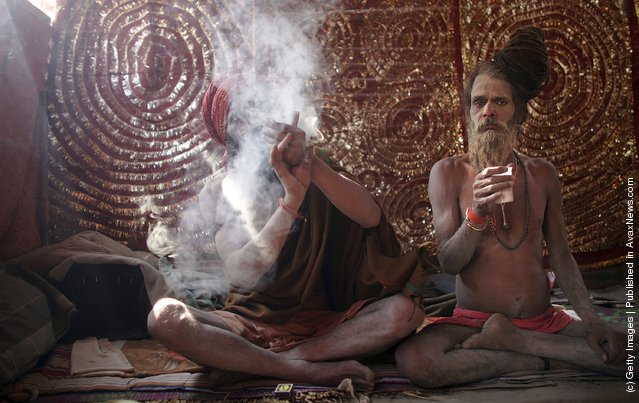
“Kumbh Mela is a mass Hindu pilgrimage in which Hindus gather at the Ganges river. The normal Kumbh Mela is celebrated every 3 years, the Ardh (half) Kumbh Mela is celebrated every six years at Haridwar and Prayag, the Purna (complete) Kumbh takes place every twelve years, at four places (Prayag (Allahabad), Haridwar, Ujjain, and Nashik). The Maha (great) Kumbh Mela which comes after 12 “Purna Kumbh Melas”, or 144 years, is held at Allahabad.

The last Ardh Kumbh Mela was held over a period of 45 days beginning in January 2007, more than 70 million Hindu pilgrims took part in the Ardh Kumbh Mela at Prayag, and on January 15, the most auspicious day of the festival of Makar Sankranti, more than 5 million participated. The previous Maha Kumbh Mela, held in 2001, was attended by around 60 million people, making it at the time the largest gathering anywhere in the world in recorded history”. – Wikipedia

Photo: Sadhus (holy men) smoke at their camp near the ritual site at Sangam, the confluence of the Ganges, Yamuna and mythical Saraswati rivers during the Ardh Kumbh Mela festival (Half Pitcher festival) January 18, 2007 in Allahabad, India. Millions of Hindu pilgrims have flocked to the largest religious gathering in the world which lasts for 45 days in northern India. The festival commemorates the mythical conflict between gods and demons over a pitcher filled with the “nectar of immortality”. Devotees believe that taking a holy dip in the Ganges at this time washes away their sins and paves the path to salvation. (Photo by Mario Tama/Getty Images)

Details
30 Jun 2011 10:27:00
Demonstrators help a fellow protester during clashes with security forces during an opposition rally in Caracas, Venezuela on April 4, 2017. (Photo by Carlos Garcia Rawlins/Reuters)

Demonstrators help a fellow protester during clashes with security forces during an opposition rally in Caracas, Venezuela on April 4, 2017. Protesters clashed with police in Venezuela Tuesday as the opposition mobilized against moves to tighten President Nicolas Maduro' s grip on power. Protesters hurled stones at riot police who fired tear gas as they blocked the demonstrators from advancing through central Caracas, where pro- government activists were also planning to march. (Photo by Carlos Garcia Rawlins/Reuters)
Details
05 Apr 2017 09:24:00
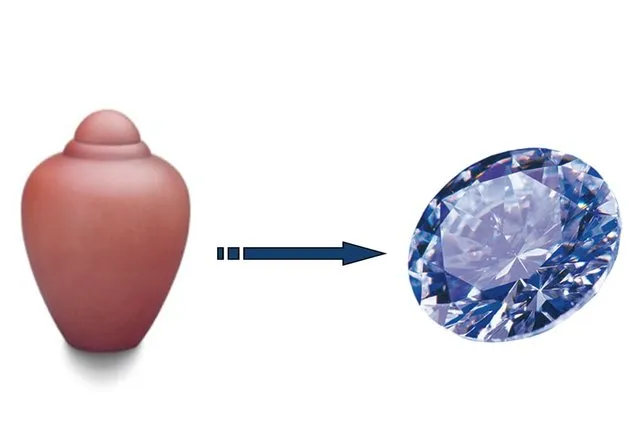
Swiss Company Turns People’s Ashes Into Diamonds

In the past people used to bury their loved ones or turn them into ashes. However, now there is a completely new possibility. Since having an urn with ashes in your house may be a bit weird, you may want to choose the option of turning your deceased relative into a diamond. Yes, diamond! You’ve heard us correctly. By using immense heat and pressure, the ashes you get after cremating a person can be turned into a real diamond. After this, the diamond can be left as it is, and stored in a jewelry box, or it can be used as a piece of jewelry, such as a ring or a pendant, allowing you to always keep your loved one close to your heart. (Photo by djd/Algordanza memorial diamonds)
Details
20 Oct 2014 08:52:00
Sculpture By Ervin Loranth Herve

There are not many sculptures in the world that were purposely made to be grotesque, especially on such a large scale. Thus, a Hungarian artist Ervin Loránth Hervé has apparently decided that there isn’t enough horror in this world and created the Feltépve – a sculpture of a stone giant ripping apart the earth in order to break free. However, when we look from another perspective this sculpture might depict a grouchy giant trying to cover himself with a blanket of earth so that everyone would leave him alone. The latter interpretation of this sculpture was probably not intended by the sculptor; however, the way the arms of the giant are positioned makes it look as if it was truly the case.
Details
04 Nov 2014 11:49:00