Loading...
Done
Underwater Photography By Alexander Semenov

In 2007, I graduated from Lomonosov’s Moscow State University in the department of Zoology. I specialized in the study of invertebrate animals, with an emphasis on squid brains. Soon after, I began working at the White Sea Biological Station (WSBS) as a senior laborer. WSBS has a dive station, which is great for all sorts of underwater scientific needs, and after 4 years working there, I became chief of our diving team. I now organize all WSBS underwater projects and dive by myself with a great pleasure and always with a camera.
Details
05 Feb 2013 15:28:00
Photographers: Robert Wilson

“Born in London in 1969 Robert has had a passion for photography since the age of 14. After studying photography at Blackpool and Flyde College he undertook and completed a personal project, which went on to be published into a book called ‘One, Images of a Goalkeeping Season’. Robert has been commissioned for editorial and advertising projects by client based throughout Europe and the U.S. and undertakes commissions for many of the top advertising agencies”. – Tim Mitchell
Details
05 Apr 2012 10:50:00
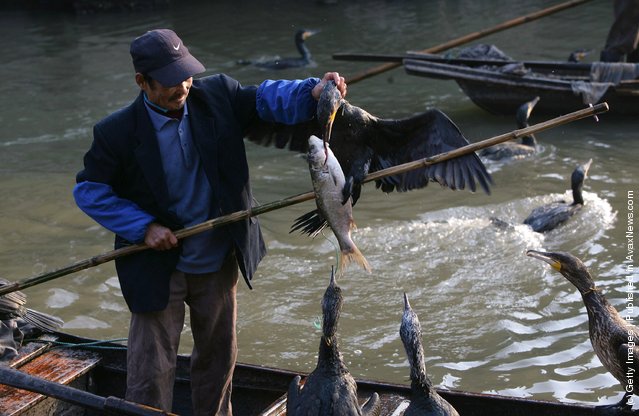
Cormorant Fishing

“Cormorant fishing is a traditional fishing method in which fishermen use trained cormorants to fish in rivers. Historically, cormorant fishing has taken place in Japan and China from around 960 AD. and recorded from other places throughout the world”. – Wikipedia

Photo: A cormorant raised by a fisherman catches a fish on a canal on November 27, 2007 in Xitang Town of Jiashan County, Zhejiang Province, China. (Photo by China Photos/Getty Images)
Details
07 Oct 2011 09:34:00
Sally Fitzgibbons of Australia competes in the Women's Final of the 2012 Australian Surfing Open in Manly, Australia

Sally Fitzgibbons of Australia competes in the Women's Final of the 2012 Australian Surfing Open on February 19, 2012 in Manly, Australia. (Photo by Cameron Spencer/Getty Images)
Details
19 Feb 2012 12:33:00
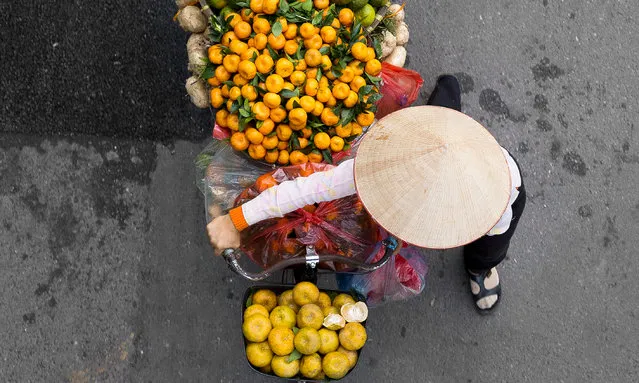
Photographer Loes Heerink spent hours waiting on bridges in Hanoi to capture the street vendors who walked underneath. She recently launched a Kickstarter project to publish a book of these images. Here: “In Hanoi there are a lot of street vendors who roam the city with their bicycles trying to sell goods, from vegetables to flowers”. (Photo by Loes Heerink/The Guardian)

Photographer Loes Heerink spent hours waiting on bridges in Hanoi to capture the street vendors who walked underneath. She recently launched a Kickstarter project to publish a book of these images. Here: “In Hanoi there are a lot of street vendors who roam the city with their bicycles trying to sell goods, from vegetables to flowers”. (Photo by Loes Heerink/The Guardian)
Details
05 Nov 2016 12:16:00
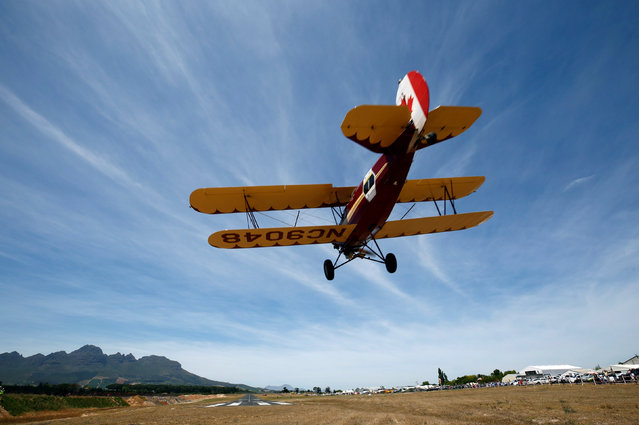
A biplane taking part in the Vintage Air Rally lands, in Stellenbosch, near Cape Town, South Africa December 16, 2016. (Photo by Mike Hutchings/Reuters)

A biplane taking part in the Vintage Air Rally lands, in Stellenbosch, near Cape Town, South Africa December 16, 2016. (Photo by Mike Hutchings/Reuters)
Details
18 Dec 2016 08:28:00
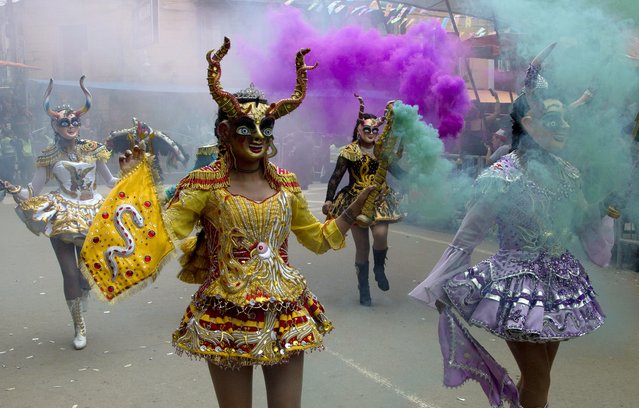
Dancers perform the traditional “Diablada” or Dance of the Devils during the Carnival in Oruro, Bolivia, Saturday, February 10, 2018. (Photo by Juan Karita/AP Photo)

Dancers perform the traditional “Diablada” or Dance of the Devils during the Carnival in Oruro, Bolivia, Saturday, February 10, 2018. Thousands of colorfully dressed dancers and musicians kick off Carnival celebrations in the Bolivian city of Oruro. (Photo by Juan Karita/AP Photo)
Details
13 Feb 2018 06:37:00
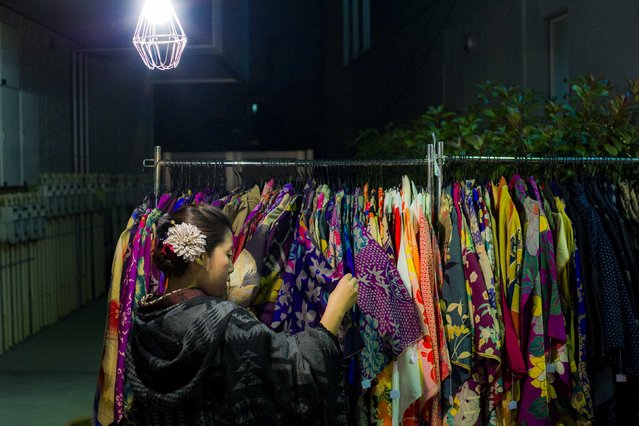
A woman browses through kimonos for sale at Boroichi flea market in Tokyo December 15, 2014. In the 16th century, Boroichi was a place for farmers to buy and sell rags, known as boro, for mending clothes and weaving sandals. Now in its 436th year, the original spirit lingers, with about 700 stands hawking fabric, used clothes and piles of rags. Others sell kitchen tools, pottery, seaweed and spices. (Photo by Thomas Peter/Reuters)

A woman browses through kimonos for sale at Boroichi flea market in Tokyo December 15, 2014. In the 16th century, Boroichi was a place for farmers to buy and sell rags, known as boro, for mending clothes and weaving sandals. Now in its 436th year, the original spirit lingers, with about 700 stands hawking fabric, used clothes and piles of rags. Others sell kitchen tools, pottery, seaweed and spices. About 200,000 people flock to the market, which is only open for four mid-winter days a year – two in December and two in January. (Photo by Thomas Peter/Reuters)
Details
19 Dec 2014 12:50:00