Loading...
Done
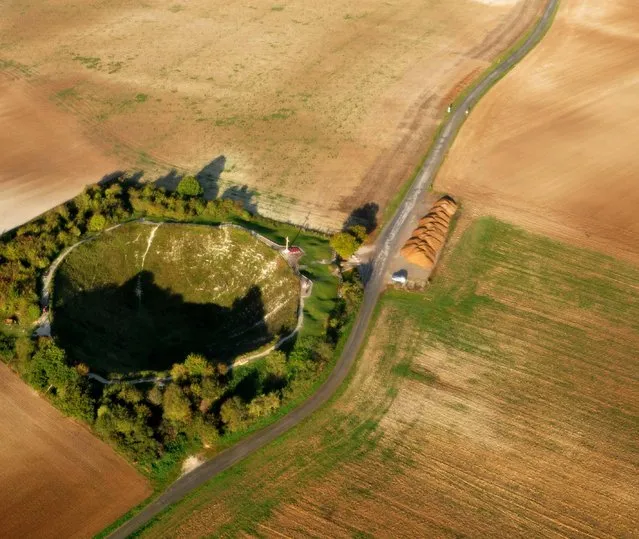
Lochnagar Crater Somme In France

It is amazing how much the humanity can change the face of the earth. Not only can it create huge craters, which look a lot like craters from meteors, they leave a big enough impact that it can be seen from space. Though this crater, caused by a massive explosion on 1 July 1916, looks large, being 90 feet deep and 300 feet across; it is nowhere big enough to be viewed for space. A common misconception is that the Great Wall of China can be seen from space. In reality, however, it is impossible. Not only is it of the same color as the earth near it, it is also not that wide. Deforestation, on the other hand, can be clearly seen from space. Also, at night, all the lights that the large cities produce are also very visible.
Details
17 Nov 2014 12:48:00
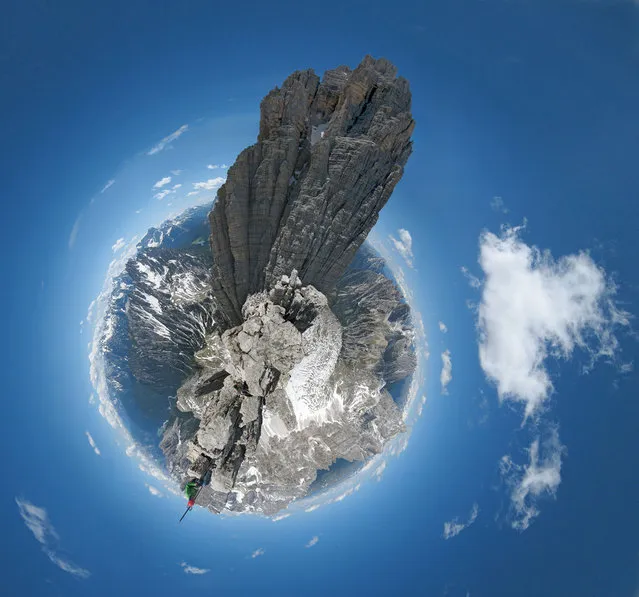
“Taken at the tiny summit of Cima Piccola in the the Tre Cima group in the Dolomites, Italy. The large peak is Cima Grande Some remote peaks have a summit register, and my climbing partner Steve can be seen signing this in the bottom of the picture”. (“Little Planets” Project. Photo and comment by Dan Arkle)

These are the amazing panoramic photographs that look like little planets. They were taken by photographer Dan Arkle, 34, from Sheffield, UK. He said: “On a sharp summit, you feel literally on top of the world, with dramatic views in all directions, including straight down. I tried using conventional photography to capture this feeling, but even with a wide angle lens I couldnt get all the view in the image”. Here: “Taken at the tiny summit of Cima Piccola in the the Tre Cima group in the Dolomites, Italy. The large peak is Cima Grande Some remote peaks have a summit register, and my climbing partner Steve can be seen signing this in the bottom of the picture”. (“Little Planets” Project. Photo and comment by Dan Arkle)
Details
06 Jun 2015 09:52:00
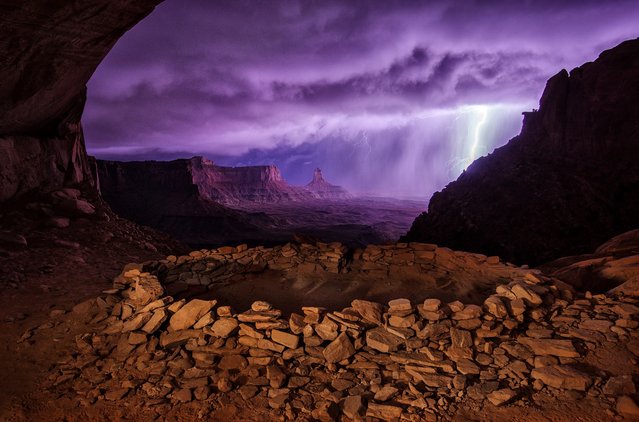
Second Place Winner: “Thunderstorm at False Kiva”. I hiked out to these ruins at night hoping to photograph them with the Milky Way, but instead a thunderstorm rolled through, creating this dramatic image. – Max Seigal. (Photo and caption by Max Seigal/National Geographic Traveler Photo Contest)

Second Place Winner: “Thunderstorm at False Kiva”. I hiked out to these ruins at night hoping to photograph them with the Milky Way, but instead a thunderstorm rolled through, creating this dramatic image. – Max Seigal. National Geographic Traveler Director of Photography Dan Westergren, one of this year's judges, shares his thoughts on the second place winner: “This photo combines two different scenes into one: the small kiva in a cliff dwelling and the grand vista of Canyonlands National Park across the valley. I really like the two different color palettes – warm inside and purple outside. This two-for-one scene was caused by the lightning storm outside the dwelling, which lit up the landscape like it was a huge electronic flash. Looking at this picture I can imagine what a wonderful sight it must have been for the ancient people who lived here. It doesn't seem too amazing now in our modern world, but might have been mind-blowing for the prehistoric residents”. Location: Utah. (Photo and caption by Max Seigal/National Geographic Traveler Photo Contest)
Details
02 Aug 2013 06:16:00
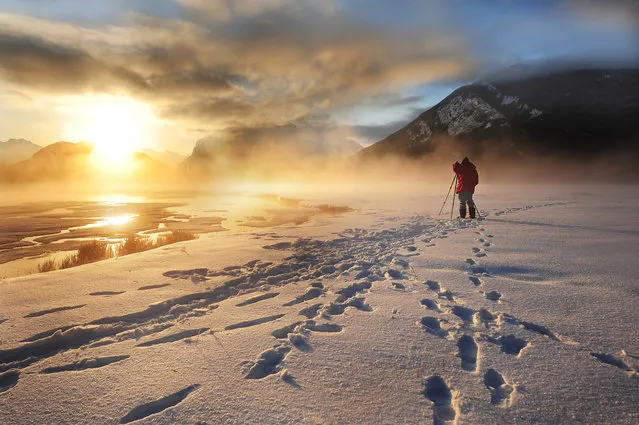
“Artist of the light”. While shooting sunrise in the Vermilion lakes area of Banff national park, Canada, I met a fellow photographer on the scene. Most of the time, we tried not to get in each other's way, however, just by accident, I snapped a picture with him in it working on his tripod settings, and it turned out to be a great photo compared to my sunrise shots. (Photo and caption by Victor Liu/National Geographic Traveler Photo Contest)

“Artist of the light”. While shooting sunrise in the Vermilion lakes area of Banff national park, Canada, I met a fellow photographer on the scene. Most of the time, we tried not to get in each other's way, however, just by accident, I snapped a picture with him in it working on his tripod settings, and it turned out to be a great photo compared to my sunrise shots. (Photo and caption by Victor Liu/National Geographic Traveler Photo Contest)

ATTENTION! All pictures are presented in high resolution. To see Hi-Res images – just TWICE click on any picture. In other words, click small picture – opens the BIG picture. Click BIG picture – opens VERY BIG picture.
Details
27 Jun 2013 13:11:00
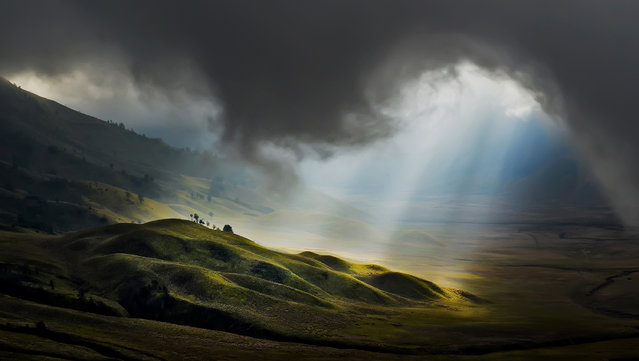
“Light From Heaven”. Taken around Mount Bromo, East Java, Indonesia in the morning. Photo location: East Java, Indonesia. (Photo and caption by Pimpin Nagawan/National Geographic Photo Contest)

“Light From Heaven”. Taken around Mount Bromo, East Java, Indonesia in the morning. Photo location: East Java, Indonesia. (Photo and caption by Pimpin Nagawan/National Geographic Photo Contest)

ATTENTION! All pictures are presented in high resolution. To see Hi-Res images – just TWICE click on any picture. In other words, click small picture – opens the BIG picture. Click BIG picture – opens VERY BIG picture.
Details
29 Nov 2013 12:36:00
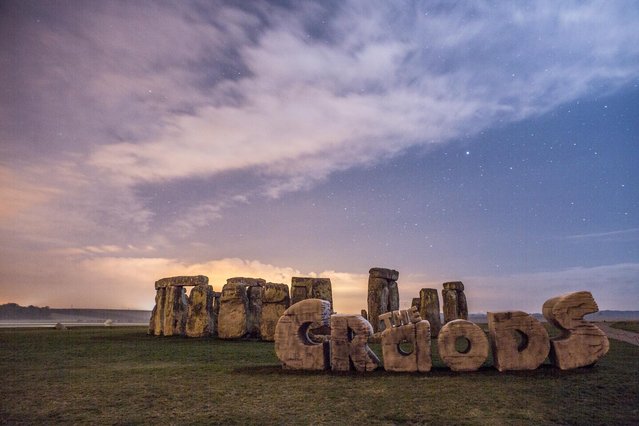
19th March 2013: In celebration of the Spring Solstice 2013 and in conjunction with the release of Twentieth Century Fox's 3D animation ‘THE CROODS’ - a family animation centered around the first ever pre historic road trip - a giant monument was erected at Stonehenge at sunrise today, Tuesday 19th March.  This marks the first time a modern structure has EVER been allowed on this historic site. The Spring Solstice or ‘Vernal Equinox’ recognises the first day of spring and each year sees druids and pagans gather at Stonehenge early in the morning to watch the sun rise above the prehistoric stones.  This year an additional monument, in the shape of ‘THE CROODS’, will become part of these special celebrations at daybreak. ‘Meet the first modern family, THE CROODS, whose world is rocked by generational clashes and seismic shifts that come to a head on a wild road trip filled with dazzling adventures, amazing firsts (like fire…and shoes), never before seen creatures and the epic discovery that they’ll have to stay one step ahead of the ever-changing world or get left in the prehistoric dust.’ DreamWorks Animation SKG presents THE CROODS. The film is directed by Chris Sanders & Kirk DeMicco, and produced by Kristine Belson and Jane Hartwell.  The screenplay is by Kirk DeMicco & Chris Sanders, with a story by John Cleese, Kirk DeMicco and Chris Sanders. The music is by Alan Silvestri. The film stars Nicolas Cage as Grug, Ryan Reynolds as Guy, Emma Stone as Eep, Catherine Keener as Ugga, Clark Duke as Thunk, and Cloris Leachman as Gran. THE CROODS presents an age known as the Croodaceous Period, which, says DeMicco, “fell between the Jurassic Age and the ‘Katzenzoic Era’– at least according to DreamWorks archaeologists.” It is a world of visual splendor and grandeur that holds innumerable challenges for the beleaguered clan

In celebration of the Spring Solstice 2013 and in conjunction with the release of Dreamworks’ 3D animation The Croods – a family animation centered around the first ever pre historic road trip – a giant monument was built at Stonehenge at sunrise on Tuesday March 19, 2013. This marks the first time a modern structure has Ever been allowed on this historic site. (Photo by Flashforwardpublicity.com)
Details
21 Mar 2013 10:21:00
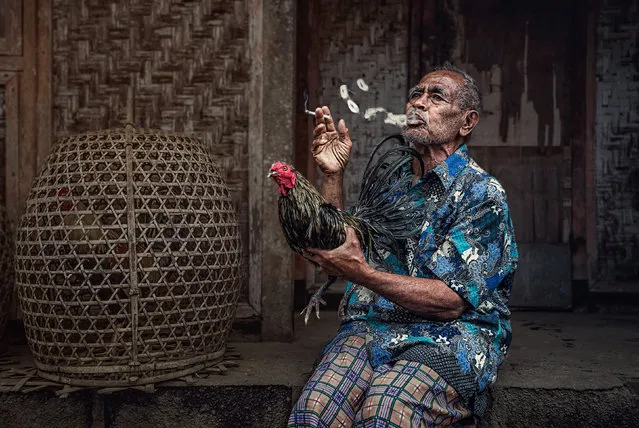
“A Balinese man shows off his pride and joy, a fighting cock, while on a cigarette break after a morning’s work in nearby fields”. (Photo by Coltrane Koh/The Guardian)

“A Balinese man shows off his pride and joy, a fighting cock, while on a cigarette break after a morning’s work in nearby fields”. (Photo by Coltrane Koh/The Guardian)
Details
05 Feb 2018 06:56:00
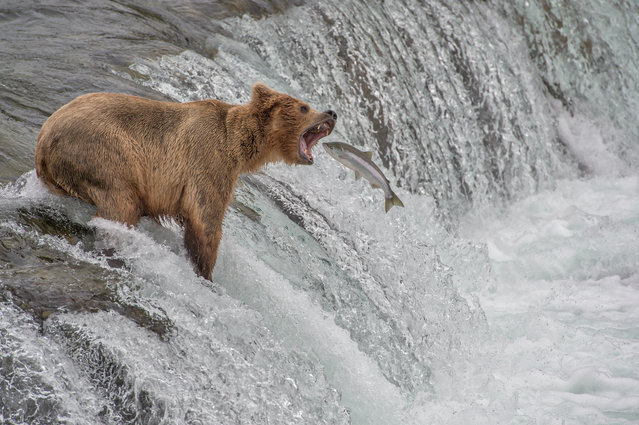
“Catch of the Decade”. Can you guess what happened next? Photo location: Katmai National Park, Alaska, USA. (Photo and caption by Aaron Baggenstos/National Geographic Photo Contest)

“Catch of the Decade”. Can you guess what happened next? Photo location: Katmai National Park, Alaska, USA. (Photo and caption by Aaron Baggenstos/National Geographic Photo Contest)
Details
30 Sep 2014 08:47:00