Loading...
Done
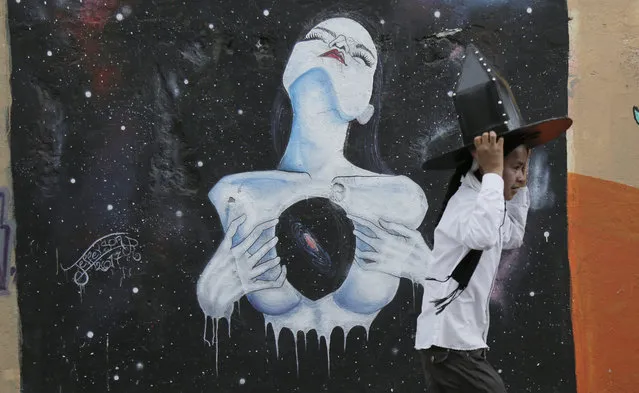
A youth in costume hurries past a mural after dancing at the Sun Festival in Cotacachi, Ecuador, Sunday, June 24, 2018. Across the Andes, from the tip of Argentina as far north as Colombia, indigenous communities are gathering for the southern hemisphere's winter solstice to honor the ancient sun god. (Photo by Dolores Ochoa/AP Photo)

A youth in costume hurries past a mural after dancing at the Sun Festival in Cotacachi, Ecuador, Sunday, June 24, 2018. Across the Andes, from the tip of Argentina as far north as Colombia, indigenous communities are gathering for the southern hemisphere's winter solstice to honor the ancient sun god. (Photo by Dolores Ochoa/AP Photo)
Details
26 Jun 2018 00:03:00
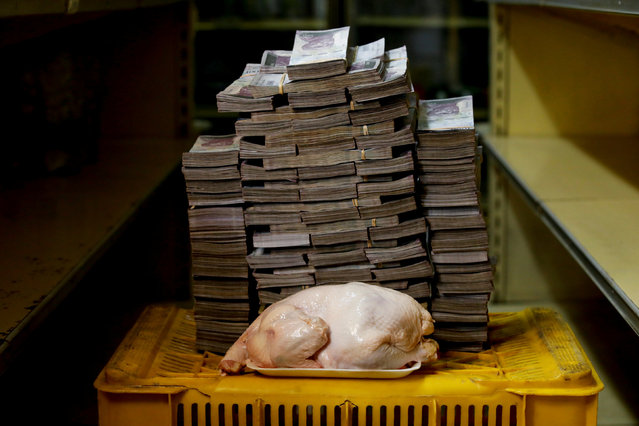
A 2.4 kg chicken is pictured next to 14,600,000 bolivars, its price and the equivalent of 2.22 USD, at a mini-market in Caracas, Venezuela August 16, 2018. It was the going price at an informal market in the low-income neighborhood of Catia. (Photo by Carlos Garcia Rawlins/Reuters)

A 2.4 kg chicken is pictured next to 14,600,000 bolivars, its price and the equivalent of 2.22 USD, at a mini-market in Caracas, Venezuela on August 16, 2018. It was the going price at an informal market in the low-income neighborhood of Catia. (Photo by Carlos Garcia Rawlins/Reuters)
Details
21 Aug 2018 00:01:00
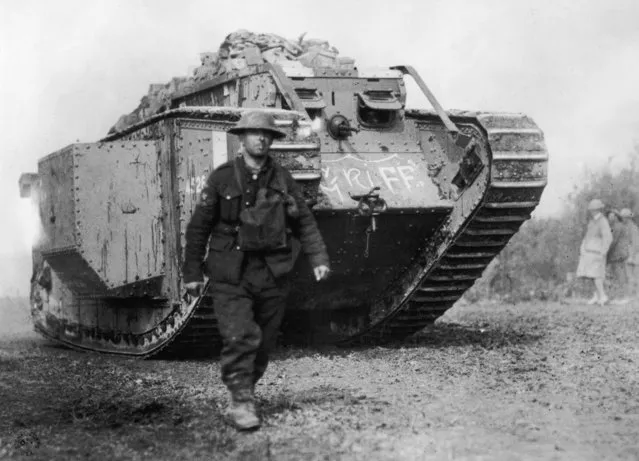
An American soldier walks ahead of an MKIV British-made tank, circa 1918. (Photo by Hulton Archive/Getty Images)

An American soldier walks ahead of an MKIV (Mark IV) British-made tank, circa 1918. (Photo by Hulton Archive/Getty Images)
Details
16 Nov 2018 00:05:00
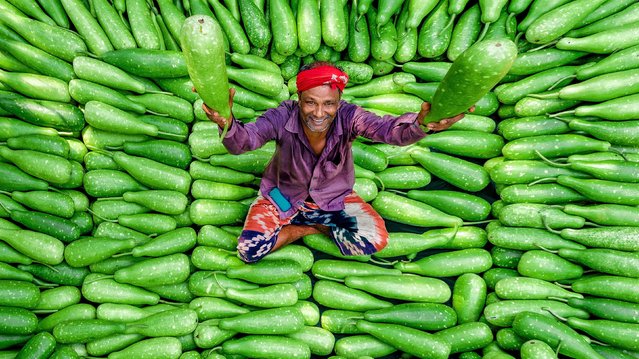
A market trader in Gaibandha in Bangladesh on September 25, 2019, surrounded by bottle gourd vegetables, which sell for around 3p  ($ 0.04) each. (Photo by Solent News)

A market trader in Gaibandha in Bangladesh on September 25, 2019, surrounded by bottle gourd vegetables, which sell for around 3p ($ 0.04) each. (Photo by Solent News)
Details
23 Oct 2019 00:01:00
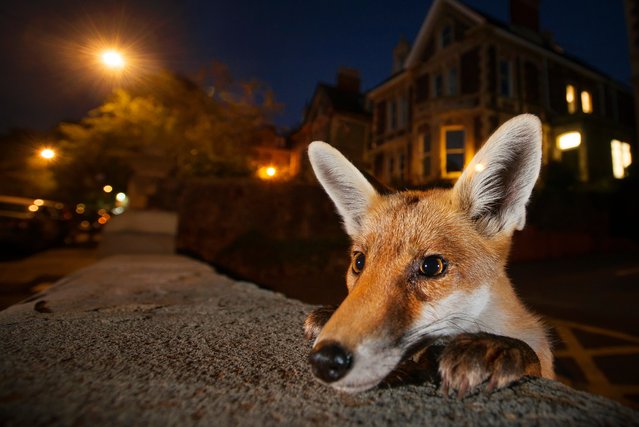
Nosy neighbour by Sam Hobson, UK. Sam knew exactly who to expect when he set his camera on the wall one summer’s evening in a suburban street in Bristol, the UK’s famous fox city. He wanted to capture the inquisitive nature of the urban red fox in a way that would pique the curiosity of its human neighbours about the wildlife around them. (Photo by Sam Hobson/2016 Wildlife Photographer of the Year)

Nosy neighbour by Sam Hobson, UK. Sam knew exactly who to expect when he set his camera on the wall one summer’s evening in a suburban street in Bristol, the UK’s famous fox city. He wanted to capture the inquisitive nature of the urban red fox in a way that would pique the curiosity of its human neighbours about the wildlife around them. (Photo by Sam Hobson/2016 Wildlife Photographer of the Year)
Details
31 Aug 2016 12:05:00
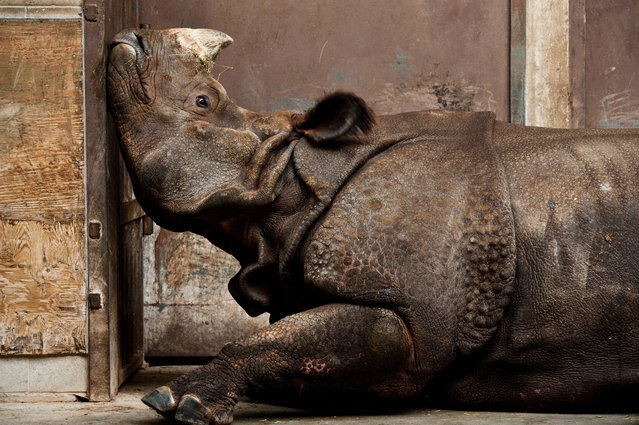
“Honorable Mention”. An Indian rhinoceros, far from home and stuck inside with late-winter blues at the Toronto zoo. Photo location: Toronto, Ontario, Canada. (Photo and caption by Stephen De Lisle/National Geographic Photo Contest)

“Honorable Mention”. An Indian rhinoceros, far from home and stuck inside with late-winter blues at the Toronto zoo. Photo location: Toronto, Ontario, Canada. (Photo and caption by Stephen De Lisle/National Geographic Photo Contest)
Details
20 Dec 2013 10:04:00
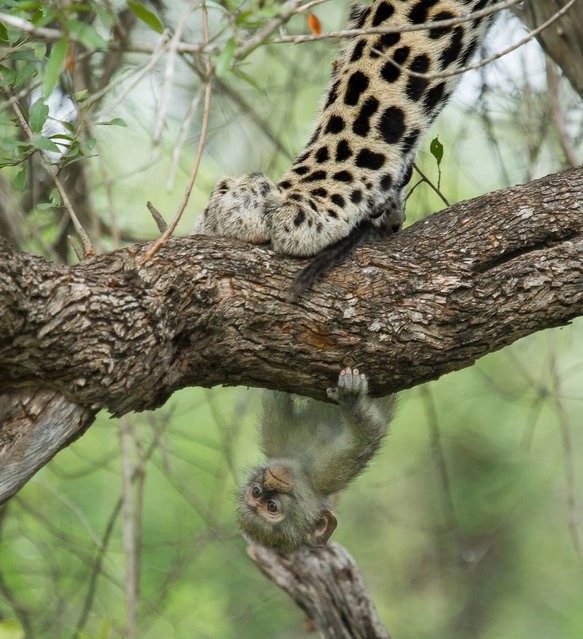
Chris Renshaw has recently been awarded the 2015 Africa Geographic “Photographer of the Year” award. Chris tells that his love “for anything wild and adventurous came from a deep rooted attachment to the African continent. This image shows that timing, a bit of anticipation, and luck allowed this incredible moment in time to be captured”. (Photo by Chris Renshaw)

Chris Renshaw has recently been awarded the 2015 Africa Geographic “Photographer of the Year” award. Chris tells that his love “for anything wild and adventurous came from a deep rooted attachment to the African continent. This image shows that timing, a bit of anticipation, and luck allowed this incredible moment in time to be captured”. (Photo by Chris Renshaw)
Details
19 Nov 2015 08:00:00
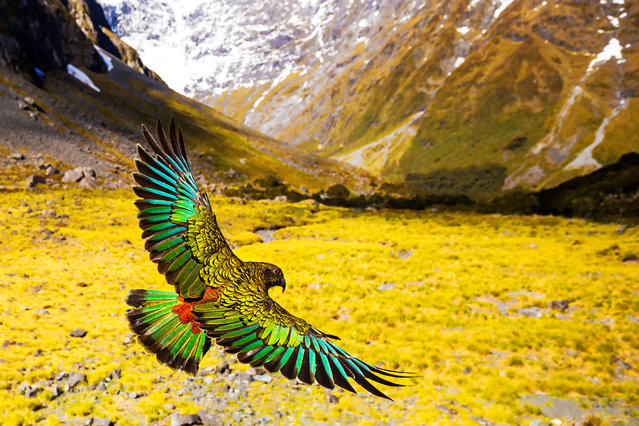
Kea are the only true alpine parrots in the world and thrive as cunning opportunists in the freezing conditions of the Southern Alps. Kea are thought to have developed their wide array of food-finding strategies during the last great ice age, where they learned to adapt using their unusual powers of curiosity. (Photo by Tom Walker/BBC Pictures/The Guardian)

Kea are the only true alpine parrots in the world and thrive as cunning opportunists in the freezing conditions of the Southern Alps. Kea are thought to have developed their wide array of food-finding strategies during the last great ice age, where they learned to adapt using their unusual powers of curiosity. (Photo by Tom Walker/BBC Pictures/The Guardian)
Details
19 Jul 2016 13:03:00