Loading...
Done
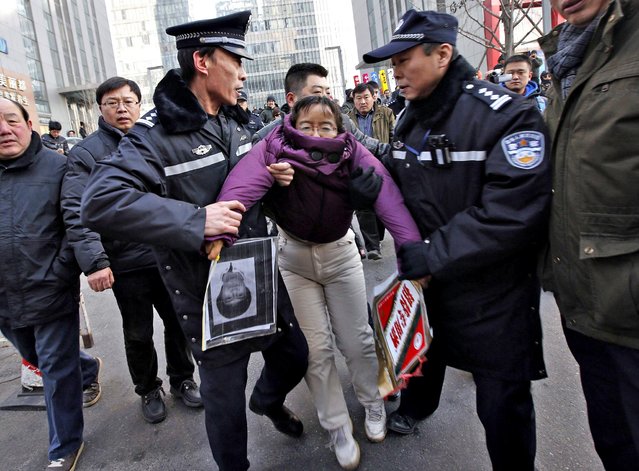
Liu Chunxia, a supporter of Xu Zhiyong, one of China's most prominent rights advocates, is detained by policemen while she gathers with other supporters nearby a court where Xu's trial is being held in Beijing January 22, 2014. (Photo by Kim Kyung-Hoon/Reuters)

Liu Chunxia, a supporter of Xu Zhiyong, one of China's most prominent rights advocates, is detained by policemen while she gathers with other supporters nearby a court where Xu's trial is being held in Beijing January 22, 2014. When dozens of activists unfurled banners across the country last March and April calling for officials to disclose their assets, they did so at the urging of one of China's most prominent rights advocates, Xu Zhiyong. Xu, 40, stands trial on Wednesday on a charge of “gathering a crowd to disturb public order” punishable by up to five years in prison. His case will almost certainly spark fresh criticism from Western governments over Beijing's crackdown on dissent. (Photo by Kim Kyung-Hoon/Reuters)
Details
26 Jan 2014 12:26:00
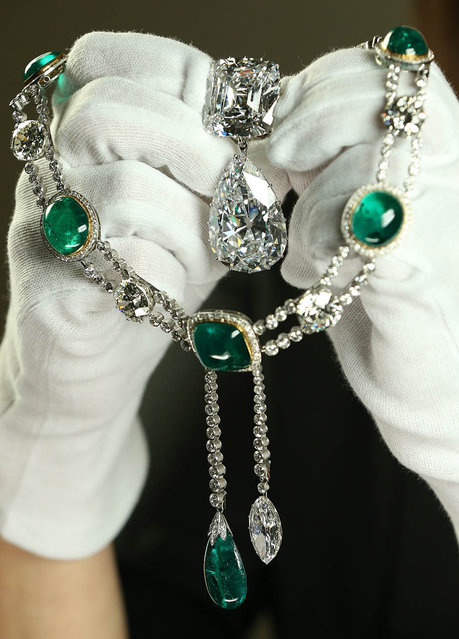
Caroline de Guitaut, Curator of Royal Collections, holds the Cullinan III and IV Broach and the Cullinan VII Delhi Durbar Necklace and Cullinan Pendant at The Queen's Gallery, Buckingham Palace

“A dazzling exhibition featuring jewelry made with the world’s largest diamond will be part of the celebrations marking the 60th anniversary of Queen Elizabeth II’s reign. The jewelry was made with a 3,106-carat diamond discovered in 1905 at the Cullinan Diamond Mine near Pretoria, the capital of South Africa. The diamond was so large that miners initially thought it was a worthless crystal and almost threw it away”... – Vidya Kauri via News.nationalpost.com

Photo: Caroline de Guitaut, Curator of Royal Collections, holds the Cullinan III and IV Broach and the Cullinan VII Delhi Durbar Necklace and Cullinan Pendant at The Queen's Gallery, Buckingham Palace on May 15, 2012 in London, England. (Photo by Peter Macdiarmid)
Details
17 May 2012 10:59:00
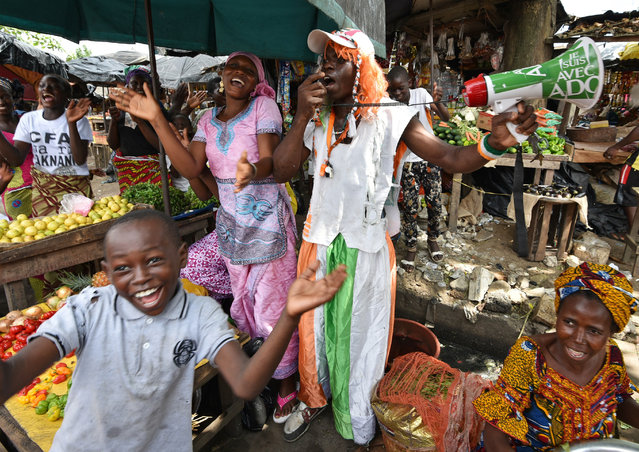
4: Abidjan, Ivory Coast. Latest ranking: 128; Ranking five years ago: 131; Five-year index movement: 3.8%. Here: A supporter of Ivory Coast president Alassane Ouattara campaigns in a market in the city’s Koumassi quarter. (Photo by Sia Kambou/AFP Photo)

A period of relative stability has put the Iranian capital No1 on the list of world cities that have achieved biggest improvements in liveability over the past five years, as calculated by the Economist Intelligence Unit. The “most improved” top 10 contains some unexpected names. So, eg, the fourth place: Abidjan, Ivory Coast. Latest ranking: 128; Ranking five years ago: 131; Five-year index movement: 3.8%. Here: A supporter of Ivory Coast president Alassane Ouattara campaigns in a market in the city’s Koumassi quarter. (Photo by Sia Kambou/AFP Photo)
Details
19 Aug 2016 11:55:00
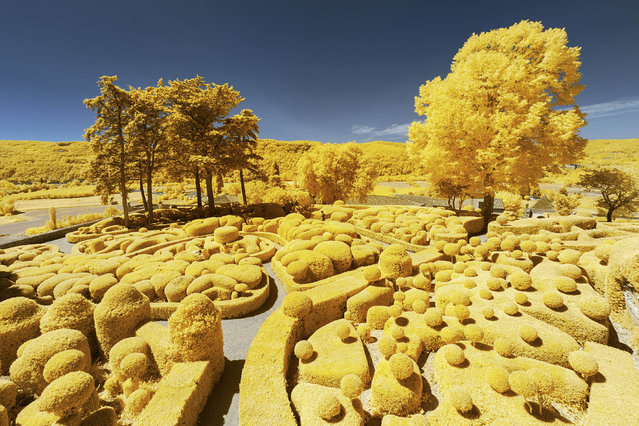
While this has meant creating large collection of shots, Ferrer said that he only selected about 50 works for the public’s eyes so far. (Photo by Pierre-Louis Ferrer/Caters News Agency)

Photographer Pierre-Louis Ferrer shows viewers the beauty of France in a whole new light, shooting the country in beautiful infrared. Ferrer’s images are as enchanting as they are intriguing, displaying a whole new variation of color in shrubs, grass and trees, as well as famous landmarks. In some of Ferrer’s works, the foliage is an eye-catching canary yellow – a stark contrast to the more normal shades in the remainder of the images. In other works, whole forests glow red, giving the French countryside an otherworldly look. (Photo by Pierre-Louis Ferrer/Caters News Agency)
Details
04 Oct 2018 00:05:00
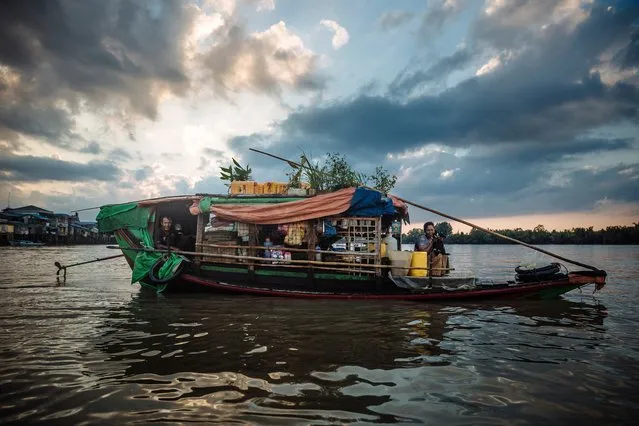
Tin and Naing win live on a small boat which they sail throughout the Delta region in Myanmar. The former gardeners once had a home on land but it was destroyed when a powerful cyclone ravaged the area in 2008. Since then, the couple have not been able to afford to rebuild their home, so they live on the boat from which they sell fish paste to make a living. (Photo by Muse Mohammed/IOM)

The ferocity of crises worldwide is forcing a record number of people to flee their homes, seeking some form of safety within their own country or across international borders. There are 65.3 million displaced people worldwide, including 21.3 million refugees. Most have lost their homes to armed conflict or natural disasters but other factors, such as extreme poverty and climate change, also drive displacement. The International Organisation for Migration commissioned photojournalist Muse Mohammed to document the plight of the displaced. (Photo by Muse Mohammed/IOM)
Details
02 Jan 2017 12:04:00
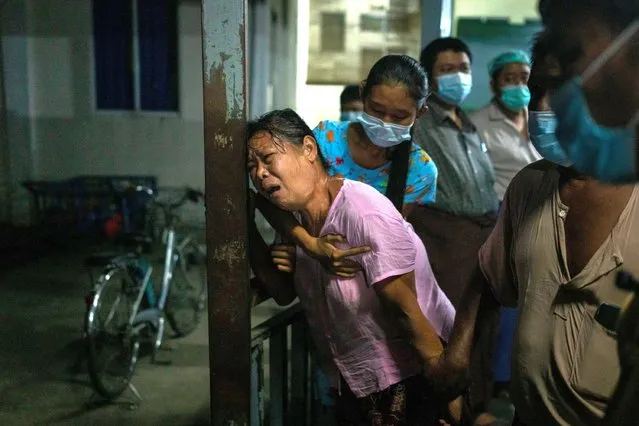
The mother of a protester mourns at a hospital after her son was killed was killed during clashes on March 03, 2021 in Yangon, Myanmar. Medics and health workers have found themselves on the front lines and under intense pressure, as they try to help anti-coup protesters as resistance continues to erupt across the country, to be met with deadly force by the military junta. The military government has intensified a crackdown on protesters in recent days, using tear gas and live ammunition, charging at and arresting protesters and journalists. At least 25 people have been killed so far, according to monitoring organizations, leaving ill-equipped medics to help scores of the injured. (Photo by Stringer/Getty Images)

The mother of a protester mourns at a hospital after her son was killed was killed during clashes on March 03, 2021 in Yangon, Myanmar. Medics and health workers have found themselves on the front lines and under intense pressure, as they try to help anti-coup protesters as resistance continues to erupt across the country, to be met with deadly force by the military junta. (Photo by Stringer/Getty Images)
Details
04 Mar 2021 08:45:00
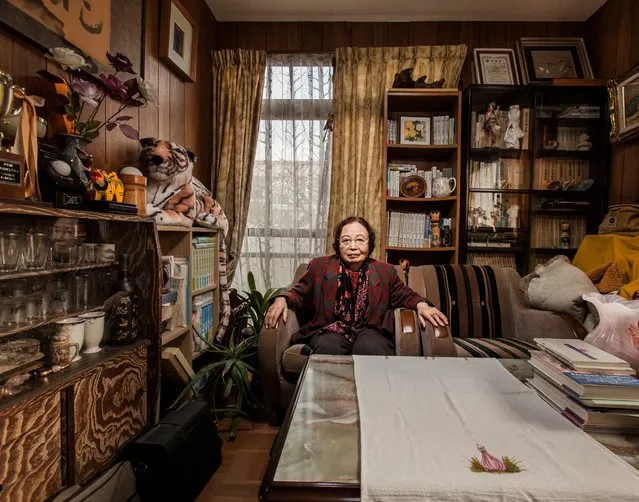
Takeoka Chisaka, Hiroshima, Japan. “One morning in August 1945, I was walking home from the night shift at a factory in Hiroshima. As I reached my door, there was a huge explosion. When I came to, my head was bleeding and I had been blasted 30m away”. (Photo and caption by Sasha Maslov)

Takeoka Chisaka, Hiroshima, Japan. “One morning in August 1945, I was walking home from the night shift at a factory in Hiroshima. As I reached my door, there was a huge explosion. When I came to, my head was bleeding and I had been blasted 30m away. The atomic bomb had detonated. When I found my mother, her eyes were badly burned. A doctor said they had to come out, but he didn’t have the proper tools so used a knife instead. It was hellish. I became a peace-worker after the war. In the 1960s, at a meeting at the UN, I met one of the people who created the atomic bomb. He apologised”. (Photo and caption by Sasha Maslov)
Details
11 May 2015 11:56:00
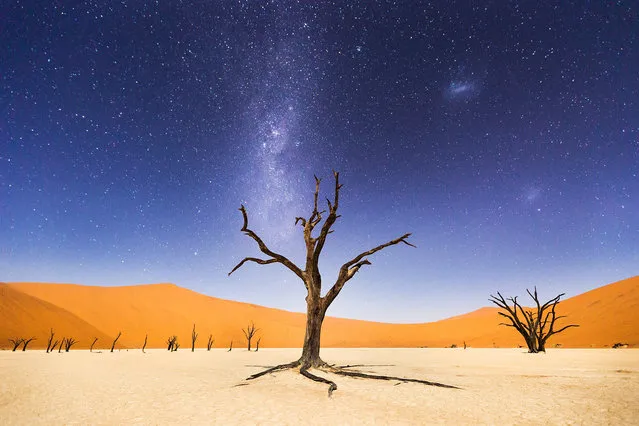
Merit: A Night at Deadvlei. The night before returning to Windhoek, we spent several hours at Deadveli. The moon was bright enough to illuminate the sand dunes in the distance, but the skies were still dark enough to clearly see the milky way and magellanic clouds. Deadveli means “dead marsh. (Photo and caption by Beth McCarley/National Geographic Traveler Photo Contest)

Merit: A Night at Deadvlei. The night before returning to Windhoek, we spent several hours at Deadveli. The moon was bright enough to illuminate the sand dunes in the distance, but the skies were still dark enough to clearly see the milky way and magellanic clouds. Deadveli means “dead marsh. The camelthorn trees are believed to be about 900 years old, but have not decomposed because the environment is so dry. (Photo and caption by Beth McCarley/National Geographic Traveler Photo Contest)
Details
04 Aug 2015 11:50:00