Loading...
Done
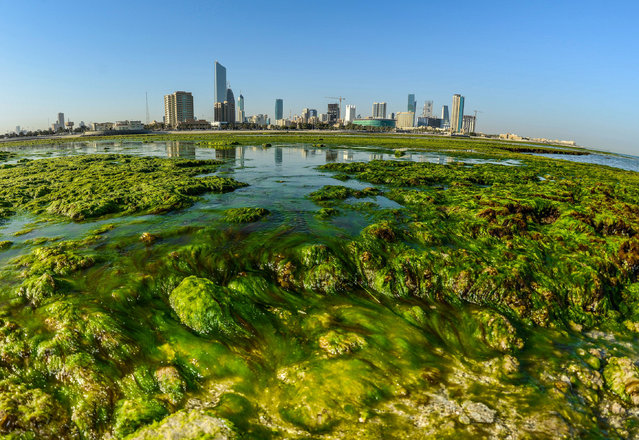
Green algae sits on a beach in Kuwait City, Kuwait, 28 February 2017. The formation of green algae is a normal phenomenon that occurs every year at the shores of Kuwait. (Photo by Raed Qutena/EPA)

Green algae sits on a beach in Kuwait City, Kuwait, 28 February 2017. The formation of green algae is a normal phenomenon that occurs every year at the shores of Kuwait. (Photo by Raed Qutena/EPA)
Details
01 Mar 2017 10:50:00
Demi Rose attends Sixty6 Magazine – issue two launch party at Paper club on March 22, 2017 in London, England. (Photo by Splash News and Pictures)

Demi Rose attends Sixty6 Magazine – issue two launch party at Paper club on March 22, 2017 in London, England. (Photo by Splash News and Pictures)
Details
26 Mar 2017 09:08:00
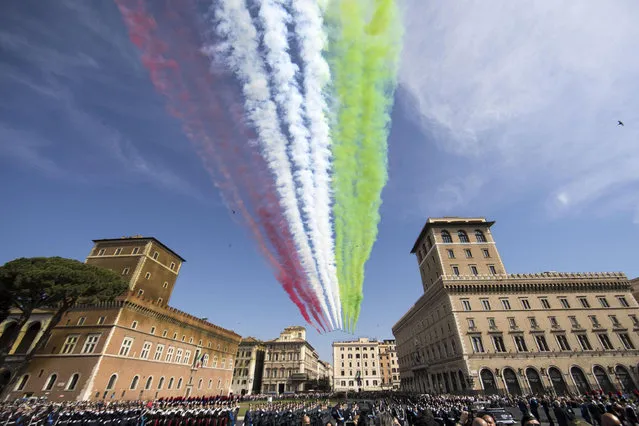
Italian Air Force's aerobatic demonstration team, the Frecce Tricolori leave colourful vapour trails as they fly over the Altare della Patria monument on Republic Day (Festa della Repubblica) in Rome, Italy, 02 Jun 2017. The anniversary marks the founding of the Italian Republic in 1946. (Photo by Massimo Percossi/EPA)

Italian Air Force's aerobatic demonstration team, the Frecce Tricolori leave colourful vapour trails as they fly over the Altare della Patria monument on Republic Day (Festa della Repubblica) in Rome, Italy, 02 Jun 2017. The anniversary marks the founding of the Italian Republic in 1946. (Photo by Massimo Percossi/EPA)
Details
04 Jun 2017 08:20:00
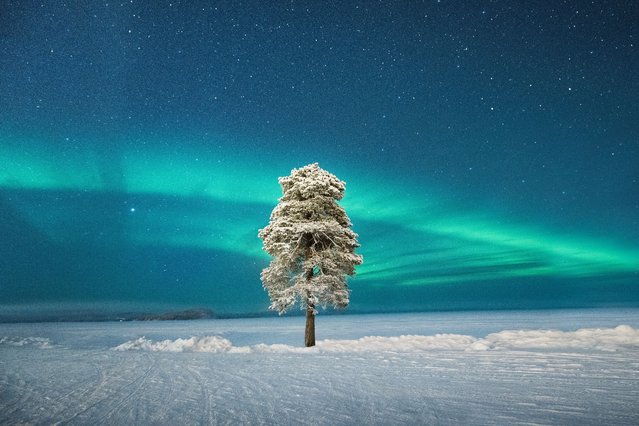
Aurorae category runner-up: Lone Tree under a Scandinavian Aurora by Tom Archer (UK). The photographer decided to explore the area around the hotel on a very crisp -35C evening in Finnish Lapland. When he found this tree, he decided to wait for the misty conditions to change and could not believe his luck when the sky cleared and the aurora came out in the perfect spot. Archer spent about an hour photographing it before his camera started to lock up because of the harsh conditions, but by then he was happy to call it a night. (Photo by Tom Archer/2020 Astronomy Photographer of the Year)

Aurorae category runner-up: Lone Tree under a Scandinavian Aurora by Tom Archer (UK). The photographer decided to explore the area around the hotel on a very crisp -35C evening in Finnish Lapland. When he found this tree, he decided to wait for the misty conditions to change and could not believe his luck when the sky cleared and the aurora came out in the perfect spot. Archer spent about an hour photographing it before his camera started to lock up because of the harsh conditions, but by then he was happy to call it a night. (Photo by Tom Archer/2020 Astronomy Photographer of the Year)
Details
17 Sep 2020 00:03:00
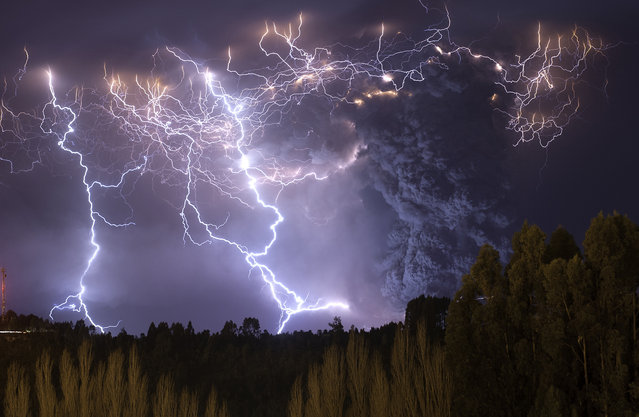
The eruption of Cordon Caulle began on June 4, 2011, located in the Region of Los Rios in Chile. For about 12 months, people and animals became accustomed to living with the daily fall of ash, which also caused problems in the air traffic in South America. The explosions and lightning during first days of the eruption could be seen from hundreds of miles around. This photograph was taken on the second night of eruption from the town of Lago Ranco. (Photo and caption by Francisco Negroni/National Geographic Traveler Photo Contest)

The eruption of Cordon Caulle began on June 4, 2011, located in the Region of Los Rios in Chile. For about 12 months, people and animals became accustomed to living with the daily fall of ash, which also caused problems in the air traffic in South America. The explosions and lightning during first days of the eruption could be seen from hundreds of miles around. This photograph was taken on the second night of eruption from the town of Lago Ranco. (Photo and caption by Francisco Negroni/National Geographic Traveler Photo Contest)

ATTENTION! All pictures are presented in high resolution. To see Hi-Res images – just TWICE click on any picture. In other words, click small picture – opens the BIG picture. Click BIG picture – opens VERY BIG picture.
Details
23 Jun 2013 11:24:00
On August 31, 2012, a long filament of solar material that had been hovering in the sun's atmosphere, the corona, erupted out into space at 4:36 p.m. EDT. The coronal mass ejection, or CME, traveled at over 900 miles per second. The CME did not travel directly toward Earth, but did connect with Earth's magnetic environment, or magnetosphere, causing aurora to appear on the night of Monday, September 3. (Photo by NASA/GSFC/SDO)

On August 31, 2012, a long filament of solar material that had been hovering in the sun's atmosphere, the corona, erupted out into space at 4:36 p.m. EDT. The coronal mass ejection, or CME, traveled at over 900 miles per second. The CME did not travel directly toward Earth, but did connect with Earth's magnetic environment, or magnetosphere, causing aurora to appear on the night of Monday, September 3. (Photo by NASA/GSFC/SDO via The Atlantic)
Details
14 Sep 2012 09:01:00
An animal advocate lays in fake blood in a replica of a meat package with a label that reads “meat” during a protest “The meat is murder” in the Bulgarian capital Sofia on May 8, 2016. (Photo by Nikolay Doychinov/AFP Photo)

An animal advocate lays in fake blood in a replica of a meat package with a label that reads “meat” during a protest “The meat is murder” in the Bulgarian capital Sofia on May 8, 2016. (Photo by Nikolay Doychinov/AFP Photo)
Details
10 May 2016 13:32:00
Emma White, of Team Cyclocrossworld, hits the dirt hard during the USA Cycling Cyclo-cross National Championship Elite Women's race at the Valmont Bike Park in Boulder, Colorado, on January 12, 2014. (Photo by Jeremy Papasso/The Daily Camera)

Emma White, of Team Cyclocrossworld, hits the dirt hard during the USA Cycling Cyclo-cross National Championship Elite Women's race at the Valmont Bike Park in Boulder, Colorado, on January 12, 2014. (Photo by Jeremy Papasso/The Daily Camera)
Details
18 Jan 2014 13:43:00