Chinese-American actress Bai Ling attends “The Key” screening at The Real Experimental Film Festival at Laemmle's Music Hall on November 21, 2014 in Beverly Hills, California. (Photo by Barry King/WireImage)
Aerial view of Taxodium Distichum in full blossom at a maze area of a wetland park on January 6, 2023 in Xiamen, Fujian Province of China. (Photo by Wu Wei/VCG via Getty Images)
Giant panda Xiao Qi Ji plays at his enclosure at the Smithsonian National Zoo in Washington, Thursday, September 28, 2023. (Photo by Jose Luis Magana/AP Photo)
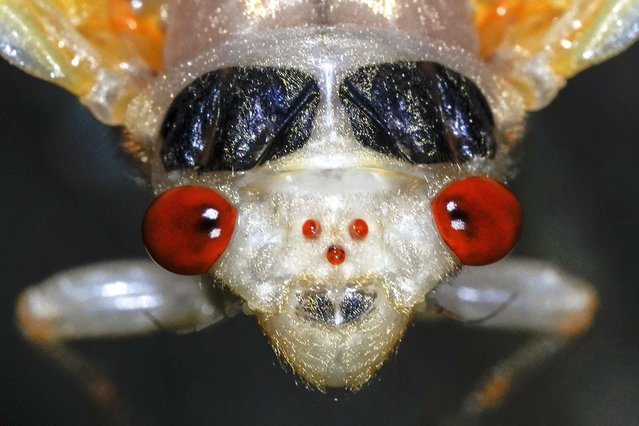
An adult periodical cicada, in the process of shedding its nymphal skin, is visible on Saturday, May 11, 2024, in Cincinnati. There are two large compound eyes, which are used to visually perceive the world around them, and three small, jewel-like, simple eyes called ocelli at center. (Photo by Carolyn Kaster/AP Photo)
People look out at the city among 30,375 square feet of mirrors at SUMMIT One Vanderbilt in New York on May 22, 2024. The Parade of Ships is seen from SUMMIT One Vanderbilt in NYC as part of the Fleet Week Celebration events. (Photo by Timothy A. Clary/AFP Photo)
I know, this answer was a little too short, so let me explain in a little more detail.
Imagine tossing a coin. Normally, any normal coin toss has two possible outcomes - heads or tails - with each one having a 50% chance of happening. Ideally, that is, because factors like the force of your finger tossing the coin, gravity, the wind, the moon phase and a passing TARDIS can all influence the outcome of the toss - but I have deviated from the subject.