Loading...
Done
Derailing My Train of Thought By Thomas Wightman

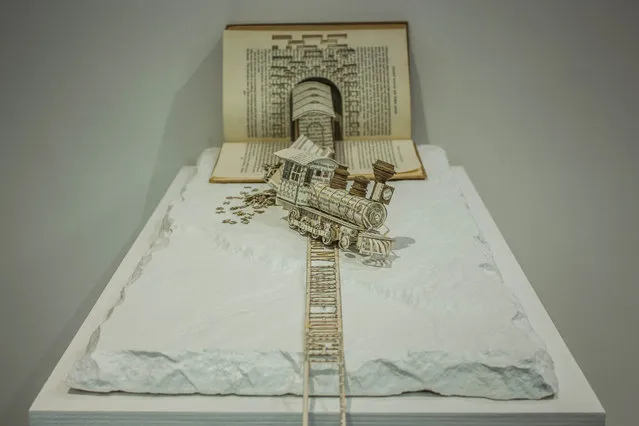
This awesome book sculpture is by Thomas Wightman and is the most recent of the series, if you would like to see his two previous sculptures do so via his website.


See Also: Plagued by Doubt
Details
29 Nov 2013 11:07:00
Cars And Films By Jesus Prudencio

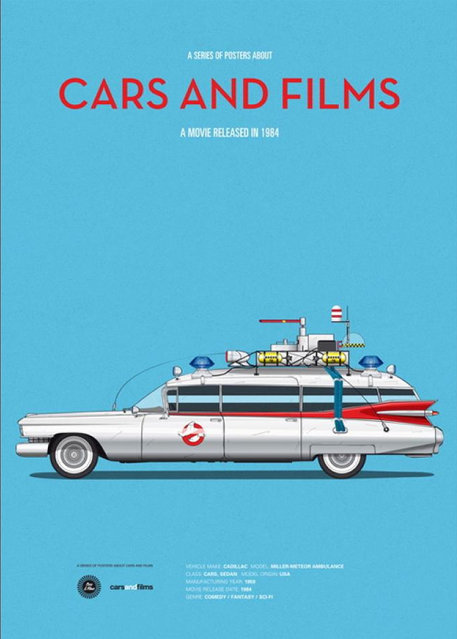
Artist Jesús Prudencio loves cars and movies, if you couldn’t tell by his beautiful series of movie posters, titled Cars and Films, that focuses on an iconic automobile from each movie. From Back to the Future to Pulp Fiction, The Shining to The Italian Job, Prudencio’s colorfully minimal illustrations are a delight for any fan of cars and/or films.
Details
04 Jan 2014 13:33:00
Short circuit

“Throughout those last months photography has grown in me. It has become a part of my life and I wouldn’t have it any other way. Flickr is my small theater, hope you'll enjoy the show”. – ShmilebliK

Photo: Short circuit, 2012 (Photo by ShmilebliK)
Details
07 Jun 2012 10:29:00
Road Trip! (Photo by Thad Lawrence)

Interesting photos which can't be united in a certain series quite often come across to me. Therefore I publish simply a small group of separate pictures – enjoy, if it's interesting to you. Photo: “Road Trip!” (Photo by Thad Lawrence)

Details
05 Oct 2012 09:58:00
Hobbit house by Simon Dale

You are looking at pictures of a house I built for our family in Wales. It was built by myself and my father in law with help from passers by and visiting friends. 4 months after starting we were moved in and cosy. I estimate 1000-1500 man hours and £3000 put in to this point. Not really so much in house buying terms (roughly £60/sq m excluding labour).
Details
13 Nov 2012 12:48:00
Participants dressed as Santa Claus take part in the Great Edinburgh Santa Run on December 11, 2011 in Edinburgh, Scotland

Participants dressed as Santa Claus take part in the Great Edinburgh Santa Run on December 11, 2011 in Edinburgh, Scotland. Around a thousand people took part in the annual fundraising event, with all money raised being donated to the charity “When You Wish Upon a Star”. (Photo by Jeff J. Mitchell/Getty Images)
Details
12 Dec 2011 12:11:00
Ocean voyage

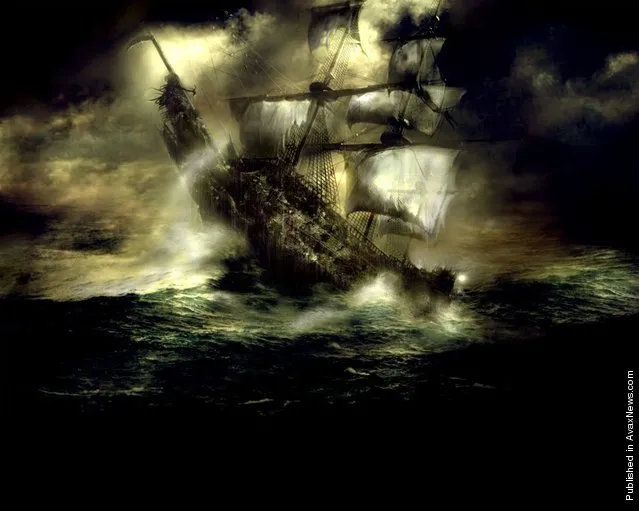
Do you think that history is a science? Well, not exactly. First, and foremost, history is the state's “legend of wars”, it’s official regalia. Of course, public historians are not interested in scientific truth – quite the opposite. In this respect, any attempt to present a state’s history as altruistic and benevolent as possible is welcomed and encouraged – as opposed to any revisionism attempts that may be more accurate. In this matter, Chinese have surpassed us all – they revised in highly creative manner (but rather shamelessly) the technology already invented by Europeans, a process that resulted in oldest state on the planet. Here is an interesting paradox: ask any sinologist about the Middle Kingdom during second century B.C., and he will describe it to you in such a vivid manner as if he has been living there all his life – but as soon as you will ask him to describe Chinese history in the 19-20th centuries… let's say, his eagerness will be greatly diminished. However, we will discuss China in a different article, and in the meantime we will try to understand how exactly historic “legend of wars” is formed and functions – based on a specific and well-known example. A great example is Ferdinand Magellan's first voyage around the world.
Details
14 Nov 2011 09:11:00
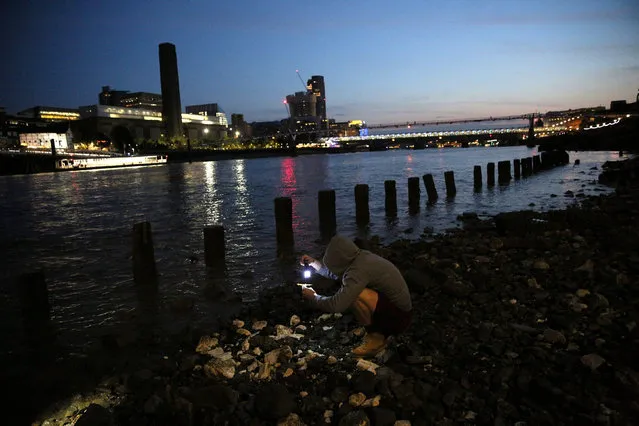
A mudlark uses a torch to look for items on the bank of the River Thames in London, Britain June 06, 2016. Mudlarking is believed to trace its origins to the 18th and 19th century, when scavengers searched the Thames' shores for items to sell. These days, history and archaeology fans are the ones hoping to find old relics such as coins, ceramics, artifacts or everyday items from across centuries. They wait for the low tide and then scour specific areas of exposed shores. "If you're in a field you could be out all day long, with the river you're restricted to about two or three hours," mudlark Nick Stevens said. While many just use the naked eye for their searches, others rely on metal detectors for which a permit from the Port of London Authority is needed. Digging also requires consent. (Photo by Neil Hall/Reuters)

A mudlark uses a torch to look for items on the bank of the River Thames in London, Britain June 06, 2016. Mudlarking is believed to trace its origins to the 18th and 19th century, when scavengers searched the Thames' shores for items to sell. These days, history and archaeology fans are the ones hoping to find old relics such as coins, ceramics, artifacts or everyday items from across centuries. their finds with the Portable Antiquities Scheme. Any item over 300 years old must be recorded. (Photo by Neil Hall/Reuters)
Details
27 Aug 2016 10:43:00