People dressed in traditional costumes sing Christmas carols as they gather to celebrate Orthodox Christmas at a compound of the National Architecture museum in Kyiv, Ukraine on January 7, 2022. (Photo by Valentyn Ogirenko/Reuters)
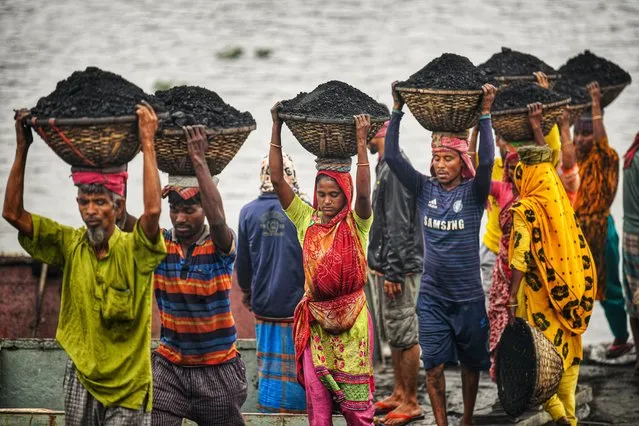
Bangladeshi day labourers carry baskets of coal from a cargo ship in Gabtoli, Dhaka on January 2, 2022. They are earning around $1 every 30 baskets of coal unloaded from the ship. (Photo by Piyas Biswas/SOPA Images/Rex Features/Shutterstock)
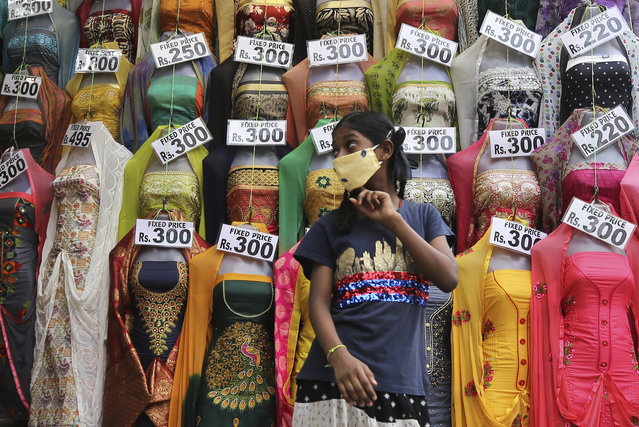
A girl wearing a face mask as a precaution against the coronavirus walks past a display of garments at a market in Bengaluru, India, Saturday, January 9, 2021. India will kick off the coronavirus vaccination drive on Jan. 16 to stem the pandemic in the world's second-most populous country. A Health Ministry statement says that priority will be given to the healthcare workers and the frontline workers, estimated around 30 million. (Photo by Aijaz Rahi/AP Photo)
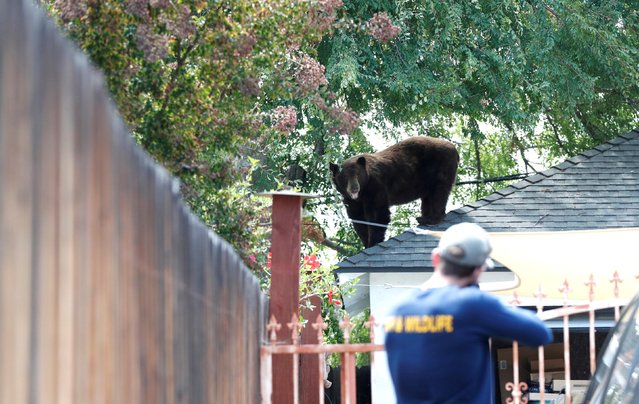
An officer from the California Department of Fish and Wildlife gets ready to tranquillize a bear in Pasadena, California, U.S., August 20, 2021. (Photo by Mario Anzuoni/Reuters)
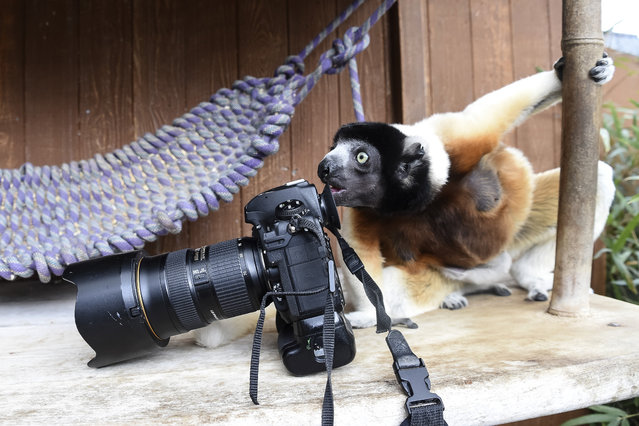
Poppy, a female Crowned sifaka, inspects a photographer's camera in the enclosure at the zoo of Mulhouse, eastern France, on March 5, 2019. The Crowned sifaka is a critically endangered species from Madagascar. (Photo by Sebastien Bozon/AFP Photo)
Linda Evangelista, Naomi Campbell, Polly Mellon, and Christy Turlington, The Fashion Group International's 6th Annual “Night of 100 Stars” at the The Plaza Hotel in New York City, New York on October 29, 1989. (Photo by Ron Galella/WireImage)
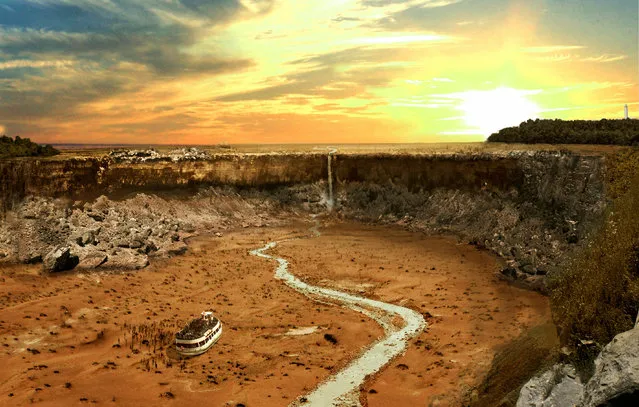
A graphic designer has produced a haunting look at what the world’s most famous landmarks would look like if they were hit by a severe drought. Joel Krebs has intricately dried up hot spots such as the Tower Bridge in London, the Capitol in Washington, D.C., Niagara Falls and Machu Picchu. Here: Niagara Falls, Canada, after severe drought. (Photo by Joel Krebs/Caters News)