Loading...
Done
Thecacera Pacifica AKA Pikachu

If you ever wanted to meet a live Pikachu, you might have a hard time finding one. However, there is a creature on this Earth that kind of looks like one. That creature’s name is Thecacera pacifica and it is a species of a sea slug. These little critters can be found in the Indian Ocean from African coast to Indonesia and Vanuatu. Their vibrant orange and blue colors look gorgeous, making it look like some sort of anemone. Also, as you might have guessed from the striking colors of the sea slug, just like most of anemones, this creature is very toxic. Thus, keeping it as a pet isn’t an option.

Details
19 Dec 2014 12:51:00
Miners search for jade stones at a mine dump at a Hpakant jade mine in Kachin state, Myanmar November 25, 2015. (Photo by Soe Zeya Tun/Reuters)

Miners search for jade stones at a mine dump at a Hpakant jade mine in Kachin state, Myanmar November 25, 2015. Using heavy earth-excavators and explosives, miners have been tearing into Myanmar's northern hills in recent months, in a rush to excavate more jade from the world's richest deposits of the gemstone before a new government takes office next year. (Photo by Soe Zeya Tun/Reuters)
Details
18 Dec 2015 08:03:00
Farmer holding a freshly cut cocoa bean pod, revealing the pulp and seed inside on a rainforest farm. (Photo by Doug McKinlay/Getty Images)

Chocolate is the greatest gift the Earth has given us. The dessert table would be a sad sight without it. It’s so beloved, so appreciated, that the Swedish scientist who named the cocoa plant that gives us chocolate called it Theobroma cacao, which means “food of the gods”. Here: Farmer holding a freshly cut cocoa bean pod, revealing the pulp and seed inside on a rainforest farm. (Photo by Doug McKinlay/Getty Images)
Details
10 Aug 2016 10:20:00
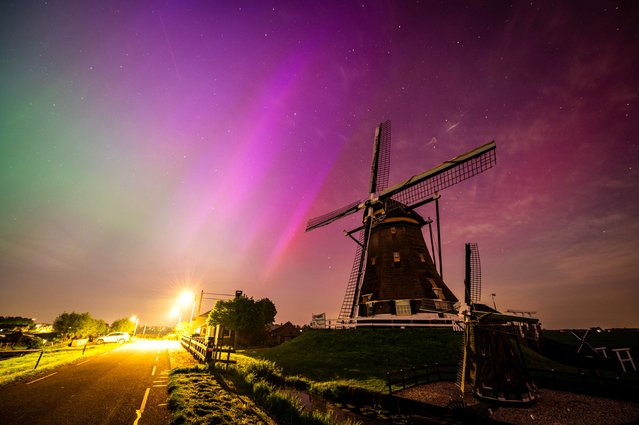
The Northern lights (aurora borealis) lights up the night sky above the Molenviergang in Aarlanderveen, the Netherlands, early on 11 May 2024. The National Oceanic and Atmospheric Administration (NOAA) of America has warned that the strongest geomagnetic storm for 20 years is set to hit Earth, making the Aurora Borealis, or Northern Lights, visible at much lower geomagnetic latitudes than usual. (Photo by Josh Walet/EPA/EFE/Rex Features/Shutterstock)

The Northern lights (aurora borealis) lights up the night sky above the Molenviergang in Aarlanderveen, the Netherlands, early on 11 May 2024. The National Oceanic and Atmospheric Administration (NOAA) of America has warned that the strongest geomagnetic storm for 20 years is set to hit Earth, making the Aurora Borealis, or Northern Lights, visible at much lower geomagnetic latitudes than usual. (Photo by Josh Walet/EPA/EFE/Rex Features/Shutterstock)
Details
17 Aug 2024 04:31:00
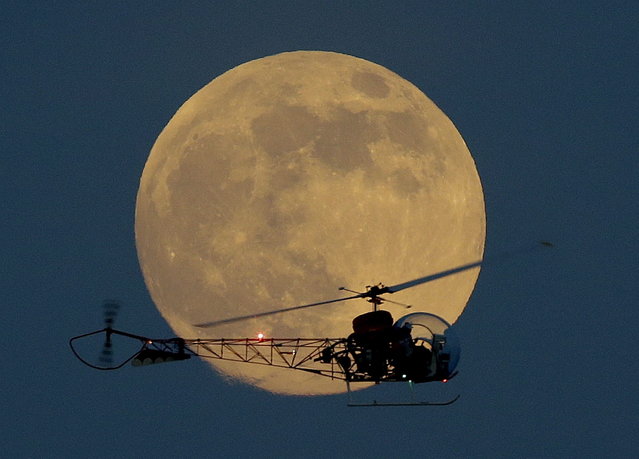
The moon is seen in its waxing gibbous stage as it rises behind the helicopter from the original Batman television show, which people can ride at the New Jersey State Fair, Saturday, June 22, 2013, in East Rutherford, N.J. The moon, which will reach its full stage on Sunday, is expected to be 13.5 percent closer to earth during a phenomenon known as supermoon. (Photo by Julio Cortez/AP Photo)

The moon is seen in its waxing gibbous stage as it rises behind the helicopter from the original Batman television show, which people can ride at the New Jersey State Fair, Saturday, June 22, 2013, in East Rutherford, N.J. The moon, which will reach its full stage on Sunday, is expected to be 13.5 percent closer to earth during a phenomenon known as supermoon. (Photo by Julio Cortez/AP Photo)
Details
24 Jun 2013 12:17:00
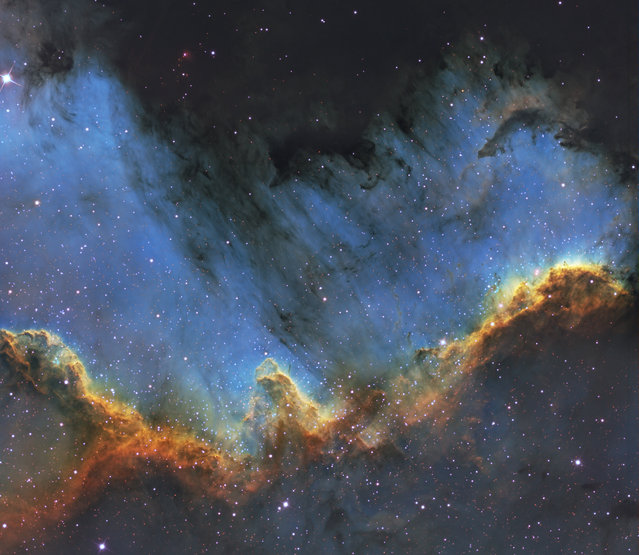
The Cygnus Wall is in the southern  area of NGC7000 also known as the North America Nebula. It is approximately 1800 light years from Earth, and is in the constellation Cygnus. The Wall is an energized shock front and contains the most concentrated star formations in the nebula. The size of the North America Nebula is about 4 full moons. (Bill Snyder)

Amateur astronomer Bill Snyder has been involved with astrophotography since 2007. Photo: The Cygnus Wall is in the southern area of NGC7000 also known as the North America Nebula. It is approximately 1800 light years from Earth, and is in the constellation Cygnus. The Wall is an energized shock front and contains the most concentrated star formations in the nebula. The size of the North America Nebula is about 4 full moons. (Photo and caption by Bill Snyder)
Details
30 Oct 2013 09:15:00
In this February 26, 1962 file photo, Mercury astronaut John Glenn, and his wife, Annie, ride in the back of an open car with Vice-President Johnson during a parade in Glenn's honor in Washington. The Capitol is seen in the background. Glenn, the first American to orbit Earth who later spent 24 years representing Ohio in the Senate, died Thursday, Dec. 8, 2016, at the age of 95. (Photo by AP Photo)

In this February 26, 1962 file photo, Mercury astronaut John Glenn, and his wife, Annie, ride in the back of an open car with Vice-President Johnson during a parade in Glenn's honor in Washington. The Capitol is seen in the background. Glenn, the first American to orbit Earth who later spent 24 years representing Ohio in the Senate, died Thursday, Dec. 8, 2016, at the age of 95. (Photo by AP Photo)
Details
09 Dec 2016 11:35:00
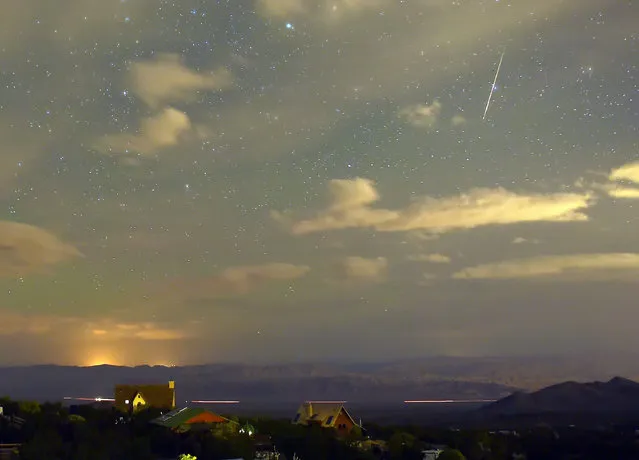
A Perseid meteor streaks across the sky over the community of Cold Creek on August 12, 2015 in the Spring Mountains National Recreation Area, Nevada. The annual display, known as the Perseid shower because the meteors appear to radiate from the constellation Perseus in the northeastern sky, is a result of Earth's orbit passing through debris from the comet Swift-Tuttle. (Photo by Ethan Miller/Getty Images)

A Perseid meteor streaks across the sky over the community of Cold Creek on August 12, 2015 in the Spring Mountains National Recreation Area, Nevada. The annual display, known as the Perseid shower because the meteors appear to radiate from the constellation Perseus in the northeastern sky, is a result of Earth's orbit passing through debris from the comet Swift-Tuttle. (Photo by Ethan Miller/Getty Images)
Details
13 Aug 2015 11:33:00