Loading...
Done
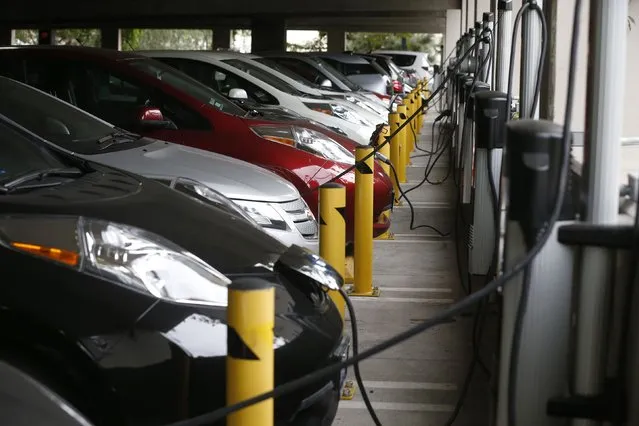
Electric cars sit charging in a parking garage at the University of California, Irvine January 26, 2015. “The Irvine Smart Grid Demonstration”, a $79 million project funded half by federal stimulus money and half by Edison and partners like UC Irvine, was launched in 2010. (Photo by Lucy Nicholson/Reuters)

Electric cars sit charging in a parking garage at the University of California, Irvine January 26, 2015. “The Irvine Smart Grid Demonstration”, a $79 million project funded half by federal stimulus money and half by Edison and partners like UC Irvine, was launched in 2010. The $12 billion utility's research team Southern California Edison is testing everything from charging electronic vehicles via cell phone to devices that smooth out the power created by rooftop solar panels. Those are some of the roughly 60 projects in the works at Edison's Advanced Technology division. It has a small $19 million annual budget, but its influence far exceeds that. (Photo by Lucy Nicholson/Reuters)
Details
28 Jan 2015 11:50:00
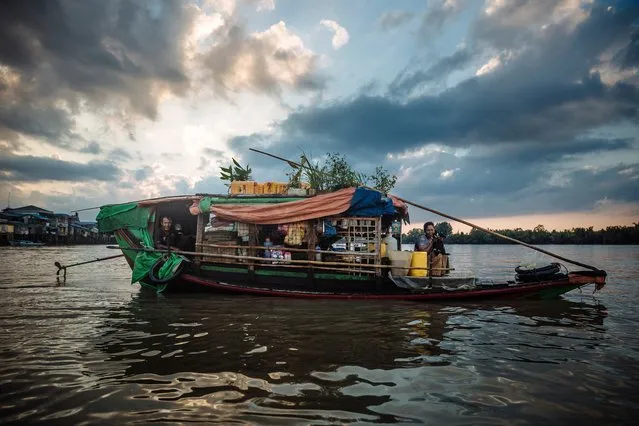
Tin and Naing win live on a small boat which they sail throughout the Delta region in Myanmar. The former gardeners once had a home on land but it was destroyed when a powerful cyclone ravaged the area in 2008. Since then, the couple have not been able to afford to rebuild their home, so they live on the boat from which they sell fish paste to make a living. (Photo by Muse Mohammed/IOM)

The ferocity of crises worldwide is forcing a record number of people to flee their homes, seeking some form of safety within their own country or across international borders. There are 65.3 million displaced people worldwide, including 21.3 million refugees. Most have lost their homes to armed conflict or natural disasters but other factors, such as extreme poverty and climate change, also drive displacement. The International Organisation for Migration commissioned photojournalist Muse Mohammed to document the plight of the displaced. (Photo by Muse Mohammed/IOM)
Details
02 Jan 2017 12:04:00
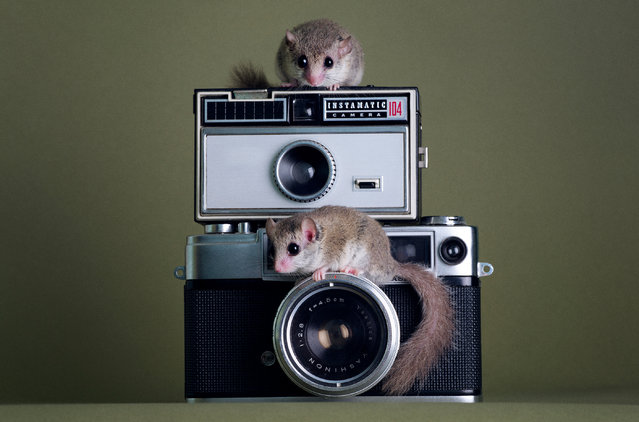
“The most difficult aspect of this shoot was to get each African pygmy dormouse – also known as micro squirrels – on to a separate camera. Once in place, they needed to remain still long enough to get them both in the frame and looking at me. Often solitary, they naturally wanted to move away”. (Photo by David Yeo/Leica Studio Mayfair/The Guardian)

David Yeo’s photography places naturally small species alongside animals that have been selectively bred to be tiny and cute. Here: “The most difficult aspect of this shoot was to get each African pygmy dormouse – also known as micro squirrels – on to a separate camera. Once in place, they needed to remain still long enough to get them both in the frame and looking at me. Often solitary, they naturally wanted to move away”. (Photo by David Yeo/Leica Studio Mayfair/The Guardian)
Details
24 Oct 2017 08:20:00
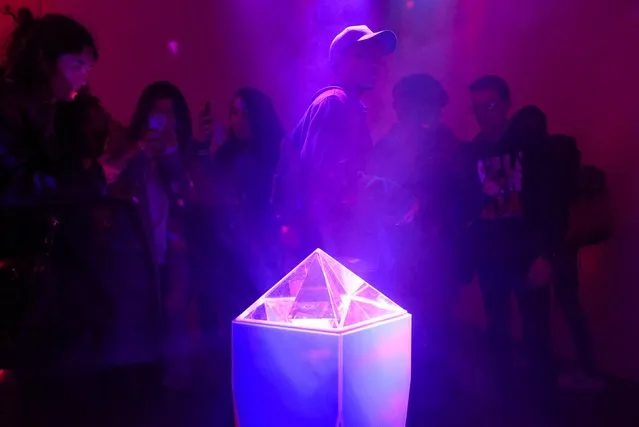
The Museum of Feelings doesn't really have “exhibits" in the conventional sense; rather, visitors move from one themed alcove to another, five in total, each with its own distinctive aroma.  (Photo by Stephanie Keith/Reuters)

The Museum of Feelings doesn't really have “exhibits" in the conventional sense; rather, visitors move from one themed alcove to another, five in total, each with its own distinctive aroma. The “Optimistic Room," bathed in vivid pink and purple light, is little more than a lightshow, with patrons using small reflective panels to bounce light around the room. Here: People interact in the “optimistic” room at the Museum of Feelings, a pop-up installation in New York, December 15, 2015. (Photo by Stephanie Keith/Reuters)
Details
19 Dec 2015 08:00:00
Chris “Birdman” Andersen poses for Getty Images photographer Mike Ehrmann during the Miami Heat's Media Day at AmericanAirlines Arena, on September 30, 2013. (Photo by Gary Coronado/The Palm Beach Post)

Chris “Birdman” Andersen poses for Getty Images photographer Mike Ehrmann during the Miami Heat's Media Day at AmericanAirlines Arena, on September 30, 2013. (Photo by Gary Coronado/The Palm Beach Post)

P.S. All pictures are presented in high resolution. To see Hi-Res images – just TWICE click on any picture. In other words, click small picture – opens the BIG picture. Click BIG picture – opens VERY BIG picture (if available; this principle works anywhere on the site AvaxNews)
Details
05 Oct 2013 12:25:00
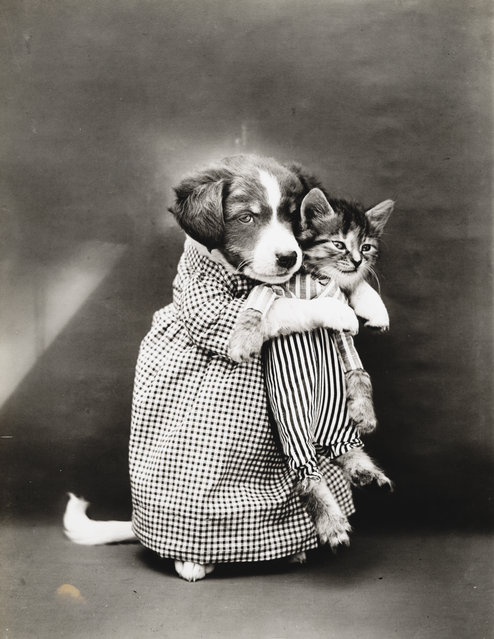
Photograph shows a puppy holding a kitten, 1914. (Photo by Harry Whittier Frees/Library of Congress)

“Harry Whittier Frees (1879–1953) was an American photographer who created novelty postcards and children's books based on his photographs of animals. He dressed the animals and posed them in human situations with props, often with captions; these can be seen as progenitors of modern lolcats”. – Wikipedia. Photo: “The nurse”. Photograph shows a puppy holding a kitten, 1914. (Photo by Harry Whittier Frees/Library of Congress)

P.S. All pictures are presented in high resolution. To see Hi-Res images – just TWICE click on any picture. In other words, click small picture – opens the BIG picture. Click BIG picture – opens VERY BIG picture (if available; this principle works anywhere on the site AvaxNews).
Details
28 Mar 2014 11:20:00
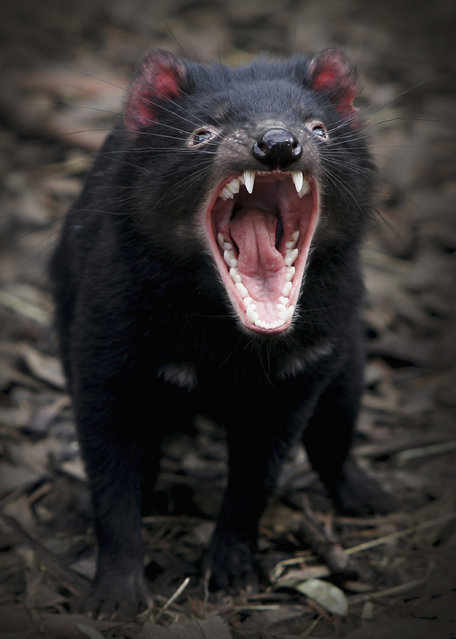
A Tasmanian Devil bears it's teeth at a quarantine facility August 31, 2005 in Hobart, Australia. The Devil, a native marsupial unique to Tasmania, is under threat from Devil Facial Tumor Disease (DFTD) which is decimating numbers throughout Tasmania. (Photo by Ian Waldie/Getty Images)

“The Tasmanian devil (Sarcophilus harrisii) is a carnivorous marsupial of the family Dasyuridae now found in the wild only in the Australian island state of Tasmania. The size of a small dog, it became the largest carnivorous marsupial in the world following the extinction of the thylacine in 1936. It is characterised by its stocky and muscular build, black fur, pungent odour, extremely loud and disturbing screech, keen sense of smell, and ferocity when feeding”. – Wikipedia. Photo: A Tasmanian Devil bears it's teeth at a quarantine facility August 31, 2005 in Hobart, Australia. (Photo by Ian Waldie/Getty Images)
Details
27 Jan 2014 09:45:00
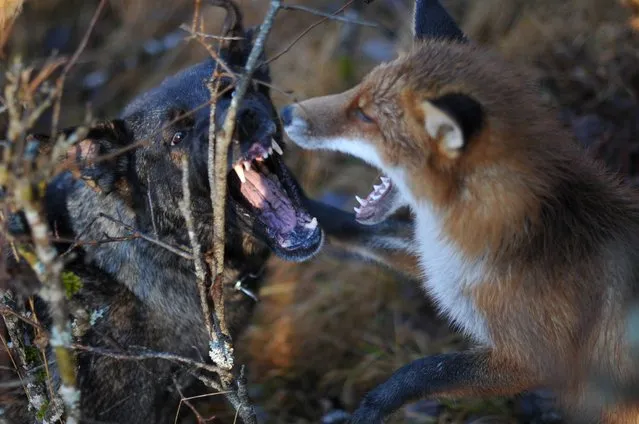
Life Fox And Hound

Tinni the dog and Sniffer the fox became quick friends, prompting the pooch's owner Torgeir Berge to start a campaign against the highly controversial fur trade after he noticed "how similar foxes and dogs actually are," calling the fox the "dog of the forest." Berge and his friend Berit Helberg plan to release a book sometime next year chronicling the duo, because "no animals should be living like the animals in the fur industry are living." According to animal advocacy group PETA, many creatures bound for the fur industry are allegedly kept in small, restrictive cages for their entire lives. Berge and Helberg said they plan to donate a portion of the proceeds to help save the Sniffers of the world, and we can totally see why.
Details
24 Apr 2014 14:40:00