Loading...
Done


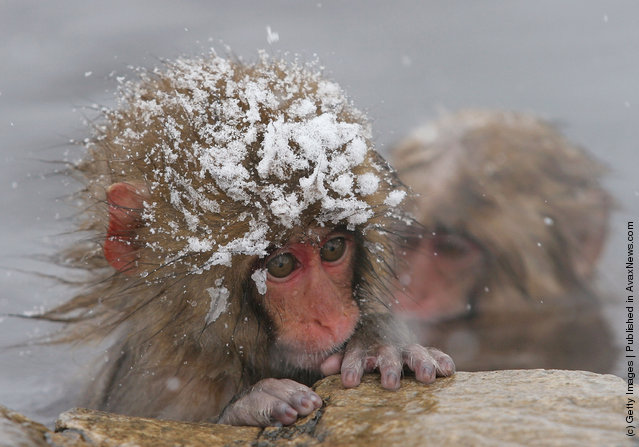
Japanese macaque monkeys enjoy sitting in the hot springs at Jigokudani-Onsen (Hell Valley) on January 23, 2005 in Jigokudani, Nagano-Prefecture, Japan. Japanese Macaques, also known as snow monkeys are the most northerly nonhuman primate in the world. In 1963 a female Macaque ventured into the hot springs to retrieve some soybeans. This behaviour was adopted by other monkeys, and eventually by the entire troop. This Macaque troop regularly visits the Jigokudani-Onsen springs to escape the cold. The hot springs are said to help relieve nerve pain and fatigue. (Photo by Koichi Kamoshida/Getty Images)
Details
20 May 2011 08:04:00
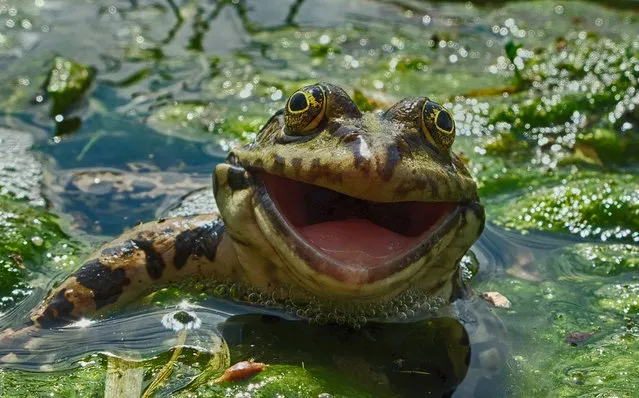
A frog appears to have a big smile for the camera, Russia. (Photo by Artyom Krivosheev/Barcroft Images/Comedy Wildlife Photography Awards 2016)

A frog appears to have a big smile for the camera, Russia. Things are heating up at the Comedy Wildlife Photography Awards as the shortlisted final 40 entries are revealed. This year's competition has featured over 2200 hilarious entries from around the world with photos including a fox face planting in the snow, a dancing brown bear and a pair of seemingly headless penguins – all beautifully photographed with perfect comedy timing and a strong conservation message. (Photo by Artyom Krivosheev/Barcroft Images/Comedy Wildlife Photography Awards 2016)
Details
08 Oct 2016 11:57:00
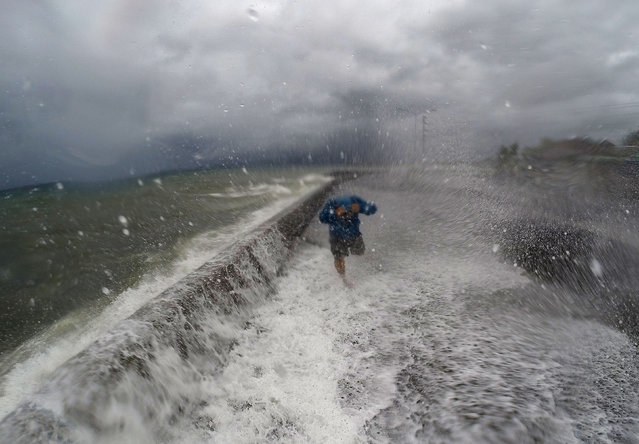
A resident walks past big waves spilling over a wall onto a coastal road in the city of Legaspi in Albay province, south of Manila on December 14, 2015, as typhoon Melor approaches the city. More than 700,000 people fled the central Philippines amid threats of giant waves, floods and landslides as powerful Typhoon Melor approached the archipelago nation, officials said December 14. (Photo by Charism Sayat/AFP Photo)

A resident walks past big waves spilling over a wall onto a coastal road in the city of Legaspi in Albay province, south of Manila on December 14, 2015, as typhoon Melor approaches the city. More than 700,000 people fled the central Philippines amid threats of giant waves, floods and landslides as powerful Typhoon Melor approached the archipelago nation, officials said December 14. (Photo by Charism Sayat/AFP Photo)
Details
15 Dec 2015 11:34:00
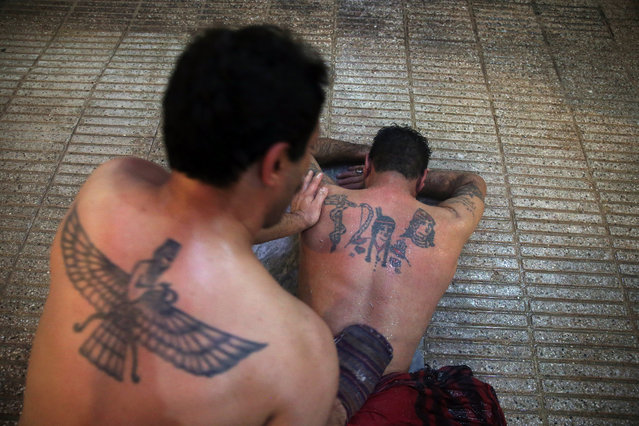
In this Friday, January 9, 2015 photo, bathhouse worker Omid Riahi, 39, scrubs a man to remove dead skin, at the Ghebleh public bathhouse, in Tehran, Iran. The steamy air and curved tiled walls of Iran's famed public bathhouses, some rinsing and massaging patrons for hundreds of years, slowly may wash away as interest in them wanes. (Photo by Ebrahim Noroozi/AP Photo)

In this Friday, January 9, 2015 photo, bathhouse worker Omid Riahi, 39, scrubs a man to remove dead skin, at the Ghebleh public bathhouse, in Tehran, Iran. The steamy air and curved tiled walls of Iran's famed public bathhouses, some rinsing and massaging patrons for hundreds of years, slowly may wash away as interest in them wanes. The bathhouses, known as “hammams” in Persian, find themselves in rough financial times as modern conveniences now allow showers and baths in most homes across the Islamic Republic. (Photo by Ebrahim Noroozi/AP Photo)
Details
03 Apr 2015 12:40:00
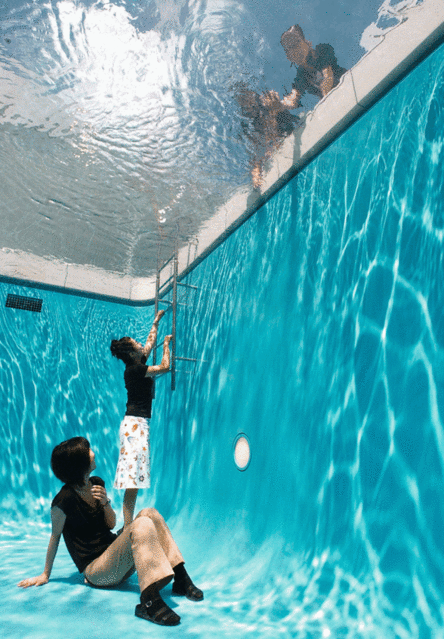
Swimming Pool Art Installation by Leandro Erlich

In one of the Museum’s courtyards is a swimming pool framed by a limestone deck. When seen from the deck, the pool appears to be filled with deep, shimmering water. In fact, however, a layer of water only some 10 centimeters deep is suspended over transparent glass. Below the glass is an empty space with aquamarine walls that viewers can enter. The work sets up an unfolding sequence of experiences—we view the pool through the glass wall enclosing the courtyard; from the deck, looking down into the pool; and from the interior of the pool, looking up. The Swimming Pool might hence be considered a place where, slowly, with time, different perspectives and perceptions of self and others all come to intersect.
Details
25 Aug 2012 07:31:00
A woman poses for a picture as bunches of paprika hang on the walls of her house to dry in the village of Donja Lakosnica, Serbia October 6, 2016. Donja Lokosnica is the Serbian “capital of paprika”, since almost all of the 1300 inhabitants are involved in growing paprika. As autumn approaches, the whole village turns red, because of many threads of dried peppers, that hang around Lokosnica, waiting for their winter use. Each of these paprika threads is handmade, still dried according to traditional techniques, assisted solely by the sun and fresh air. (Photo by Marko Djurica/Reuters)

A woman poses for a picture as bunches of paprika hang on the walls of her house to dry in the village of Donja Lakosnica, Serbia October 6, 2016. Donja Lokosnica is the Serbian “capital of paprika”, since almost all of the 1300 inhabitants are involved in growing paprika. As autumn approaches, the whole village turns red, because of many threads of dried peppers, that hang around Lokosnica, waiting for their winter use. Each of these paprika threads is handmade, still dried according to traditional techniques, assisted solely by the sun and fresh air. (Photo by Marko Djurica/Reuters)
Details
08 Oct 2016 12:04:00
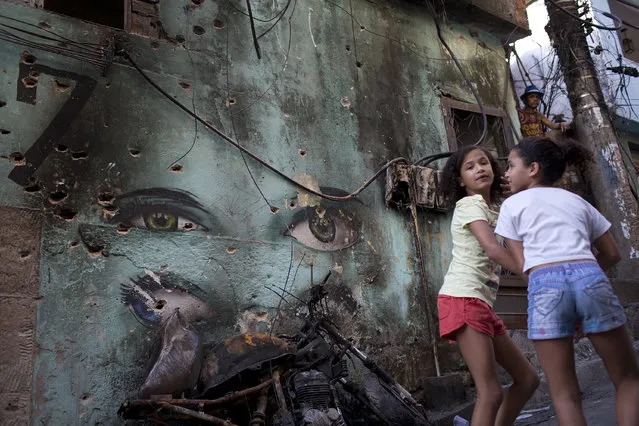
In this September 27, 2017 file photo, girls walk past a wall riddled with bullet holes from shootings between rival drug traffickers, at the Rocinha slum, in Rio de Janeiro, Brazil. Violence is on the rise in Rio's slums after several years of decline, and the killings of kids have shocked even residents long inured to deaths from gangs and police. (Photo by Silvia Izquierdo/AP Photo)

In this September 27, 2017 file photo, girls walk past a wall riddled with bullet holes from shootings between rival drug traffickers, at the Rocinha slum, in Rio de Janeiro, Brazil. Violence is on the rise in Rio's slums after several years of decline, and the killings of kids have shocked even residents long inured to deaths from gangs and police. (Photo by Silvia Izquierdo/AP Photo)
Details
16 Oct 2017 09:13:00
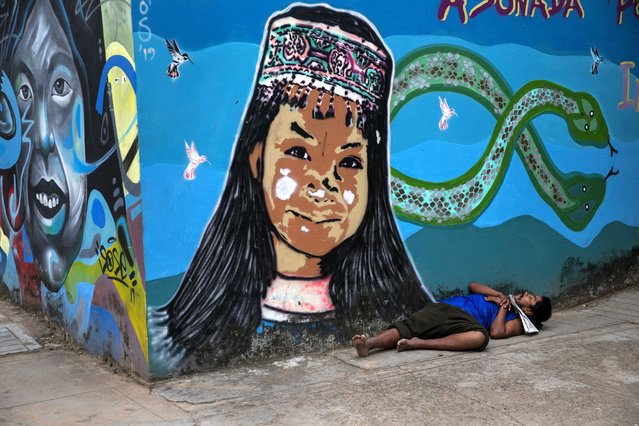
A homeless man sleeps against a wall adorned with a mural featuring a Shipibo Indigenous girl and Amazon rainforest animals, in Pucallpa, in Peru's Ucayali region, Wednesday, September 2, 2020. Peru is home to one of Latin America's largest Indigenous populations, whose ancestors lived in the Andean country before the arrival of Spanish colonists. (Photo by Rodrigo Abd/AP Photo)

A homeless man sleeps against a wall adorned with a mural featuring a Shipibo Indigenous girl and Amazon rainforest animals, in Pucallpa, in Peru's Ucayali region, Wednesday, September 2, 2020. Peru is home to one of Latin America's largest Indigenous populations, whose ancestors lived in the Andean country before the arrival of Spanish colonists. (Photo by Rodrigo Abd/AP Photo)
Details
23 Oct 2020 00:03:00