Loading...
Done
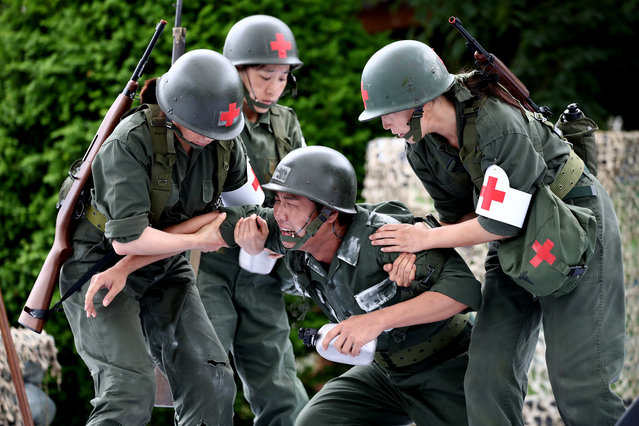
South Korean performers participate in a re-enactment of the battle of the Korean war during the ceremony to mark the 70th anniversary of the Korean War in Cheorwon, near the border with North Korea on June 25, 2020 in Cheorwon, South Korea. Over 66,000 South Koreans have been separated from their families during the Korean War which started on June 25, 1950, and effectively split the Korean Peninsula into two over the 3-year conflict. The fighting between North and South Korea ended on July 27, 1953, with the signing of the Korean Armistice Agreement and the heavily guarded Demilitarized Zone was created, however, both countries remain technically still at war since no peace agreement was signed and many Koreans died before they could reunite with their loved ones. (Photo by Chung Sung-Jun/Getty Images)

South Korean performers participate in a re-enactment of the battle of the Korean war during the ceremony to mark the 70th anniversary of the Korean War in Cheorwon, near the border with North Korea on June 25, 2020 in Cheorwon, South Korea. Over 66,000 South Koreans have been separated from their families during the Korean War which started on June 25, 1950, and effectively split the Korean Peninsula into two over the 3-year conflict. (Photo by Chung Sung-Jun/Getty Images)
Details
27 Jun 2020 00:03:00
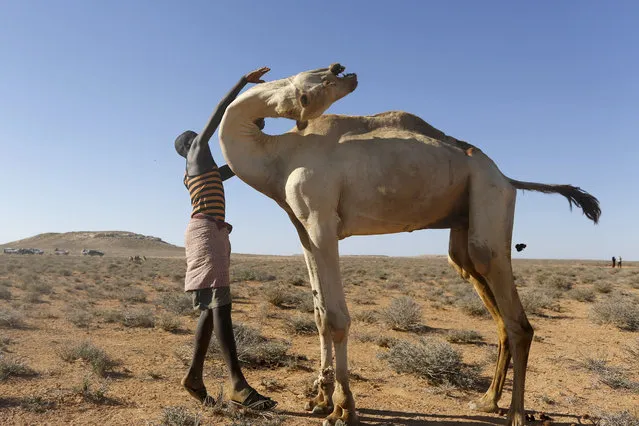
Ali Asair, who has left his family behind and traveled hundreds of kilometers in search for a pasture for his animals, attends to his camel in a pastoralists' settlement in the Bandarbeyla district in Somalia's semi-autonomous region of Puntland, Somalia, 24 March 2017. According to media reports, the United Nations says only 31 percent of 864 million US dollars appeal for a drought-hit Somalia is funded. The UN said the world is facing the largest humanitarian crisis since 1945, adding that more than 20 million people are facing the threat of famine in Somalia, Yemen, South Sudan and Nigeria and 1.4 million children could die from starvation this year. (Photo by Dai Kurokawa/EPA)

Ali Asair, who has left his family behind and traveled hundreds of kilometers in search for a pasture for his animals, attends to his camel in a pastoralists' settlement in the Bandarbeyla district in Somalia's semi-autonomous region of Puntland, Somalia, 24 March 2017. According to media reports, the United Nations says only 31 percent of 864 million US dollars appeal for a drought-hit Somalia is funded. The UN said the world is facing the largest humanitarian crisis since 1945, adding that more than 20 million people are facing the threat of famine in Somalia, Yemen, South Sudan and Nigeria and 1.4 million children could die from starvation this year. (Photo by Dai Kurokawa/EPA)
Details
28 Mar 2017 09:01:00
Artists perform during a “Yandu Story” Show performance, in Yancheng, Jiangsu province, China, 20 September 2022. The story dates back to some 100 years when – according to the organizers – two prominent local families, Gu and Ling, were committed to get out of a predicament, but parted due to different development concepts and ended in a turmoil. The large-scale immersive series of performances took more than a year of careful planning and consists of two parts: a daytime performance and a 90-minute night performance, they added. (Photo by Alex Plavevski/EPA/EFE/Rex Features/Shutterstock)

Artists perform during a “Yandu Story” Show performance, in Yancheng, Jiangsu province, China, 20 September 2022. The story dates back to some 100 years when – according to the organizers – two prominent local families, Gu and Ling, were committed to get out of a predicament, but parted due to different development concepts and ended in a turmoil. The large-scale immersive series of performances took more than a year of careful planning and consists of two parts: a daytime performance and a 90-minute night performance, they added. (Photo by Alex Plavevski/EPA/EFE/Rex Features/Shutterstock)
Details
29 Sep 2022 03:41:00
Kha Tu Ngoc rests in her two- square- meter house in Ho Chi Minh City on May 2, 2018. (Photo by Thanh Nguyen/AFP Photo)

Kha Tu Ngoc rests in her two- square- meter house in Ho Chi Minh City on May 2, 2018. The “micro- house” dwellings are dotted throughout Vietnam' s bustling southern hub, occupied by families clinging to postage stamp- sized plots a city developing at breakneck pace. Tucked away in winding alleys, nestled under new condo developments or sandwiched between street food stalls and shops, the tiny houses are easily missed by the unattentive passerby. (Photo by Thanh Nguyen/AFP Photo)
Details
04 Jun 2018 00:01:00
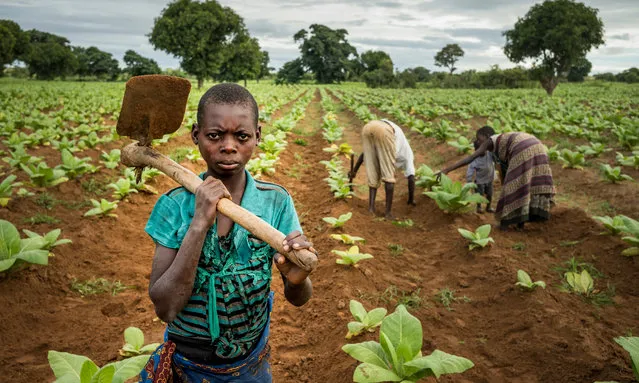
Tiyamike Phiri hopes to become a nurse because she wants to travel the country and help others. (Photo by David Levene/The Guardian)

Life as tenant farmers in Kasungu, northern Malawi, can be a struggle for families trapped in poverty, who feel forced to rely on their children’s help, impacting schooling. Here: A tobacco field at a farm in Kasungu region, Malawi. Tobacco is the country’s most important export crop, with tobacco leaf from Malawi filling cigarettes found all over the world. Here: Tiyamike Phiri hopes to become a nurse because she wants to travel the country and help others. (Photo by David Levene/The Guardian)
Details
27 Jun 2018 00:05:00
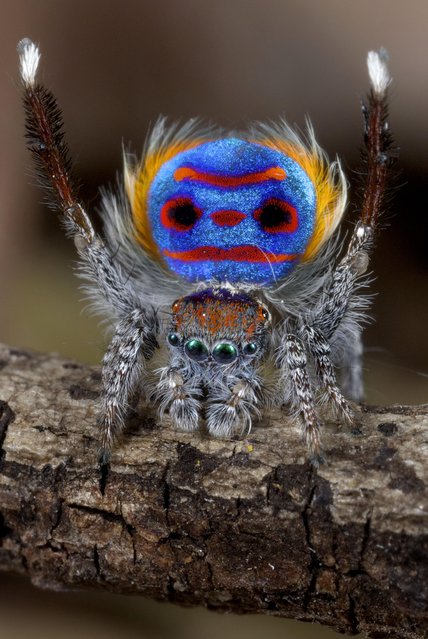
Peacock Spider Maratus Speciosus by Jurgen Otto

Maratus is a spider genus of the Salticidae family (jumping spiders). These spiders are commonly referred to as peacock spiders due to their colorful abdominal flaps that they display during courtship. In at least one species, Maratus vespertilio, the expansion of the flaps also occurs during ritualised contests between males. All described species, except M. furvus, are endemic to Australia. (Photo by Jurgen Otto)
Details
27 Feb 2014 12:20:00
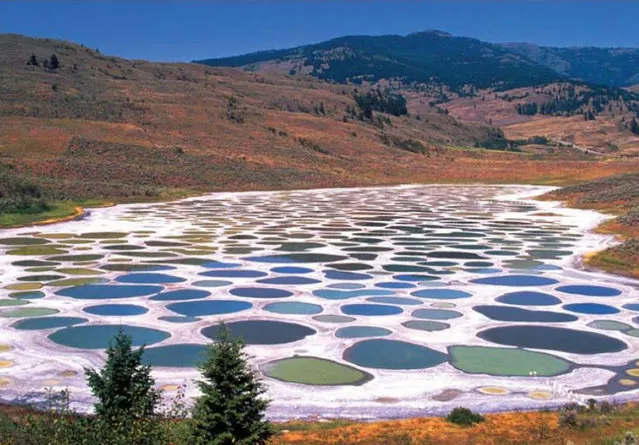
Kliluk, the Spotted Lake, Canada

Originally known to the First Nations of the Okanagan Valley as Khiluk, which was- and remains today revered as a sacred site producing therapeutic waters. During World War I the minerals of Spotted Lake were used in manufacturing ammunition. Later the area came under the control of the Ernest Smith Family, for a term of about 40 years. In 1979 Smith attempted to create interest in a spa at the lake. The First Nations responded with an effort to buy the lake; in October 2001 they finally struck a deal. First Nations arranged the purchase of 22 hectares of land for a total of $720,000, and contributed about 20% of the cost. The Indian Affairs Department paid the remainder.
Details
06 Mar 2015 12:59:00
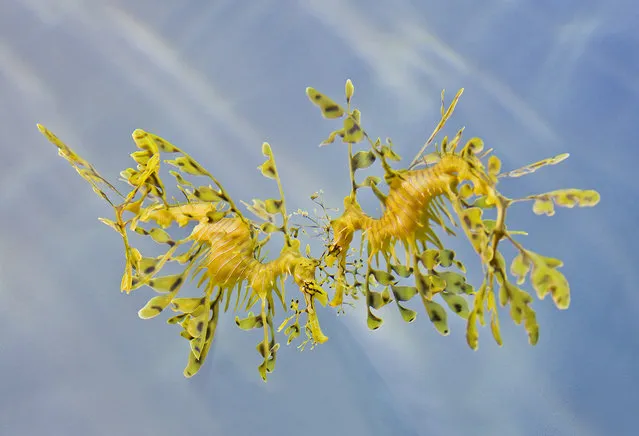
Leafy sea dragon

The leafy seadragon or Glauert's seadragon, Phycodurus eques, is a marine fish in the family Syngnathidae, which also includes the seahorses. It is the only member of the genus Phycodurus. It is found along the southern and western coasts of Australia. The name is derived from the appearance, with long leaf-like protrusions coming from all over the body. These protrusions are not used for propulsion; they serve only as camouflage. The leafy seadragon propels itself by means of a pectoral fin on the ridge of its neck and a dorsal fin on its back closer to the tail end. These small fins are almost completely transparent and difficult to see as they undulate minutely to move the creature sedately through the water, completing the illusion of floating seaweed.
Details
05 Sep 2012 08:51:00