Loading...
Done
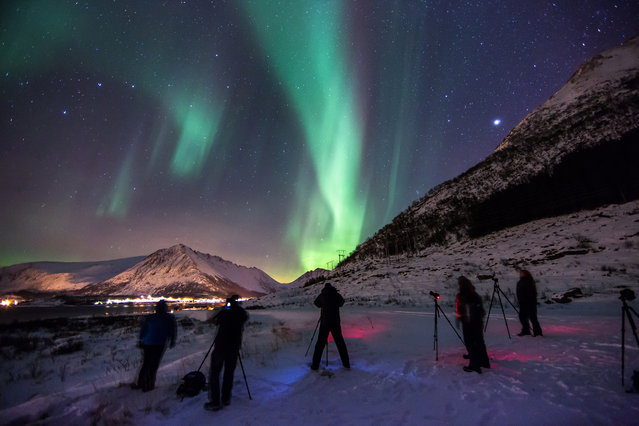
“Aurora Hunters”. Photographers taking part in a photography tour on the Lofoten Islands in Norway, pull over on the side of the road to take a photo of their first ever Aurora Borealis after spotting it from their tour bus. Photo location: Rystad, Lofoten Islands, Norway. (Photo and caption by Mark Gee/National Geographic Photo Contest)

“Aurora Hunters”. Photographers taking part in a photography tour on the Lofoten Islands in Norway, pull over on the side of the road to take a photo of their first ever Aurora Borealis after spotting it from their tour bus. Photo location: Rystad, Lofoten Islands, Norway. (Photo and caption by Mark Gee/National Geographic Photo Contest)
Details
17 Jun 2014 10:08:00
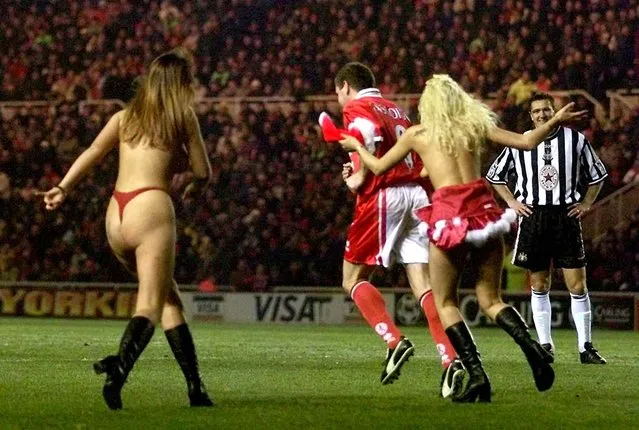
Middlesbrough star Paul Gasgoigne is confronted by streakers at The Riverside on December 6, 1998 during their match against Newcastle. (Photo by Owen Humphreys – PA Images/PA Images via Getty Images)

Middlesbrough star Paul Gasgoigne is confronted by streakers at The Riverside on December 6, 1998 during their match against Newcastle. (Photo by Owen Humphreys – PA Images/PA Images via Getty Images)
Details
22 May 2022 04:33:00
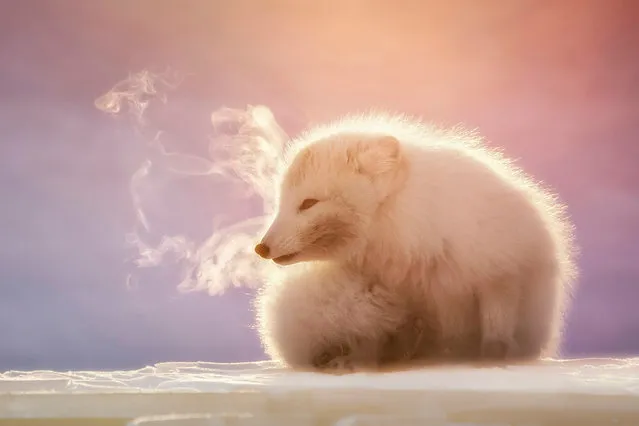
Breath of an Arctic fox by Marco Gaiotti, Italy. Marco was watching this little Arctic fox as it incessantly called another nearby. Gradually he noticed the fox’s wet breath was quickly freezing in the air after each call. It was late winter in Spitsbergen, Svalbard, and the air was -35C (-31F). Photographing Arctic foxes is often frustrating, as they are normally running around fast in search of food, but this one was very relaxed and let Marco get close enough to focus on it, with the light glowing perfectly in the background. (Photo by Marco Gaiotti/Wildlife Photographer of the Year 2021)

Breath of an Arctic fox by Marco Gaiotti, Italy. Marco was watching this little Arctic fox as it incessantly called another nearby. Gradually he noticed the fox’s wet breath was quickly freezing in the air after each call. It was late winter in Spitsbergen, Svalbard, and the air was -35C (-31F). Photographing Arctic foxes is often frustrating, as they are normally running around fast in search of food, but this one was very relaxed and let Marco get close enough to focus on it, with the light glowing perfectly in the background. (Photo by Marco Gaiotti/Wildlife Photographer of the Year 2021)
Details
05 Dec 2021 06:36:00
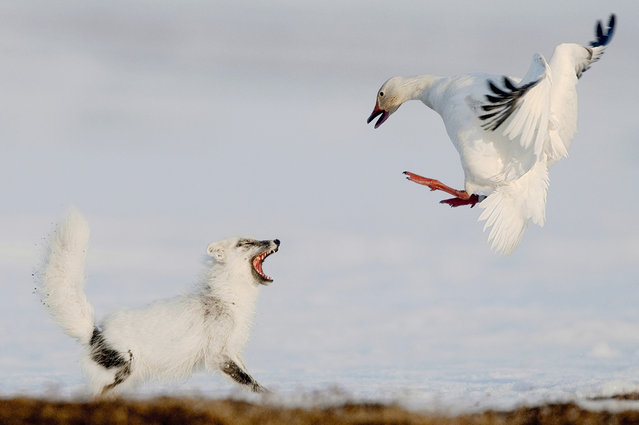
Commended. In late May, about a quarter of a million snow geese arrive from North America to nest on Wrangel Island, in northeastern Russia. They form the world's largest breeding colony of snow geese. Photographer Sergey Gorshkov spent two months on the remote island photographing the unfolding dramas. (Photo by Sergey Gorshkov/Veolia Environnement Wildlife Photographer)

Commended. In late May, about a quarter of a million snow geese arrive from North America to nest on Wrangel Island, in northeastern Russia. They form the world's largest breeding colony of snow geese. Photographer Sergey Gorshkov spent two months on the remote island photographing the unfolding dramas. Arctic foxes take advantage of the abundance of eggs, caching surplus eggs for leaner times. But a goose (here the gander) is easily a match for a fox, which must rely on speed and guile to steal eggs. “The battles were fairly equal”, notes Sergey, “and I only saw a fox succeed in grabbing an egg on a couple of occasions, despite many attempts”. Surprisingly, “the geese lacked any sense of community spirit”, he adds, “and never reacted when a fox harassed a neighboring pair nesting close by”. (Photo by Sergey Gorshkov/Veolia Environnement Wildlife Photographer)

Details
16 Jun 2015 12:30:00
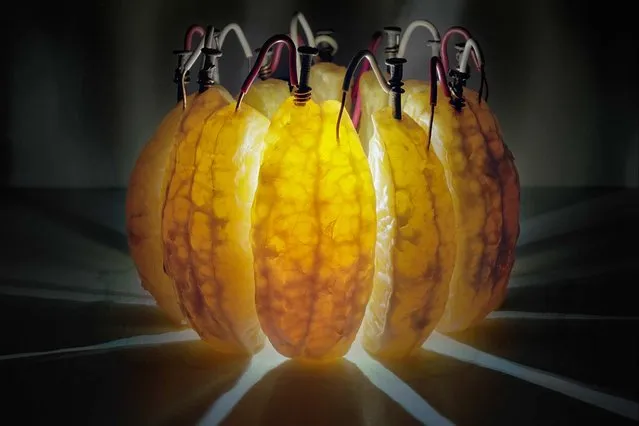
Wedges of an orange generate enough current and electrical juice – 3.5 volts – to power an LED. The fruit’s citric acid helps electrons flow from galvanized nails to copper wire in this 14-hour exposure. This image was published in September’s Visions of Earth, a trio of photos that appear in each issue of National Geographic. (Photo by Caleb Charland/National Geographic)

Wedges of an orange generate enough current and electrical juice – 3.5 volts – to power an LED. The fruit’s citric acid helps electrons flow from galvanized nails to copper wire in this 14-hour exposure. This image was published in September’s Visions of Earth, a trio of photos that appear in each issue of National Geographic. (Photo by Caleb Charland/National Geographic)
Details
06 Jan 2014 12:09:00
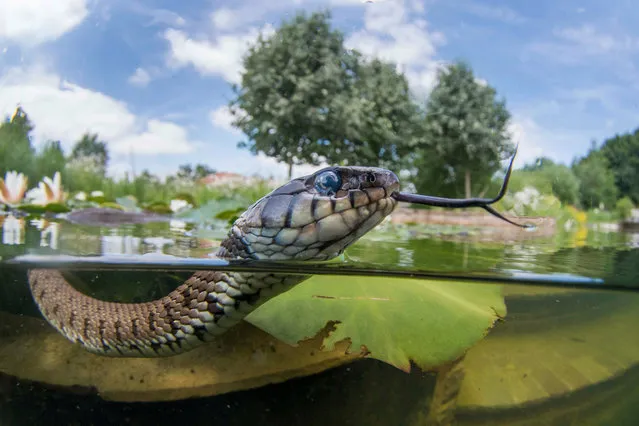
British Waters Wide Angle category runner-up. Grass snake swimming along a garden pond by Jack Perks (UK)in Nottinghamshire, UK. “I’m always on the lookout for unusual freshwater subjects and grass snakes are a species I’ve been after for years. I was told about a pond where the odd grass snake hangs around the lilly pads for frogs. I put my drysuit on and got into the water and could see one slithering along the surface. Slowly making my way towards it with my head only just poking above I got the spilt shot”. (Photo by Jack Perks/Underwater Photographer of the Year 2019)

British Waters Wide Angle category runner-up. Grass snake swimming along a garden pond by Jack Perks (UK)in Nottinghamshire, UK. “I’m always on the lookout for unusual freshwater subjects and grass snakes are a species I’ve been after for years. I was told about a pond where the odd grass snake hangs around the lilly pads for frogs. I put my drysuit on and got into the water and could see one slithering along the surface. Slowly making my way towards it with my head only just poking above I got the spilt shot”. (Photo by Jack Perks/Underwater Photographer of the Year 2019)
Details
28 Feb 2019 00:03:00
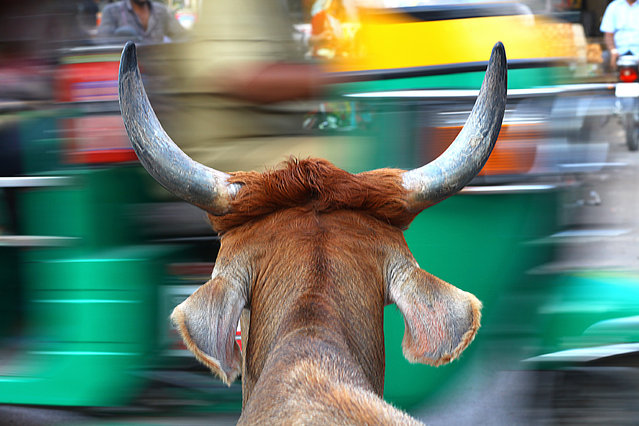
“Slow”. A calm cow in the messy streets of Jodhpur. Photo location: India. (Photo and caption by Matthias Troeger/National Geographic Photo Contest)

“Slow”. A calm cow in the messy streets of Jodhpur. Photo location: India. (Photo and caption by Matthias Troeger/National Geographic Photo Contest)
Details
20 May 2014 12:18:00
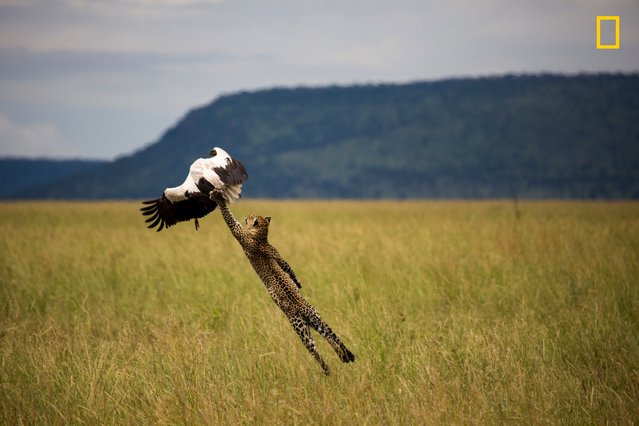
“Leopard Hunting a Stork”. “One-shot capture. I watched the leopard stalking the stork, I only had time to focus at 400mm, no time to change to high speed, I watched the stork, and as soon as it flapped its wings, I shot one shot”. (Photo by Paul Rifkin/National Geographic Travel Photographer of the Year Contest)

“Leopard Hunting a Stork”. “One-shot capture. I watched the leopard stalking the stork, I only had time to focus at 400mm, no time to change to high speed, I watched the stork, and as soon as it flapped its wings, I shot one shot”. (Photo by Paul Rifkin/National Geographic Travel Photographer of the Year Contest)
Details
04 Jun 2018 00:03:00