Loading...
Done
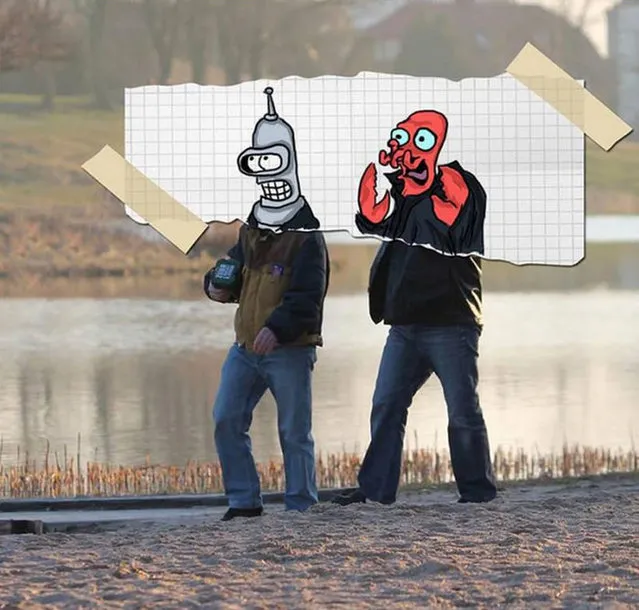
Funny Drawings By Aleks Nocny

How to make the world a brighter using pen? You just have to complement conventional photographs persons toon, and immediately transformed the world. Aleks Nocny uses simple tools: pens, scraps of paper and your imagination. And the most simple pictures of people on the streets are transformed into a work of art.
Details
10 Oct 2014 10:56:00
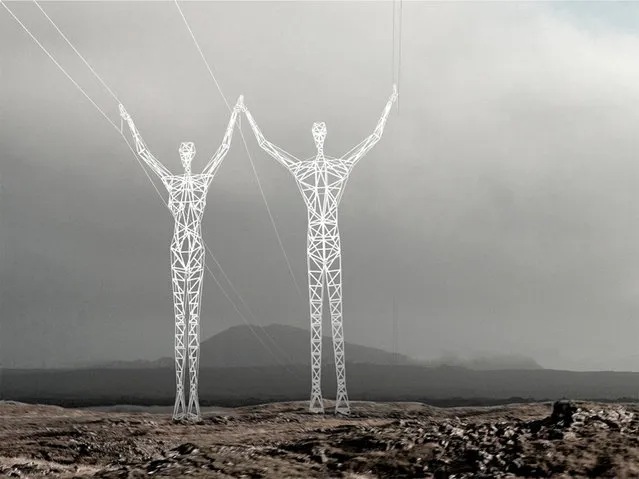
The Land Of Giants By Choi + Shine Architects

Power to the people! Giant transmission tower people that is… We can all agree that transmission towers (that’s an electricity pylon or ironman for you European and Aussie folk) are very necessary yet completely unsightly. These suspension towers dot our landscapes, typically soaring 15-55 meters (49 – 180 ft) high.
Details
07 Jun 2015 09:27:00
Mandalay, Burma. (Photo by Steve McCurry)

“If a man insisted always on being serious, and never allowed himself a bit of fun and relaxation, he would go mad or become unstable without knowing it”. – Herodotus. “You can discover more about a person in an hour of play than in a year of conversation”. – Plato. Photo: Mandalay, Burma. (Photo by Steve McCurry)
Details
25 Apr 2014 08:51:00
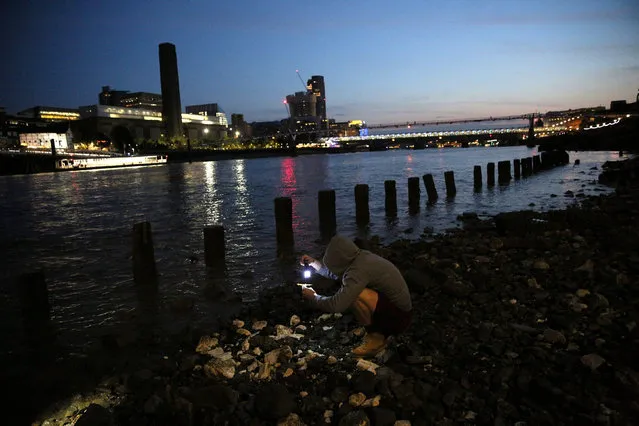
A mudlark uses a torch to look for items on the bank of the River Thames in London, Britain June 06, 2016. Mudlarking is believed to trace its origins to the 18th and 19th century, when scavengers searched the Thames' shores for items to sell. These days, history and archaeology fans are the ones hoping to find old relics such as coins, ceramics, artifacts or everyday items from across centuries. They wait for the low tide and then scour specific areas of exposed shores. "If you're in a field you could be out all day long, with the river you're restricted to about two or three hours," mudlark Nick Stevens said. While many just use the naked eye for their searches, others rely on metal detectors for which a permit from the Port of London Authority is needed. Digging also requires consent. (Photo by Neil Hall/Reuters)

A mudlark uses a torch to look for items on the bank of the River Thames in London, Britain June 06, 2016. Mudlarking is believed to trace its origins to the 18th and 19th century, when scavengers searched the Thames' shores for items to sell. These days, history and archaeology fans are the ones hoping to find old relics such as coins, ceramics, artifacts or everyday items from across centuries. their finds with the Portable Antiquities Scheme. Any item over 300 years old must be recorded. (Photo by Neil Hall/Reuters)
Details
27 Aug 2016 10:43:00
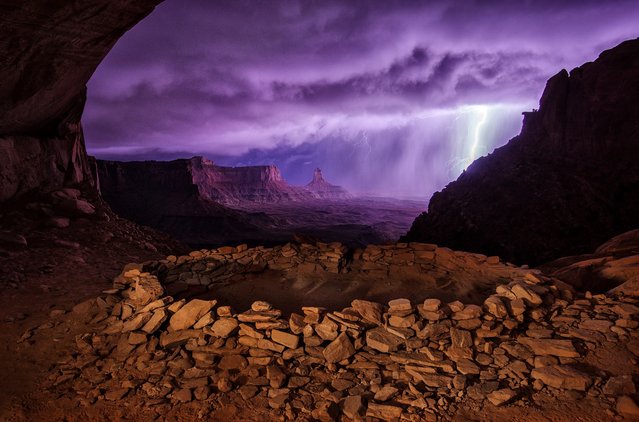
Second Place Winner: “Thunderstorm at False Kiva”. I hiked out to these ruins at night hoping to photograph them with the Milky Way, but instead a thunderstorm rolled through, creating this dramatic image. – Max Seigal. (Photo and caption by Max Seigal/National Geographic Traveler Photo Contest)

Second Place Winner: “Thunderstorm at False Kiva”. I hiked out to these ruins at night hoping to photograph them with the Milky Way, but instead a thunderstorm rolled through, creating this dramatic image. – Max Seigal. National Geographic Traveler Director of Photography Dan Westergren, one of this year's judges, shares his thoughts on the second place winner: “This photo combines two different scenes into one: the small kiva in a cliff dwelling and the grand vista of Canyonlands National Park across the valley. I really like the two different color palettes – warm inside and purple outside. This two-for-one scene was caused by the lightning storm outside the dwelling, which lit up the landscape like it was a huge electronic flash. Looking at this picture I can imagine what a wonderful sight it must have been for the ancient people who lived here. It doesn't seem too amazing now in our modern world, but might have been mind-blowing for the prehistoric residents”. Location: Utah. (Photo and caption by Max Seigal/National Geographic Traveler Photo Contest)
Details
02 Aug 2013 06:16:00
Realistic Hair Art By Roberto Perez Part 1

When Roberto Perez (also known as Rob The Original) gives you a haircut, it’s probably not going to be just a haircut. This San-Antonio-based artist and hair stylist creates amazing works of art using nothing but his clients’ scalp and hair as his canvas. Perez can create just about anything he or his clients can think of – from a photo-realistic portrait or illustration to full-head paintings or graphic designs.


See Also: Part 2
Details
24 Sep 2014 10:04:00
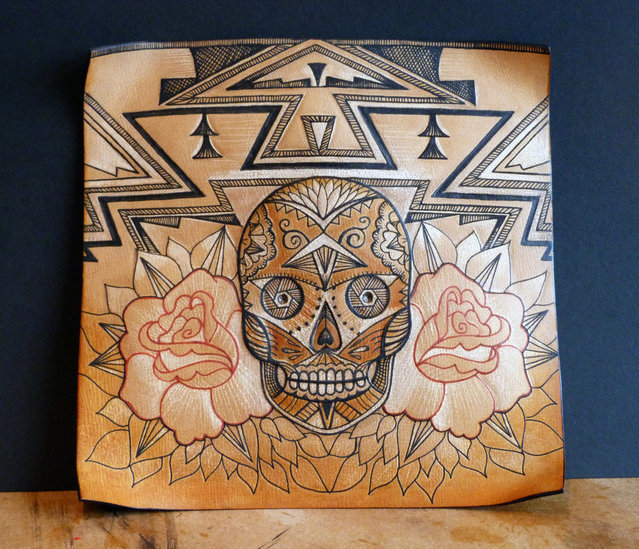
Tattooed Leather Art By Punctured Artefact

Tattoos always seem to fascinate us, which is probably one of the reasons why Dionne Marshall has turned to tattooing patterns onto leather. The designs she creates are reminiscent of tattoos favored by people in Central America. Working with leather is a lot harder than working with paints or pencils. Unlike the latter, there is no room for mistakes when you make a tattoo. This is the reason why there are so few artists that specialize in creating art by tattooing leather. However, the results are definitely worth it, as this is a truly unique form of art with a primal feeling to it. (Photo by Dionne Marshall)
Details
18 Oct 2014 06:01:00
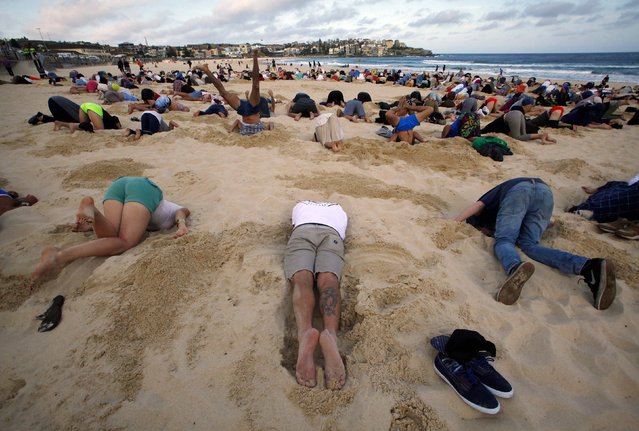
A group of around 400 demonstrators participate in a protest by burying their heads in the sand at Sydney's Bondi Beach November 13, 2014. (Photo by David Gray/Reuters)

A group of around 400 demonstrators participate in a protest by burying their heads in the sand at Sydney's Bondi Beach November 13, 2014. Hundreds of protesters participated in the event, held ahead of Saturday's G20 summit in Brisbane, which was being promoted as a message to Australian Prime Minister Tony Abbott's government that, “You have your head in the sand on climate change”. (Photo by David Gray/Reuters)
Details
14 Nov 2014 13:47:00