Loading...
Done
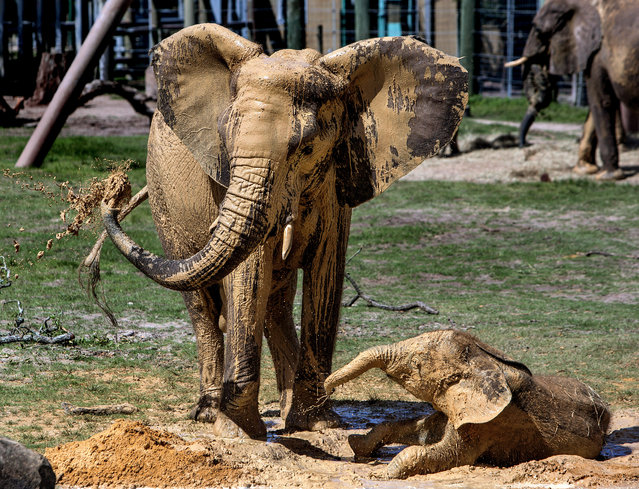
Lowry Park Zoo elephants Matjeka, 23, and her 1-year-old daughter, Mavi, apply a liberal coating of “sunscreen”  to themselves in a clay mud wallow at the park Tuesday, August 12, 2014, in Tampa, Fla., on the park's first observation of World Elephant Day to raise awareness of the wild African elephant crisis. (Photo by Cherie Diez/AP Photo/The Tampa Bay Times)

Lowry Park Zoo elephants Matjeka, 23, and her 1-year-old daughter, Mavi, apply a liberal coating of “sunscreen” to themselves in a clay mud wallow at the park Tuesday, August 12, 2014, in Tampa, Fla., on the park's first observation of World Elephant Day to raise awareness of the wild African elephant crisis. “Elephants are prone to being sunburned”, said associate curator Chris Massaro. “What they need is lot of mud or clay to roll around in and cover up their skin so it will protect it from the sun”. (Photo by Cherie Diez/AP Photo/The Tampa Bay Times)
Details
16 Aug 2014 11:38:00
Visitors watch as members of a local winter swimmers club pour buckets of cold water over their daughters, 7-year-old Liza Broverman and 2-year-old Alisa Smagina during a celebration of Polar Bear Day at the Royev Ruchey zoo, with the air temperature at about minus 5 degrees Celsius (23 degrees Fahrenheit), in Krasnoyarsk, Russia, November 27, 2016. (Photo by Ilya Naymushin/Reuters)

Visitors watch as members of a local winter swimmers club pour buckets of cold water over their daughters, 7-year-old Liza Broverman and 2-year-old Alisa Smagina during a celebration of Polar Bear Day at the Royev Ruchey zoo, with the air temperature at about minus 5 degrees Celsius (23 degrees Fahrenheit), in Krasnoyarsk, Russia, November 27, 2016. (Photo by Ilya Naymushin/Reuters)
Details
28 Nov 2016 12:20:00
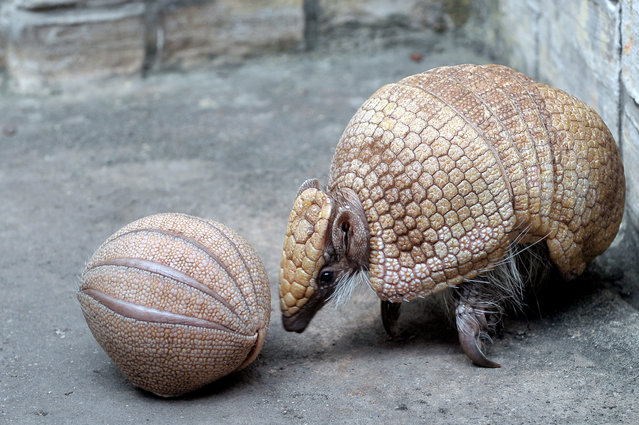
A four-week old southern three-banded armadillo (Tolypeutes matacus) is rolled up into a ball next to its mother in the tropical house of Budapest Zoo in Budapest, Hungary on May 3, 2019. The South American insect-eating mammal and its close relative, the Brasilian three-banded armadillo (Tolypeutes tricinctus) are the only two species of armadillos capable of rolling into a complete ball to defend themselves when feeling threatened. (Photo by Attila Kovács/EPA/EFE)

A four-week old southern three-banded armadillo (Tolypeutes matacus) is rolled up into a ball next to its mother in the tropical house of Budapest Zoo in Budapest, Hungary on May 3, 2019. The South American insect-eating mammal and its close relative, the Brasilian three-banded armadillo (Tolypeutes tricinctus) are the only two species of armadillos capable of rolling into a complete ball to defend themselves when feeling threatened. (Photo by Attila Kovács/EPA/EFE)
Details
05 May 2019 00:03:00
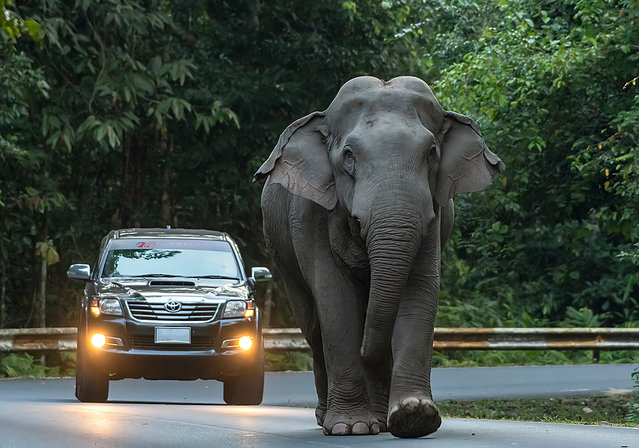
An Asian elephant called “Plai Deaw” goes for a walk on a mountain road in Nakhon Nayok, Thailand on July 11, 2022. The bull has become well known in the area for his taste for venturing out from the deep forest and emerging among cars and village homes. Thailand has an estimated 2,000 Asian elephants living in the wild but there is often conflict when they come into contact with humans on roads and in villages. A similar number of elephants are kept captive where they work in zoos and are hired out for religious festivals and weddings. (Photo by Mongkol Pitakmoo/ViralPress)

An Asian elephant called “Plai Deaw” goes for a walk on a mountain road in Nakhon Nayok, Thailand on July 11, 2022. The bull has become well known in the area for his taste for venturing out from the deep forest and emerging among cars and village homes. Thailand has an estimated 2,000 Asian elephants living in the wild but there is often conflict when they come into contact with humans on roads and in villages. A similar number of elephants are kept captive where they work in zoos and are hired out for religious festivals and weddings. (Photo by Mongkol Pitakmoo/ViralPress)
Details
04 Aug 2022 04:55:00
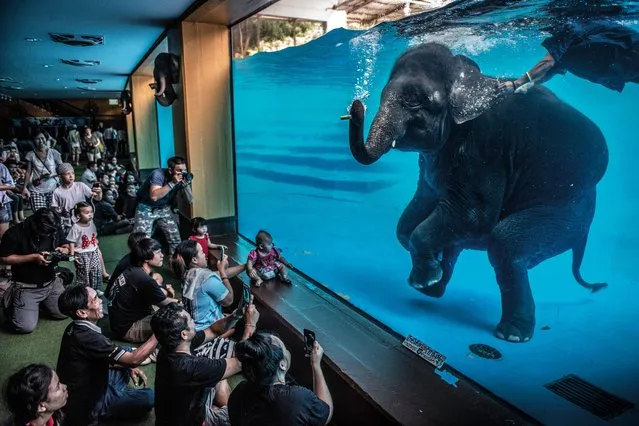
Winner, photojournalism. Elephant in the room, by Adam Oswell, Australia Zoo. Visitors watch a young elephant performing underwater. Oswell was disturbed by this scene, and organisations concerned with the welfare of captive elephants say performances like this encourage unnatural behaviour. In Thailand, there are now more elephants in captivity than in the wild. With the Covid pandemic causing tourism to collapse, elephant sanctuaries are becoming overwhelmed with animals that can no longer be looked after by their owners. (Photo by Adam Oswell/Wildlife Photographer of the Year 2021)

Winner, photojournalism. Elephant in the room, by Adam Oswell, Australia Zoo. Visitors watch a young elephant performing underwater. Oswell was disturbed by this scene, and organisations concerned with the welfare of captive elephants say performances like this encourage unnatural behaviour. In Thailand, there are now more elephants in captivity than in the wild. With the Covid pandemic causing tourism to collapse, elephant sanctuaries are becoming overwhelmed with animals that can no longer be looked after by their owners. (Photo by Adam Oswell/Wildlife Photographer of the Year 2021)
Details
30 Oct 2021 08:40:00
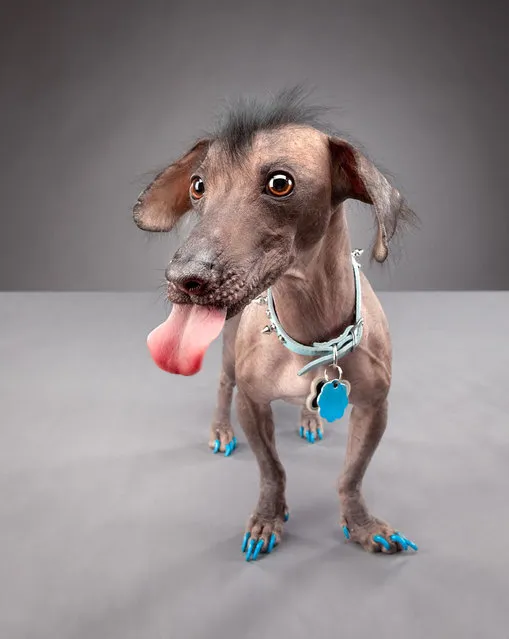
Dogs and Cats by Pet Photographer Carli Davidson

“Carli Davidson is both an internationally recognized award winning photographer and an experienced animal trainer and caretaker. She is able to capture the innate personalities of her subjects using her professional understanding of animal behavior. She is a freelance photographer for the Oregon Zoo, and works regularly with domestic animals both commercially and personally for her fine art projects”. (Photo by Carli Davidson)
Details
30 Sep 2012 11:22:00


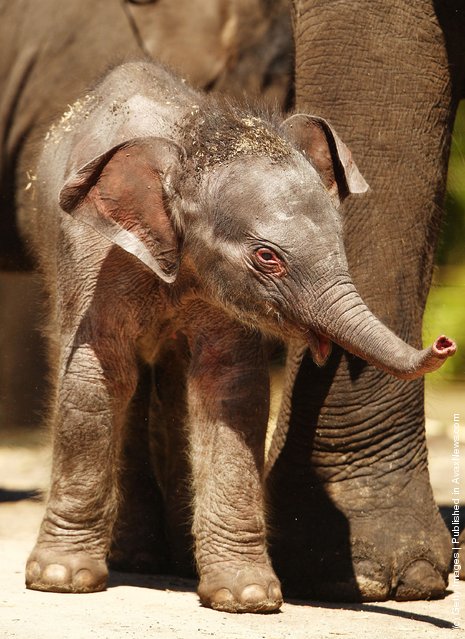
Taronga's first female elephant calf explores the paddock with her mother Pak Boon at Taronga Zoo on November 3, 2010 in Sydney, Australia. The 120kg elephant was born at 1:12am and is Taronga's first female calf and fifth born to The Australian Conservation Management Plan for endangered elephants. The calf will be given a Thai name to reflect the herds' cultural origin. (Photo by Brendon Thorne/Getty Images)
Details
16 Apr 2011 11:01:00
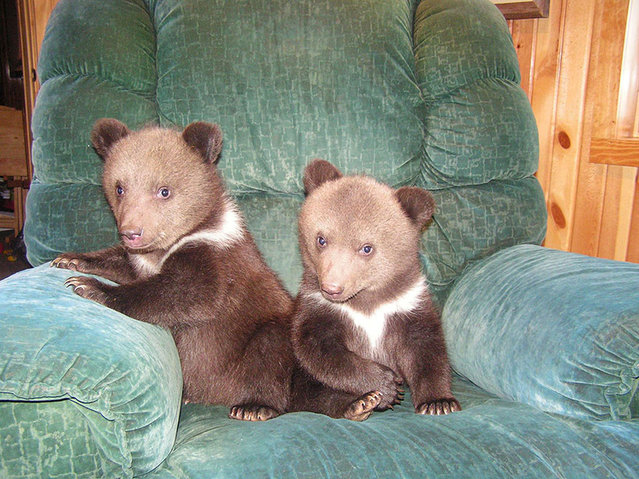
Couple Adopts Twin Bear Cubs Rejected By Their Mother

David and Lana Fechter have recently adopted two adorable Siberian bear cubs that were rejected by their mother at a Chicago zoo. The two nine-week-old male cubs, Lewis and Clark, are being kept in an inside closure and are being bottle fed. When the twins get bigger and more independent, they’ll be be given a large natural enclosure with ponds and ridges to live in at Shalom Wildlife Sanctuary.
Details
13 Apr 2014 07:25:00