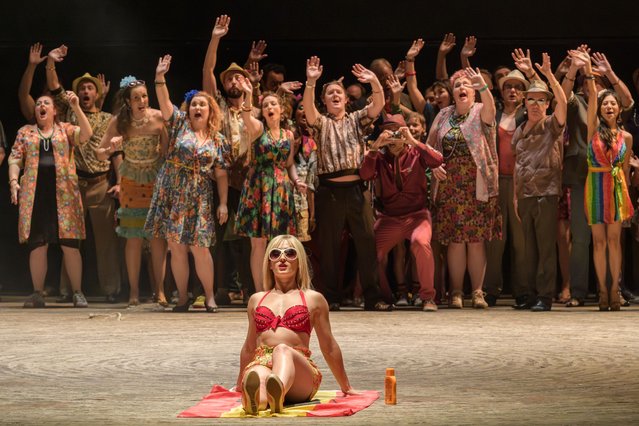
English National Opera presents Georges Bizet's “Carmen” at the London Coliseum in London on October 6, 2025. (Photo by Jane Hobson/Rex Features/Shutterstock)
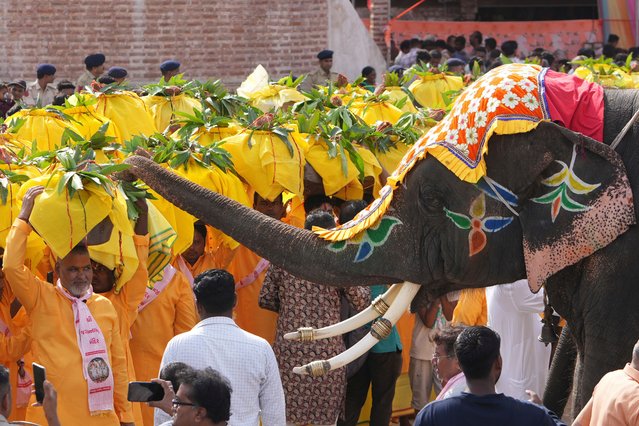
An elephant tries to eat leaves during a religious procession called Jal Yatra, ahead of the annual Rath Yatra, or chariot procession of Hindu god Lord Jagannath, in Ahmedabad, India, Wednesday, June 11, 2025. (Photo by Ajit Solanki/AP Photo)
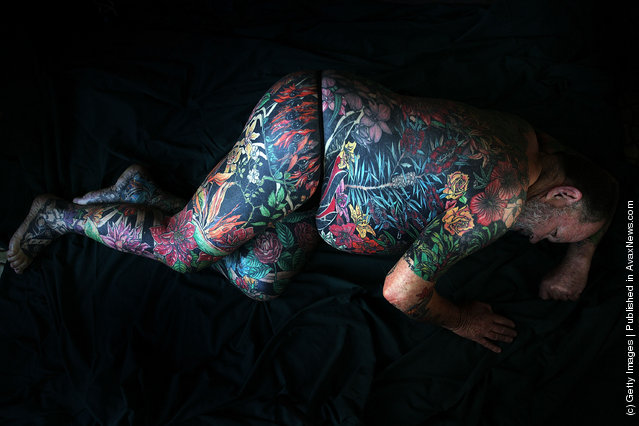
Retired teacher Geoff Ostling displays his tattooed skin at a portrait session at his home in Petersham on May 11, 2009 in Sydney, Australia. The 62-year old has pledged to donate his skin to the National Gallery in Canberra after his death. Ostling, who did not get his first tattoo until he was in his forties, is now covered in the artwork by artist eX de Merci from neck to ankle with the theme 'all the flowers of a Sydney garden'. (Photo by Lisa Maree Williams/Getty Images)
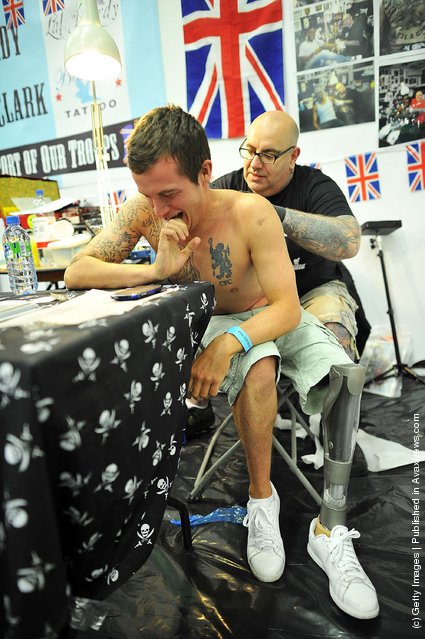
Shephen Shine, 27, who lost a leg when serving in Iraq in 2007, is tattood with a regimental tattoo reading “Their Sacrifice – Our Freedom” during the Ink For Heroes event on June 18, 2011 in Catterick, England. Ink For Heroes is a charity event to raise money and awareness of the soldiers that get injured during service, with all proceeds going to both “Help The Heroes” and “The British Legion”. Injured soldiers can also get tattooed for free during the event. (Photo by Bethany Clarke/Getty Images)
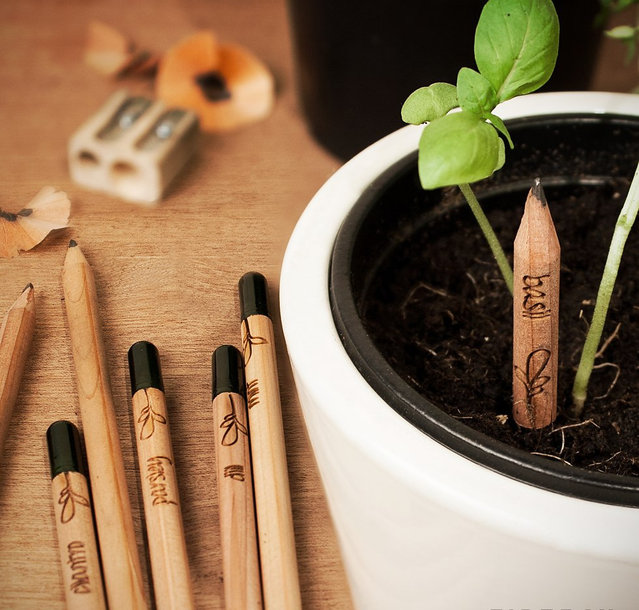
Sprout A Pencil That Grows is a very simple but excellent concept. We all know that as soon as a pencil gets down to the point where there’s only an inch or so left it’s pretty much useless. The Sprout lets you put that little stub to get use. The end of the Sprout has a seed capsule that is water activated, after you plant your pencil and water it a few times the capsule dissolves and the seed’s start germinating. The plants usually take about a week to sprout. The Sprout pencils come in a number of varieties including vegetables, herbs and flowers like rosemary, tomato, marigold, and many more.
“Sony Bravia has been a bench mark in quality advertising for years now and I’m very happy to have been chosen by McCann Worldwide to shoot this campaign for them.
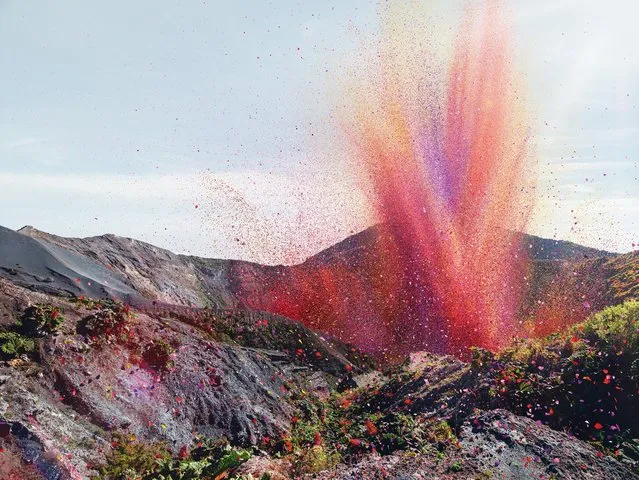
We flew to a volcano in Costa Rica where it took the inhabitants of an entire village a full week to pluck all the flower petals…. enough to fill two huge lorries!
With the help of a special effects team, the petals were blown and exploded through our landscapes creating hugely detailed vista which echoes the extreme detail of Sony’s new 4k tv.”
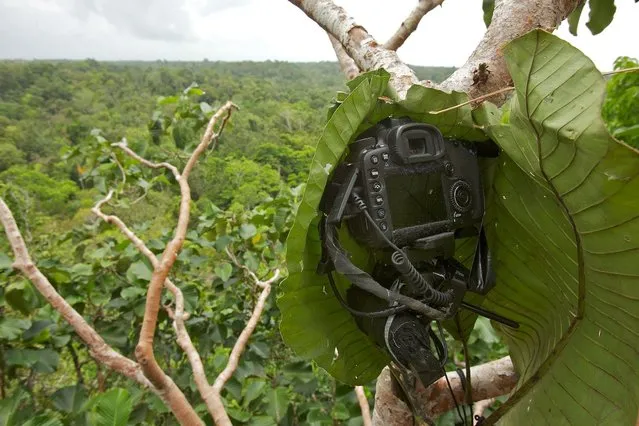
Tim Laman is a field biologist and wildlife photojournalist. His pioneering research in the rain forest canopy in Borneo led to a PhD from Harvard and his first National Geographic article in 1997. Since then, he has pursued his passion for exploring wild places and documenting little-known and endangered wildlife by becoming a regular contributor to National Geographic. He has eighteen articles to his credit to date, all of which have had a conservation message. Some have focused on endangered species such as Orangutans or Hornbills, while others, such as a series of articles on Conservation International’s Biodiversity Hotspots, have highlighted regions under intense pressure.
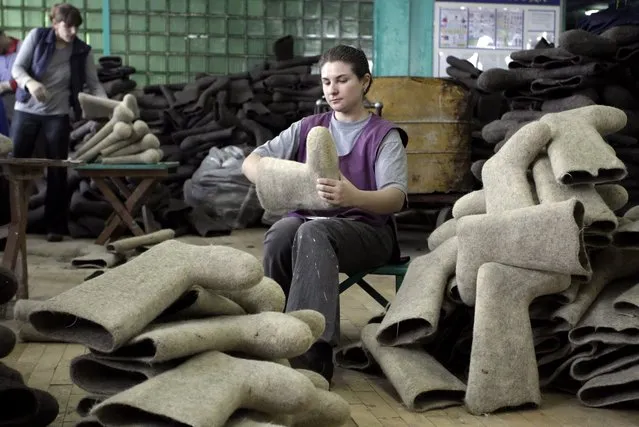
The Smilovichi Felting Factory in Belarus was founded in 1928, when Smilovichi was a small Jewish settlement of craftsmen. Five of those craftsmen organized a small artel (a cooperative association of craftsmen who all live and work together), which produced warm boots called “valenki” for cold weather. Photo: Belarusian workers works at a felt boot factory in Smilovichi, some 35km from Minsk, Belarus, 16 January 2012. (Photo by Tatyana Zenkovich/EPA)