Loading...
Done
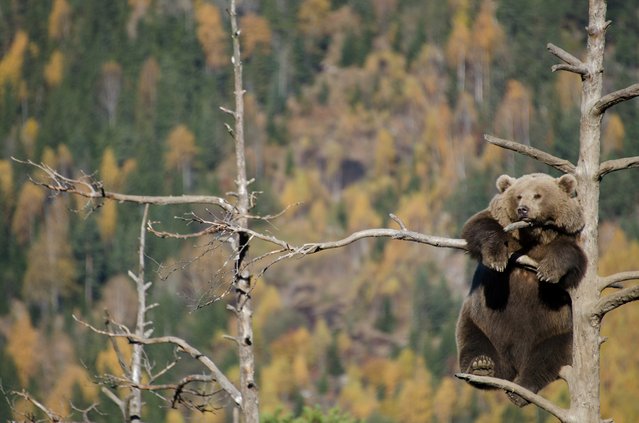
“Just hanging out”. As full autumn hits the valley of Hallingdal in Norway, this bear chills out in a tree which seems to barely cover its weight. Photo location: Flå, Hallingdal, Norway. (Photo and caption by Jorgen Tharaldsen/National Geographic Photo Contest)

“Just hanging out”. As full autumn hits the valley of Hallingdal in Norway, this bear chills out in a tree which seems to barely cover its weight. Photo location: Flå, Hallingdal, Norway. (Photo and caption by Jorgen Tharaldsen/National Geographic Photo Contest)
Details
30 Apr 2014 07:35:00
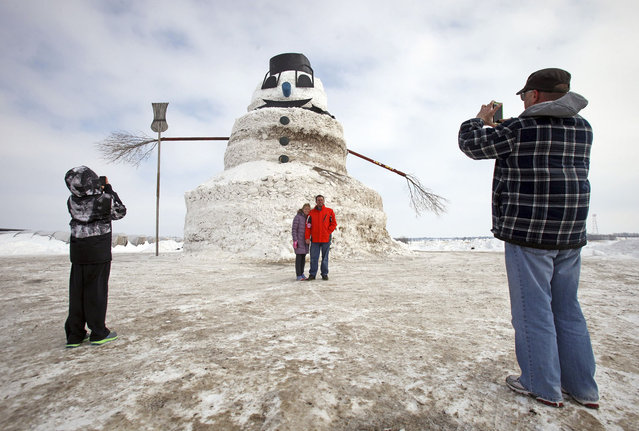
Kevin and Merith Starren have their picture taken by Merith's brother Mark Ernst (R) and nephew Logan Ernst (L) in front of a 50-foot snowman named “Granddaddy” in Gilman, Minnesota, March 6, 2014. (Photo by Eric Miller/Reuters)

Kevin and Merith Starren have their picture taken by Merith's brother Mark Ernst (R) and nephew Logan Ernst (L) in front of a 50-foot snowman named “Granddaddy” in Gilman, Minnesota, March 6, 2014. (Photo by Eric Miller/Reuters)
Details
08 Mar 2014 10:57:00
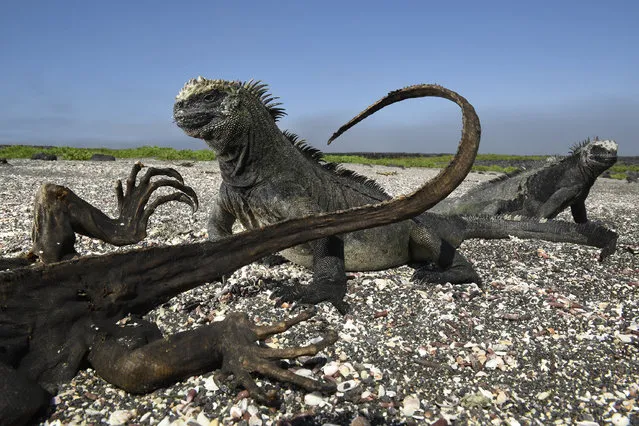
Galapagos – Rocking the Cradle: Four major ocean currents converge along the Galapagos archipelago, creating the conditions for an extraordinary diversity of animal life, April 25, 2016. The islands are home to at least 7,000 flora and fauna species, of which 97 percent of the reptiles, 80 percent of the land birds, 50 percent of the insects and 30 percent of the plants are endemic. The local ecosystem is highly sensitive to the changes in temperature, rainfall and ocean currents that characterize the climatic events known as El Niño and La Niña. These changes cause marked fluctuations in weather and food availability. Many scientists expect the frequency of El Niño and La Niña to increase as a result of climate change, making the Galapagos a possible early-warning location for its effects. (Photo by Thomas P. Peschak for National Geographic/World Press Photo)

Galapagos – Rocking the Cradle: Four major ocean currents converge along the Galapagos archipelago, creating the conditions for an extraordinary diversity of animal life, April 25, 2016. The islands are home to at least 7,000 flora and fauna species, of which 97 percent of the reptiles, 80 percent of the land birds, 50 percent of the insects and 30 percent of the plants are endemic. (Photo by Thomas P. Peschak for National Geographic/World Press Photo)
Details
16 Apr 2018 00:01:00
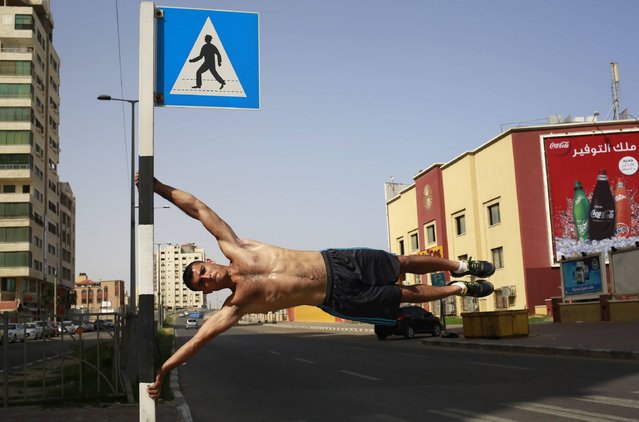
Baker Magadma, a member of Palestinian sports group Bar Palestine, performs on the street in Gaza City, on June 3, 2016. Street workout, which is still new in Gaza, is a growing sport across the world with annual competitions and events. (Photo by Mohammed Abed/AFP Photo)

Baker Magadma, a member of Palestinian sports group Bar Palestine, performs on the street in Gaza City, on June 3, 2016. Street workout, which is still new in Gaza, is a growing sport across the world with annual competitions and events. (Photo by Mohammed Abed/AFP Photo)
Details
04 Jun 2016 12:31:00
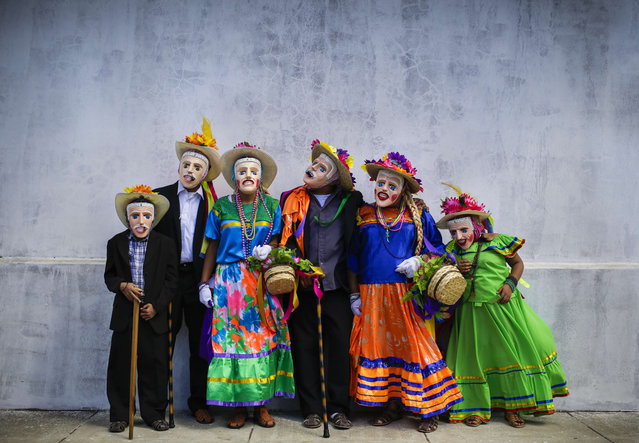
Dancers pose after performing “El Macho Raton”, “El Toro Huaco” and “El Gueguense” traditional dances during San Sebastian festivity in Diriamba, province of Carazo, some 50 km south of Managua on January 19, 2016. Devotees of Saint Sebastian dance in traditional costumes between the cities of Diriamba and Dolores, which are some three kilometers away. (Photo by Inti Ocon/AFP Photo)

Dancers pose after performing “El Macho Raton”, “El Toro Huaco” and “El Gueguense” traditional dances during San Sebastian festivity in Diriamba, province of Carazo, some 50 km south of Managua on January 19, 2016. Devotees of Saint Sebastian dance in traditional costumes between the cities of Diriamba and Dolores, which are some three kilometers away. (Photo by Inti Ocon/AFP Photo)
Details
21 Jan 2016 12:08:00
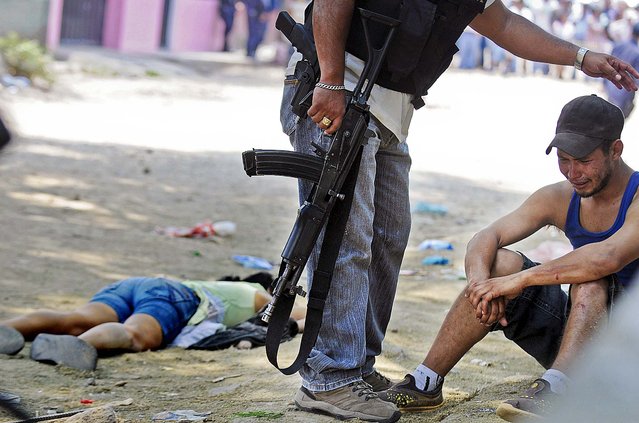
A policeman comforts a man next to the body of Maria Duron, a pregnant fruit vendor caught in the crossfire after gunmen opened fire on a vehicle, killing a sixteen year-old student, her police bodyguard and three other people who were on the street in the city of Tegucigalpa, Honduras, on April 15, 2013. (Photo by Fernando Antonio/Associated Press)

A policeman comforts a man next to the body of Maria Duron, a pregnant fruit vendor caught in the crossfire after gunmen opened fire on a vehicle, killing a sixteen year-old student, her police bodyguard and three other people who were on the street in the city of Tegucigalpa, Honduras, on April 15, 2013. (Photo by Fernando Antonio/Associated Press)

P.S. All pictures are presented in high resolution. To see Hi-Res images – just TWICE click on any picture. In other words, click small picture – opens the BIG picture. Click BIG picture – opens VERY BIG picture (if available; this principle works anywhere on the site AvaxNews)
Details
20 Apr 2013 11:43:00
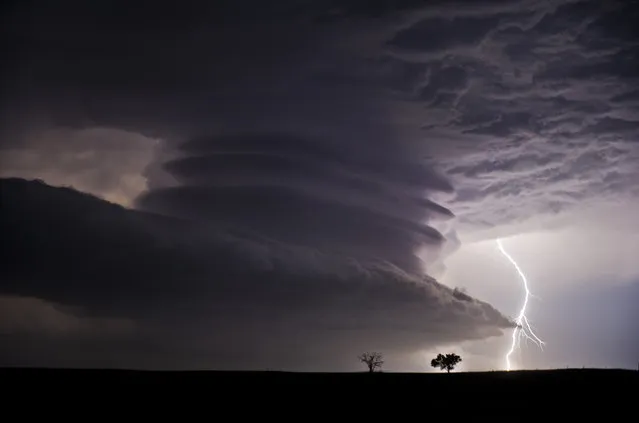
“Stacked Supercell with Lightning”. This huge mesocyclone supercell was near the Nebraska / Kansas border on the night of June 22nd, 2012. What a stunning structure! (Photo and caption by Jennifer Brindley/National Geographic Traveler Photo Contest)

“Stacked Supercell with Lightning”. This huge mesocyclone supercell was near the Nebraska / Kansas border on the night of June 22nd, 2012. What a stunning structure! (Photo and caption by Jennifer Brindley/National Geographic Traveler Photo Contest)

ATTENTION! All pictures are presented in high resolution. To see Hi-Res images – just TWICE click on any picture. In other words, click small picture – opens the BIG picture. Click BIG picture – opens VERY BIG picture.
Details
25 Jun 2013 13:12:00
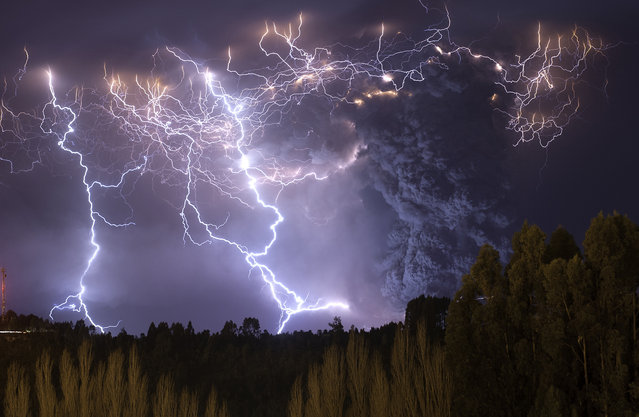
The eruption of Cordon Caulle began on June 4, 2011, located in the Region of Los Rios in Chile. For about 12 months, people and animals became accustomed to living with the daily fall of ash, which also caused problems in the air traffic in South America. The explosions and lightning during first days of the eruption could be seen from hundreds of miles around. This photograph was taken on the second night of eruption from the town of Lago Ranco. (Photo and caption by Francisco Negroni/National Geographic Traveler Photo Contest)

The eruption of Cordon Caulle began on June 4, 2011, located in the Region of Los Rios in Chile. For about 12 months, people and animals became accustomed to living with the daily fall of ash, which also caused problems in the air traffic in South America. The explosions and lightning during first days of the eruption could be seen from hundreds of miles around. This photograph was taken on the second night of eruption from the town of Lago Ranco. (Photo and caption by Francisco Negroni/National Geographic Traveler Photo Contest)

ATTENTION! All pictures are presented in high resolution. To see Hi-Res images – just TWICE click on any picture. In other words, click small picture – opens the BIG picture. Click BIG picture – opens VERY BIG picture.
Details
23 Jun 2013 11:24:00