Loading...
Done


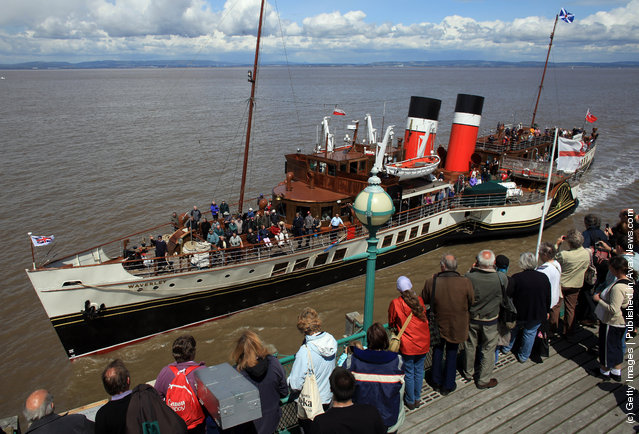
Passengers watch as The Waverley, the world's last remaining seagoing passenger paddle steamer arrives at Clevedon Pier on June 10, 2011 in Clevedon, England. Built in 1946, the trust which owns and operates the Waverley, is warning that this could be the last season for the vessel and is appealling for more public funding saying it is struggling to make ends meet in the current financial climate due in part to rising fuel costs. Restored in 1973 after service on Loch Long in Scotland, since 2003, Waverley has been listed in the British National Register of Historic Ships core collection as 'a vessel of pre-eminent national importance'. (Photo by Matt Cardy/Getty Images)
Details
11 Jun 2011 12:02:00
Jewelry by Mai McKemy

The Tiny Terrarium collection will be the ideal choice for summer time. Rings and pendants from this collection are true works of art. Each of them contains the part charming forest scenery. No matter where you are, with these accessories a little piece of nature will always be with you. Mai McKemy draws inspiration from the nature that surrounds her. Woodland Belle studio is located in Asheville, North Carolina.
Details
18 Oct 2013 13:27:00
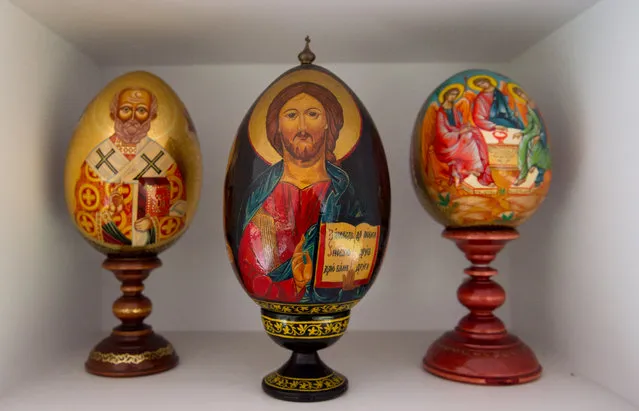
Decorated eggs are seen at the egg museum in Winden am See, Austria, March 25, 2016. (Photo by Christian Bruna/EPA)

Decorated eggs are seen at the egg museum in Winden am See, Austria, March 25, 2016. The collection of Austrian artist Wander Bertoni contains about 4000 eggs. (Photo by Christian Bruna/EPA)
Details
27 Mar 2016 11:24:00


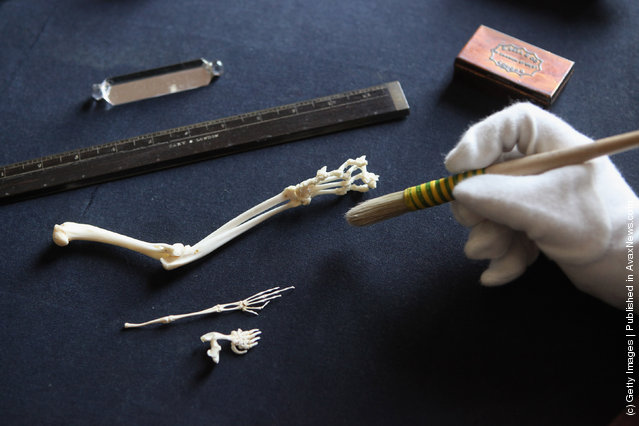
Emily Hasler, an English Heritage employee at Charles Darwin's home, Down House, cleans a rabbit bone in his old study on April 2, 2011 in Downe, England. Staff at the house are cleaning and preparing the property ahead of their peak visitor season. The house contains the study where Darwin wrote “On the Origin of Species”, as well as family rooms and an extensive garden that inspired the renowned scientist. (Photo by Oli Scarff/Getty Images)
Details
03 Apr 2011 07:17:00


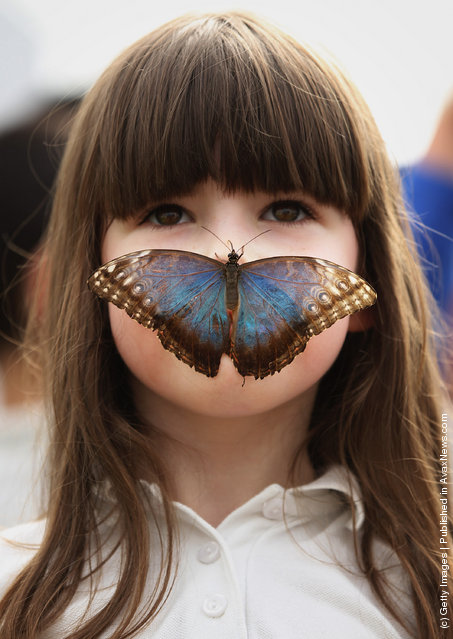
A girl allows a butterfly to be placed on her nose at the Sensational Butterflies exhibition at the Natural History Museum on April 6, 2011 in London, England. The exhibition is divided up into five sensory zones exploring how butterflies see, hear, taste, smell and touch. The display containing hundreds of butterflies runs from April 12 to September 11, 2011. (Photo by Peter Macdiarmid/Getty Images)
Details
07 Apr 2011 08:02:00
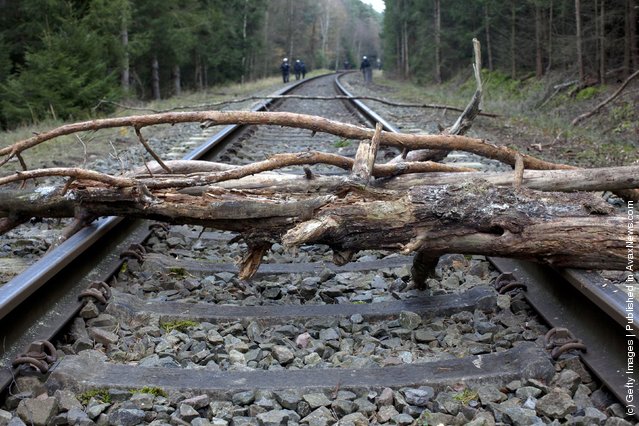
Demonstrators Protest Castor Nuclear Waste Transport

Tree trunks lie on the railtracks that will be used to transport nuclear waste on November 25, 2011 in Leitstade, near Metzingen, Germany. A train carrying the Castor containers of processed, spent nuclear fuel started from La Hague in France Wednesday for its journey to the Gorleben temporary nuclear waste storage facility in Germany, and thousands of protesters are expected to attempt to blockade the route. (Photo by Carsten Koall/Getty Images)
Details
26 Nov 2011 12:41:00
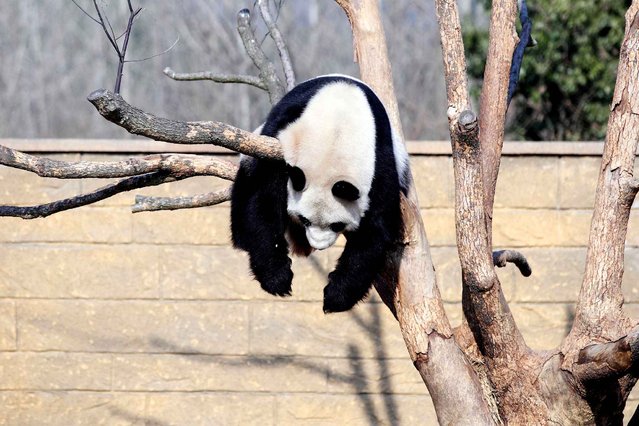
This picture taken on January 1, 2014 shows giant panda “Li Li” sleeping on a tree in Hangzhou Wild Animal World in Hangzhou, east China's Zhejiang province. Giant pandas, notorious for their low s*x drive, are among the world's most endangered animals. Fewer than 1,600 pandas remain in the wild, mainly in China's Sichuan province, with a further 300 in captivity around the world. (Photo by AFP Photo)

This picture taken on January 1, 2014 shows giant panda “Li Li” sleeping on a tree in Hangzhou Wild Animal World in Hangzhou, east China's Zhejiang province. Giant pandas, notorious for their low s*x drive, are among the world's most endangered animals. Fewer than 1,600 pandas remain in the wild, mainly in China's Sichuan province, with a further 300 in captivity around the world. (Photo by AFP Photo)
Details
04 Jan 2014 14:58:00
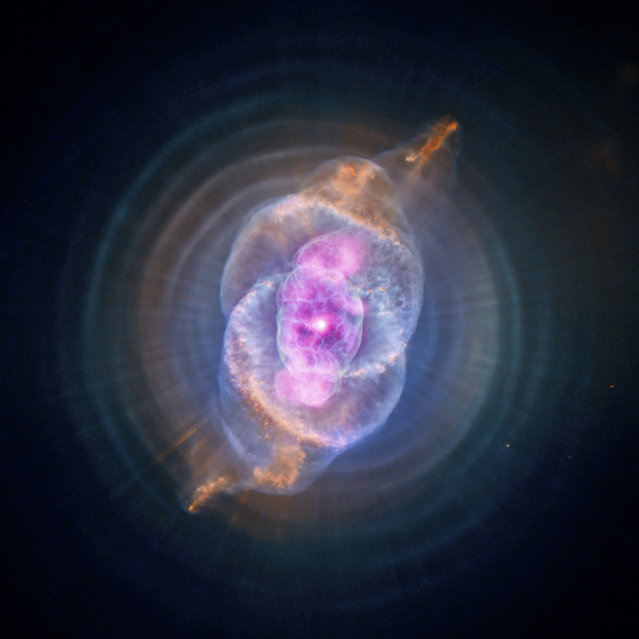
This image is NGC 6543 known as the Cat's Eye Nebula as it appears to the Chandra X-Ray Observatory and Hubble Telescope. A planetary nebula is a phase of stellar evolution that the sun should experience several billion years from now, when it expands to become a red giant and then sheds most of its outer layers, leaving behind a hot core that contracts to form a dense white dwarf star. This image was released October 10, 2012. (Photo by J. Kastner/NASA/CXC/RIT)

This image is NGC 6543 known as the Cat's Eye Nebula as it appears to the Chandra X-Ray Observatory and Hubble Telescope. A planetary nebula is a phase of stellar evolution that the sun should experience several billion years from now, when it expands to become a red giant and then sheds most of its outer layers, leaving behind a hot core that contracts to form a dense white dwarf star. This image was released October 10, 2012. (Photo by J. Kastner/NASA/CXC/RIT)
Details
15 Apr 2013 10:09:00