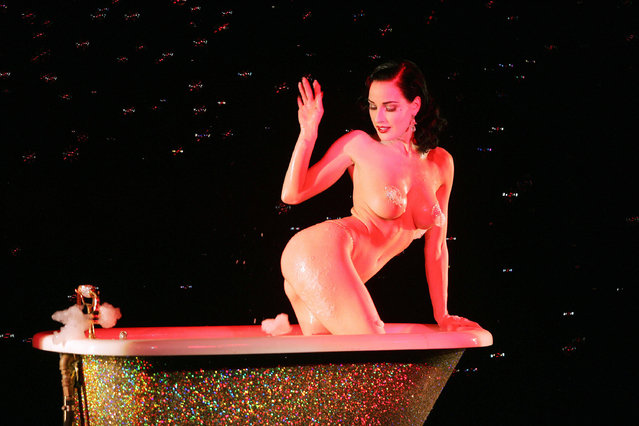
American dancer and model Dita von Teese performs a strip-tease, 23 October 2006 at the Crazy Horse saloon in Paris. Von Teese is giving eight performances of her show “the bath” at the famous Parisian cabaret. (Photo by Francois Guillot/AFP Photo)
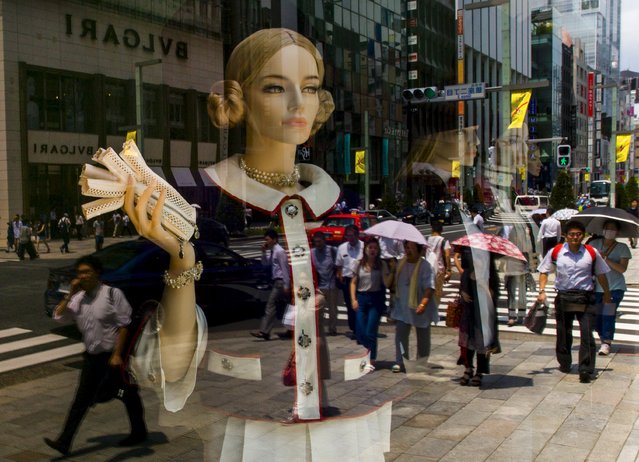
People are reflected in a shop window as they walk along a street in a shopping district in Tokyo, Japan June 25, 2015. (Photo by Thomas Peter/Reuters)
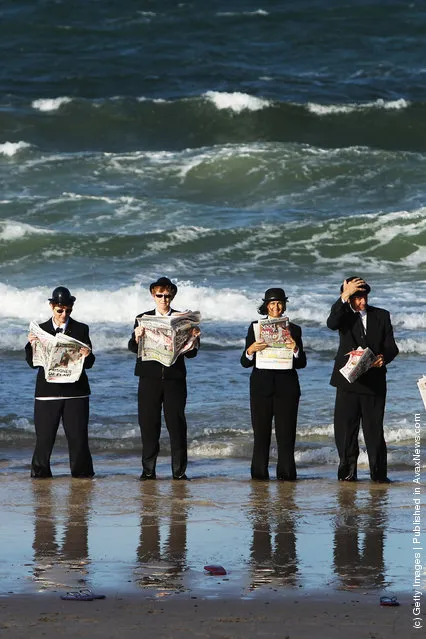
Volunteers stand and read the morning newspaper while “waiting for the bus” at Henley Beach on January 8, 2012 in Adelaide, Australia. Surrealist artist, Andrew Baines recruited 100 volunteers for this human installation, meant to illustrate corporate workers enjoying nature rather than waiting in a long queue for a trip to work. (Photo by Morne de Klerk/Getty Images)
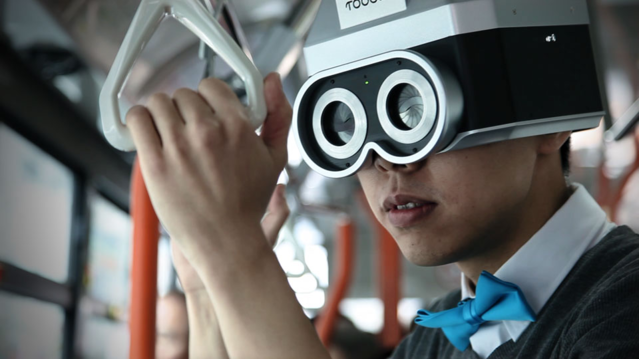
This project is a phenomenological social interaction experiment that focuses on the relationship of giving and receiving by literally transforming a human into a camera. Touchy, (the person wearing the device) is blind most of the time until you touch his/her skin. Once vision is given to Touchy, he/she can take photos for you. This human camera, with its unique properties, aims at healing social anxiety by creating joyful interactions.
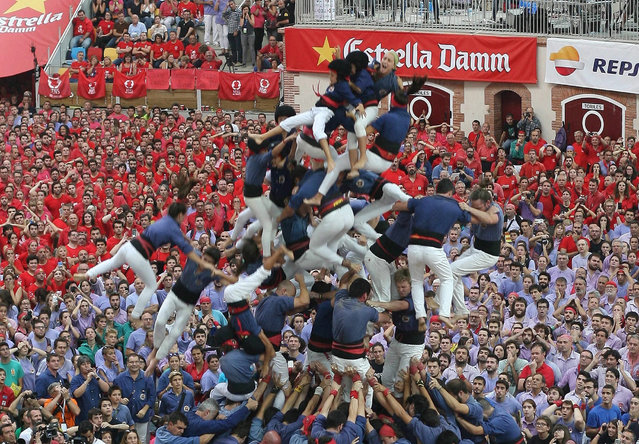
Capgrossos de Mataro team members fall during the 25th Castells' contest at the Tarraco Arena in Tarragona, Catalonia, northeastern Spain, 02 October 2016. The “Castells” is a popular event in which people create human towers up to a height of between six and ten levels. (Photo by Jaume Sellart/EPA)
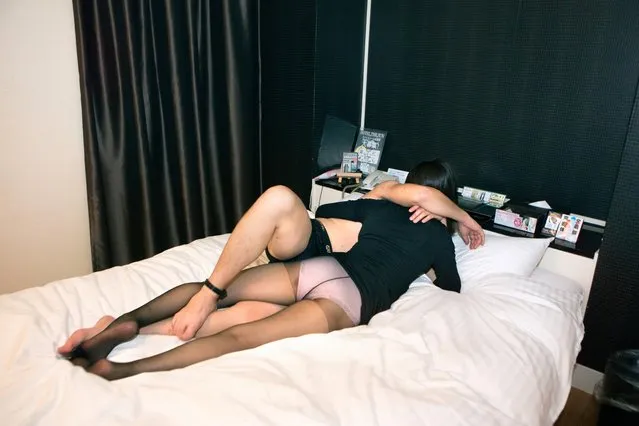
For her series “Japanese Whispers”, Belgian photographer Zaza Bertrand headed inside the intimate world of rabuhos – Japanese love hotels. Love hotels became popular in Japan from the 1960s onwards, due to a lack of privacy in many family homes. There are now around 37,000 of these hotels in Japan, allowing short daytime “rests” or overnight stays. (Photo by Zaza Bertrand/The Guardian)