Loading...
Done
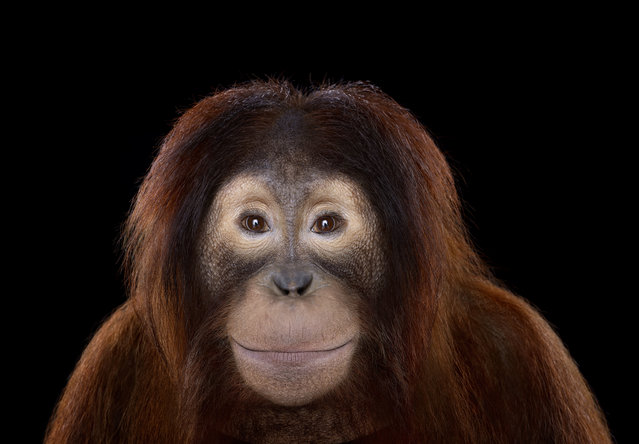
A talented portrait photographer has moved on from capturing traditional human subjects – instead photographing a stunning variety of wild animals. Brad Wilson, 51, stands just feet away from the likes of tigers, rhinos, elephants and primates. Each animal is given the same respect and dignity as any human subject, with Brad setting up a full photographic studio, either at or near sanctuaries and zoos across the U.S. (Photo by Brad Wilson/Caters News)

A talented portrait photographer has moved on from capturing traditional human subjects – instead photographing a stunning variety of wild animals. Brad Wilson, 51, stands just feet away from the likes of tigers, rhinos, elephants and primates. Each animal is given the same respect and dignity as any human subject, with Brad setting up a full photographic studio, either at or near sanctuaries and zoos across the U.S. The works are the second part of Brad's Affinity series, which the photographer – based in Los Angeles, California, first started working on in 2010. Here: Orangutan. (Photo by Brad Wilson/Caters News)
Details
16 Sep 2015 14:53:00
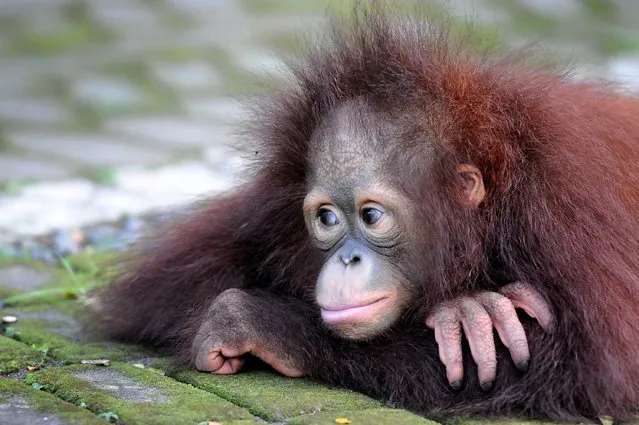
Damai, 3 years old Bornean orang utan plays courtyard at Surabaya Zoo as he prepares to be released into the wild on May 19, 2014 in Surabaya, Indonesia. The two baby orangutans, brothers, were found in Kutai National Park in a critical condition having been abandoned by their mother on May 14, 2014. (Photo by Robertus Pudyanto/Getty Images)

Damai, 3 years old Bornean orang utan plays courtyard at Surabaya Zoo as he prepares to be released into the wild on May 19, 2014 in Surabaya, Indonesia. The two baby orangutans, brothers, were found in Kutai National Park in a critical condition having been abandoned by their mother on May 14, 2014. The Centre for Orangutan Protection (COP) have since been nursing the animals back to health, treating them for malnourishment and 16 wounds predominantly to the feet and hands. (Photo by Robertus Pudyanto/Getty Images)
Details
20 May 2014 10:41:00
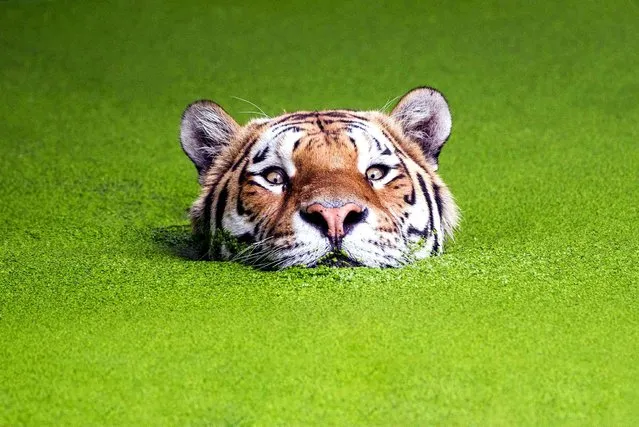
These stunning pictures show a normally vicious tiger calmly swimming in a pool of algae, on Jule 9, 2014. The powerful cat takes a refreshing break by taking a dip in the bright green algae. But it looks like this big cat is scared of getting his head wet as he strains to keep it above the water. After splashing around for a bit the tiger gets out and tries to air-dry with specks of the vegetation dripping off his fur. The striking pictures were taken at Copenhagen zoo by snapper Soren Lundgren Neilson. (Photo by Soren Nielsen/Caters News)

These stunning pictures show a normally vicious tiger calmly swimming in a pool of algae, on Jule 9, 2014. The powerful cat takes a refreshing break by taking a dip in the bright green algae. But it looks like this big cat is scared of getting his head wet as he strains to keep it above the water. After splashing around for a bit the tiger gets out and tries to air-dry with specks of the vegetation dripping off his fur. The striking pictures were taken at Copenhagen zoo by snapper Soren Lundgren Neilson. (Photo by Soren Nielsen/Caters News)
Details
12 Jul 2014 16:58:00
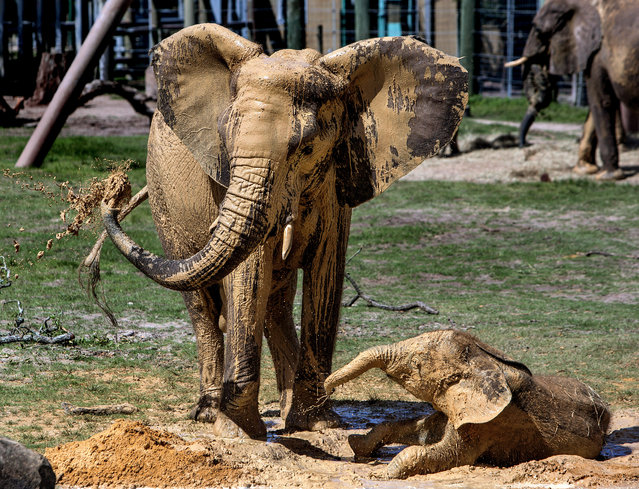
Lowry Park Zoo elephants Matjeka, 23, and her 1-year-old daughter, Mavi, apply a liberal coating of “sunscreen”  to themselves in a clay mud wallow at the park Tuesday, August 12, 2014, in Tampa, Fla., on the park's first observation of World Elephant Day to raise awareness of the wild African elephant crisis. (Photo by Cherie Diez/AP Photo/The Tampa Bay Times)

Lowry Park Zoo elephants Matjeka, 23, and her 1-year-old daughter, Mavi, apply a liberal coating of “sunscreen” to themselves in a clay mud wallow at the park Tuesday, August 12, 2014, in Tampa, Fla., on the park's first observation of World Elephant Day to raise awareness of the wild African elephant crisis. “Elephants are prone to being sunburned”, said associate curator Chris Massaro. “What they need is lot of mud or clay to roll around in and cover up their skin so it will protect it from the sun”. (Photo by Cherie Diez/AP Photo/The Tampa Bay Times)
Details
16 Aug 2014 11:38:00
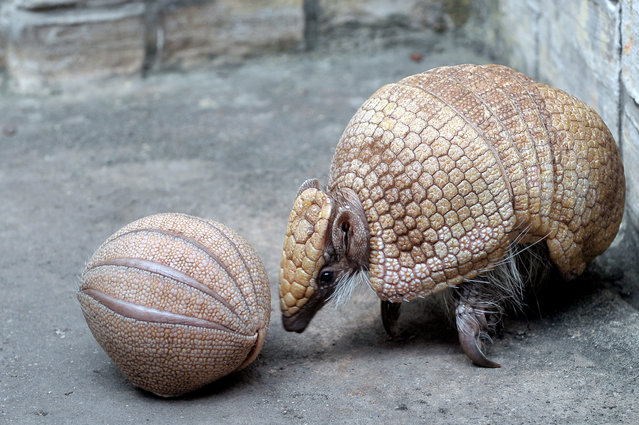
A four-week old southern three-banded armadillo (Tolypeutes matacus) is rolled up into a ball next to its mother in the tropical house of Budapest Zoo in Budapest, Hungary on May 3, 2019. The South American insect-eating mammal and its close relative, the Brasilian three-banded armadillo (Tolypeutes tricinctus) are the only two species of armadillos capable of rolling into a complete ball to defend themselves when feeling threatened. (Photo by Attila Kovács/EPA/EFE)

A four-week old southern three-banded armadillo (Tolypeutes matacus) is rolled up into a ball next to its mother in the tropical house of Budapest Zoo in Budapest, Hungary on May 3, 2019. The South American insect-eating mammal and its close relative, the Brasilian three-banded armadillo (Tolypeutes tricinctus) are the only two species of armadillos capable of rolling into a complete ball to defend themselves when feeling threatened. (Photo by Attila Kovács/EPA/EFE)
Details
05 May 2019 00:03:00
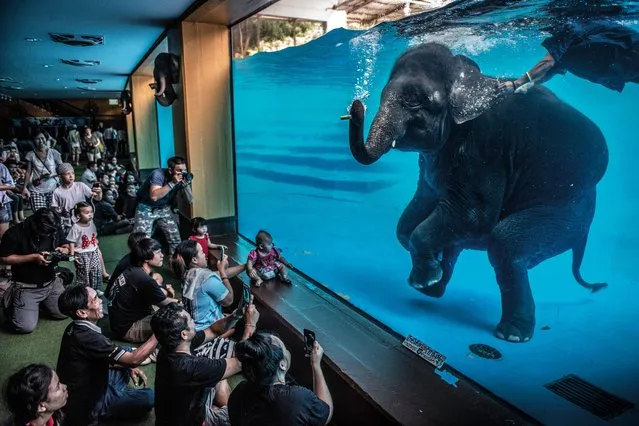
Winner, photojournalism. Elephant in the room, by Adam Oswell, Australia Zoo. Visitors watch a young elephant performing underwater. Oswell was disturbed by this scene, and organisations concerned with the welfare of captive elephants say performances like this encourage unnatural behaviour. In Thailand, there are now more elephants in captivity than in the wild. With the Covid pandemic causing tourism to collapse, elephant sanctuaries are becoming overwhelmed with animals that can no longer be looked after by their owners. (Photo by Adam Oswell/Wildlife Photographer of the Year 2021)

Winner, photojournalism. Elephant in the room, by Adam Oswell, Australia Zoo. Visitors watch a young elephant performing underwater. Oswell was disturbed by this scene, and organisations concerned with the welfare of captive elephants say performances like this encourage unnatural behaviour. In Thailand, there are now more elephants in captivity than in the wild. With the Covid pandemic causing tourism to collapse, elephant sanctuaries are becoming overwhelmed with animals that can no longer be looked after by their owners. (Photo by Adam Oswell/Wildlife Photographer of the Year 2021)
Details
30 Oct 2021 08:40:00
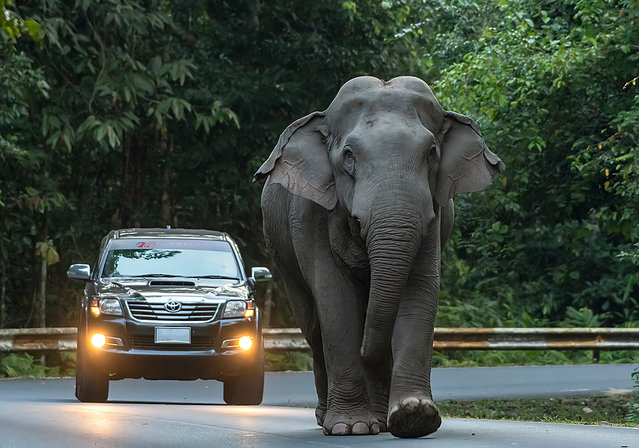
An Asian elephant called “Plai Deaw” goes for a walk on a mountain road in Nakhon Nayok, Thailand on July 11, 2022. The bull has become well known in the area for his taste for venturing out from the deep forest and emerging among cars and village homes. Thailand has an estimated 2,000 Asian elephants living in the wild but there is often conflict when they come into contact with humans on roads and in villages. A similar number of elephants are kept captive where they work in zoos and are hired out for religious festivals and weddings. (Photo by Mongkol Pitakmoo/ViralPress)

An Asian elephant called “Plai Deaw” goes for a walk on a mountain road in Nakhon Nayok, Thailand on July 11, 2022. The bull has become well known in the area for his taste for venturing out from the deep forest and emerging among cars and village homes. Thailand has an estimated 2,000 Asian elephants living in the wild but there is often conflict when they come into contact with humans on roads and in villages. A similar number of elephants are kept captive where they work in zoos and are hired out for religious festivals and weddings. (Photo by Mongkol Pitakmoo/ViralPress)
Details
04 Aug 2022 04:55:00
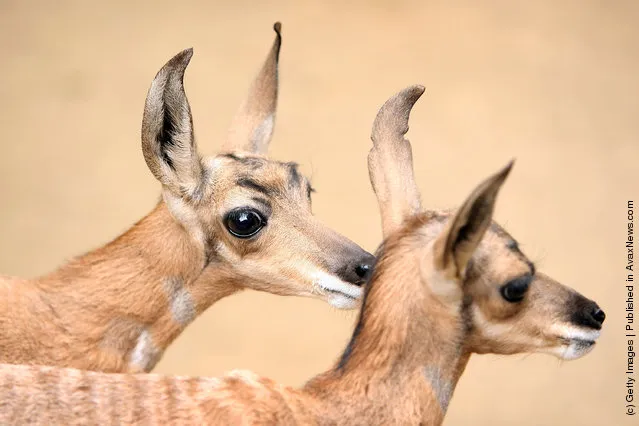
Two rare Peninsular pronghorns

“The Baja California Pronghorn or Peninsular Pronghorn (Antilocapra americana peninsularis) is a critically endangered pronghorn, endemic to Mexico. The wild population is estimated at 200”. – Wikipedia

Photo: Two rare Peninsular pronghorns, male twins was born at the Los Angeles Zoo on April 24, 2009 in Los Angeles, California. Only 250 antelope-like Peninsular pronghorns are believed to exist in the wild. (Photo by David McNew/Getty Images)
Details
07 Nov 2011 11:18:00