Loading...
Done
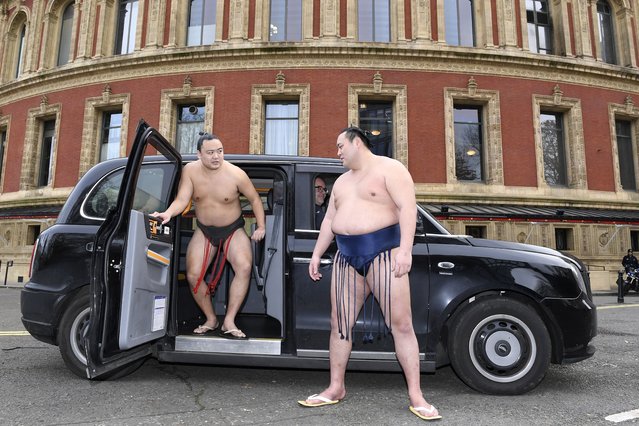
Rishikis from Japan's Sumo Kyokai, Daisuke Kitanowaka, right, and Akira Fukutsuumi pose for a photo call outside of London's Royal Albert Hall in London, Wednesday, December 4, 2024 where the UK's second ever official basho will take place in October of next year. (Photo by Thomas Krych/AP Photo)

Rishikis from Japan's Sumo Kyokai, Daisuke Kitanowaka, right, and Akira Fukutsuumi pose for a photo call outside of London's Royal Albert Hall in London, Wednesday, December 4, 2024 where the UK's second ever official basho will take place in October of next year. (Photo by Thomas Krych/AP Photo)
Details
08 Dec 2024 04:37:00
President Donald Trump is reflected in a mirror as he and Saudi Crown Prince Mohammed bin Salman walk along the White House Colonnade on Tuesday, November 18, 2025. The crown prince was welcomed to the White House with all the trappings of a state visit, including a black-tie dinner in the East Room. (Photo by Haiyun Jiang/The New York Times)

President Donald Trump is reflected in a mirror as he and Saudi Crown Prince Mohammed bin Salman walk along the White House Colonnade on Tuesday, November 18, 2025. The crown prince was welcomed to the White House with all the trappings of a state visit, including a black-tie dinner in the East Room. (Photo by Haiyun Jiang/The New York Times)
Details
27 Nov 2025 03:49:00
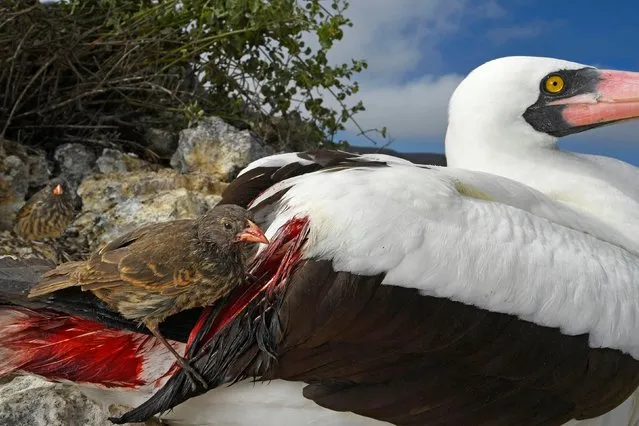
Bloodthirsty by Thomas P Peschak, Germany/South Africa — winner, Behaviour: birds. When rations run short on Wolf Island, in the remote northern Galápagos, the sharp-beaked ground finches become vampires. Their sitting targets are Nazca boobies and other large birds. The finches rely on a scant diet of seeds and insects, which regularly dries up, so they drink blood to survive. ‘I’ve seen more than half a dozen finches drinking from a single Nazca booby,’ says Tom. Rather than leave their nests the boobies tolerate the vampires, and the blood loss doesn’t seem to cause permanent harm. (Photo by Thomas P Peschak/2018 Wildlife Photographer of the Year)

Bloodthirsty by Thomas P. Peschak, Germany/South Africa — winner, Behaviour: birds. When rations run short on Wolf Island, in the remote northern Galápagos, the sharp-beaked ground finches become vampires. Their sitting targets are Nazca boobies and other large birds. The finches rely on a scant diet of seeds and insects, which regularly dries up, so they drink blood to survive. ‘I’ve seen more than half a dozen finches drinking from a single Nazca booby,’ says Tom. Rather than leave their nests the boobies tolerate the vampires, and the blood loss doesn’t seem to cause permanent harm. (Photo by Thomas P. Peschak/2018 Wildlife Photographer of the Year)
Details
19 Oct 2018 00:05:00
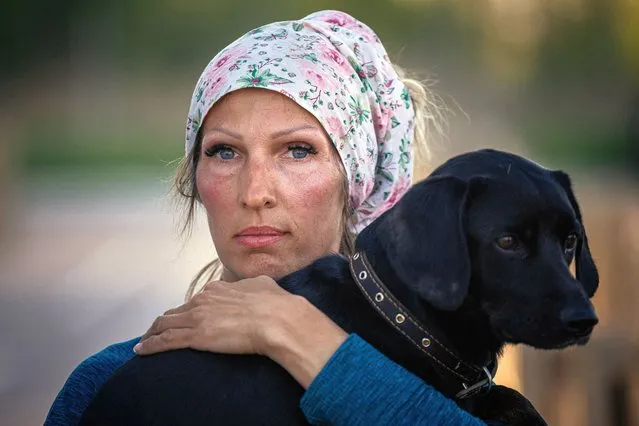
A woman holds her dog after arriving from Russian-occupied territory at a registration and processing area for internally displaced people in Zaporizhzhia, in Ukraine, on May 8, 2022. (Photo by Dimitar Dilkoff/AFP Photo)

A woman holds her dog after arriving from Russian-occupied territory at a registration and processing area for internally displaced people in Zaporizhzhia, in Ukraine, on May 8, 2022. (Photo by Dimitar Dilkoff/AFP Photo)
Details
16 May 2022 04:58:00
An employee holds a food order on a tray in the Russian version of a former McDonald's restaurant after the opening ceremony in Moscow on June 12, 2022. Former McDonald's restaurants in Russia have been renamed “Vkusno i tochka” (“Delicious. Full Stop”), the new owner said ahead of their grand re-opening . (Photo by Kirill Kudryavtsev/AFP Photo)

An employee holds a food order on a tray in the Russian version of a former McDonald's restaurant after the opening ceremony in Moscow on June 12, 2022. Former McDonald's restaurants in Russia have been renamed “Vkusno i tochka” (“Delicious. Full Stop”), the new owner said ahead of their grand re-opening . (Photo by Kirill Kudryavtsev/AFP Photo)

Details
24 Jun 2022 03:22:00
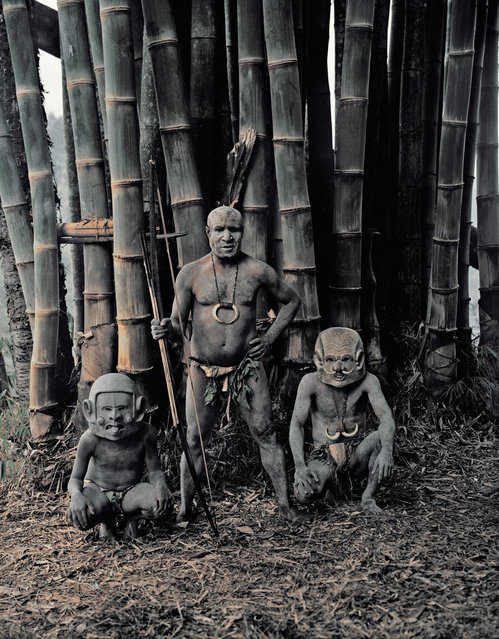
“Asaro from the Eastern Highlands”. The mudmen could not cover their faces with mud because the people of Papua New Guinea thought that the mud from the Asaro river was poisonous. So instead of covering their faces with this alleged poison, they made masks from pebbles that they heated and water from the waterfall, with unusual designs such as long or very short ears either going down to the chin or sticking up at the top, long joined eyebrows attached to the top of the ears, horns and sideways mouths. (Jimmy Nelson)

“Asaro from the Eastern Highlands”. The mudmen could not cover their faces with mud because the people of Papua New Guinea thought that the mud from the Asaro river was poisonous. So instead of covering their faces with this alleged poison, they made masks from pebbles that they heated and water from the waterfall, with unusual designs such as long or very short ears either going down to the chin or sticking up at the top, long joined eyebrows attached to the top of the ears, horns and sideways mouths. (Photo and caption by Jimmy Nelson)
Details
20 Oct 2013 08:54:00
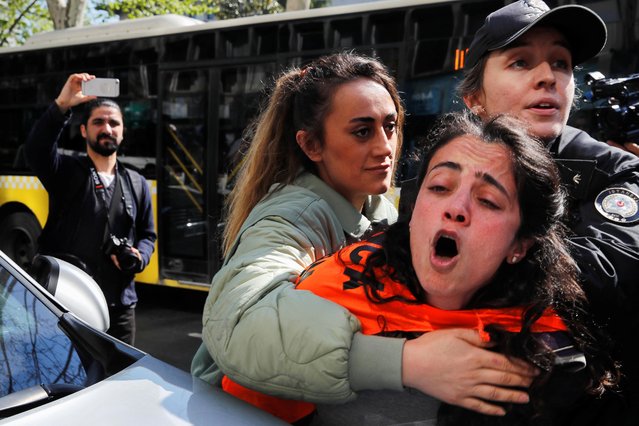
Police officers detain a demonstrator as people protest to defy a ban and march on Taksim Square to celebrate May Day in Istanbul, Turkey on May 1, 2023. (Photo by Dilara Senkaya/Reuters)

Police officers detain a demonstrator as people protest to defy a ban and march on Taksim Square to celebrate May Day in Istanbul, Turkey on May 1, 2023. (Photo by Dilara Senkaya/Reuters)
Details
19 May 2023 04:21:00
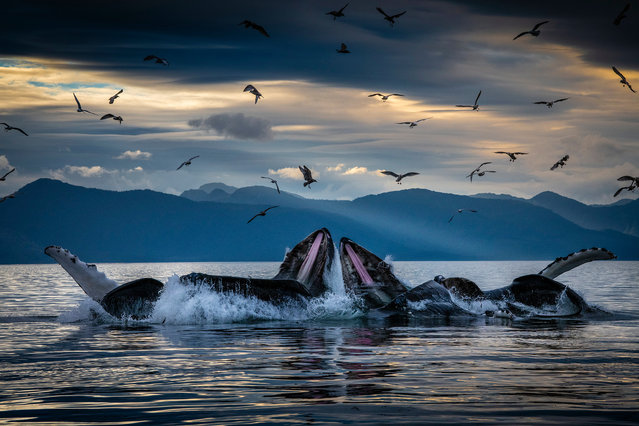
“Secrets of the Whales”. Skerry’s photographs celebrate the lives and culture of whales, illuminating recent research and their diverse behaviours. His latest work focuses on four key species: sperm whales, humpbacks, orca and beluga whales. Humpback whales bubble-net feeding off the coast of Alaska. They work cooperatively to feed on herring by blowing a perfect ring of bubbles underwater to form a net encircling the fish. The whales then swim up through the centre of the bubble net with their mouths open. (Photo by Brian Skerry/National Geographic Photo/Visa pour l'Image)

“Secrets of the Whales”. Skerry’s photographs celebrate the lives and culture of whales, illuminating recent research and their diverse behaviours. His latest work focuses on four key species: sperm whales, humpbacks, orca and beluga whales. Humpback whales bubble-net feeding off the coast of Alaska. They work cooperatively to feed on herring by blowing a perfect ring of bubbles underwater to form a net encircling the fish. The whales then swim up through the centre of the bubble net with their mouths open. (Photo by Brian Skerry/National Geographic Photo/Visa pour l'Image)
Details
04 Sep 2021 09:02:00