Loading...
Done
Huangguoshu Waterfall

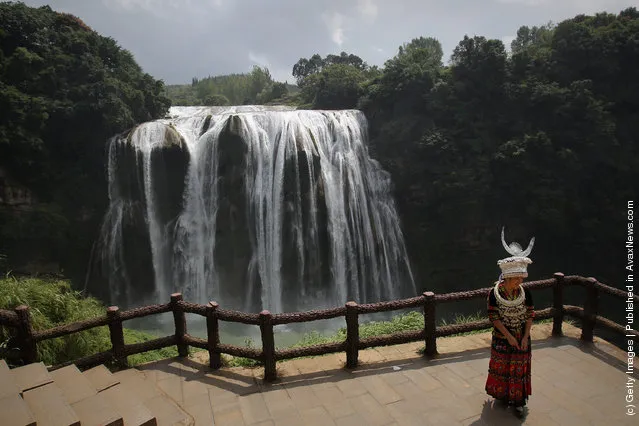
“Huangguoshu Waterfall, also known as Yellow Fruit Tree Waterfall, is one of the largest waterfalls in China and East Asia located on the Baihe River in Anshun, Guizhou Province. It is 77.8 m (255 ft) high and 101 m (331 ft) wide. The main waterfall is 67 m (220 ft) high and 83.3 m (273 ft) wide”. – Wikipedia

Photo: The Miao ethnic minority women rest in front of Huangguoshu Cataract, Asia's largest waterfall, on September 13, 2011 in Anshun city of Guizhou Province, China. (Photo by Feng Li/Getty Images)
Details
14 Sep 2011 12:11:00
A zookeeper feeds a hippopotamus with a watermelon in its enclosure in Belgrade's zoo, Serbia, July 20, 2015. (Photo by Marko Djurica/Reuters)

A zookeeper feeds a hippopotamus with a watermelon in its enclosure in Belgrade's zoo, Serbia, July 20, 2015. Temperatures in Serbia have risen up to 40 degrees Celsius (104 degrees Fahrenheit), according to official meteorological data. (Photo by Marko Djurica/Reuters)
Details
21 Jul 2015 10:46:00
Afghan boys play soccer in Chaman-e-Hozori park in Kabul City, on November 12, 2021. (Photo by Hector Retamal/AFP Photo)

Afghan boys play soccer in Chaman-e-Hozori park in Kabul City, on November 12, 2021. (Photo by Hector Retamal/AFP Photo)
Details
25 Nov 2021 07:38:00
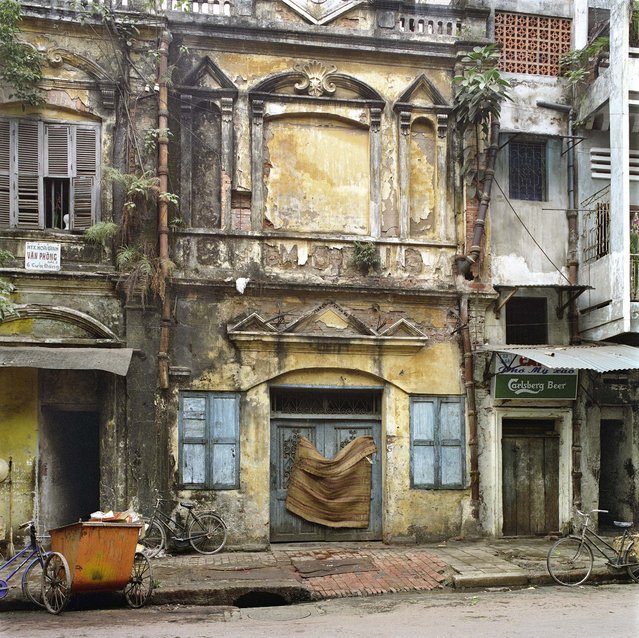
54 Hàng Ga (Chicken Street), 1994. (Photo by  William E. Crawford from the book “Hanoi Streets 1985-2015: In the Years of Forgetting”)

Documentary photographer William E. Crawford was one of the first Western photographers to gain access to North Vietnam after the war ended. He has photographed the capital, Hanoi, at regular intervals since 1985, concentrating on the colonial and indigenous architecture, urban details, landscapes and intimate portraits of people in their home settings, street scenes and the city’s surrounding countryside. Here: 54 Hàng Ga (Chicken Street), 1994. (Photo by William E. Crawford from the book “Hanoi Streets 1985-2015: In the Years of Forgetting”)
Details
27 Jun 2018 00:01:00
Cordwood Construction - Natural Building

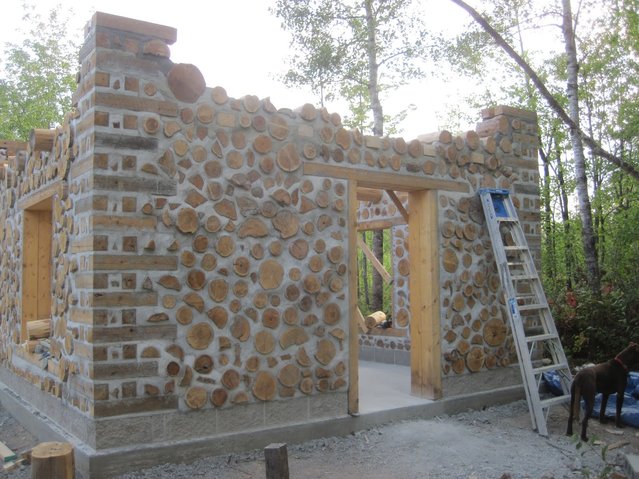
Cordwood construction is a method of natural building that originated roughly one thousand years ago in Greece and Siberia. This method involves using pieces of wood that slightly protrude from the mortar, giving the walls an attractive appearance. Usually, the walls are made 12 to 24 inches thick. However, in some parts of Canada, the walls can be as thick as 36 inches. This method appeals to many people due to its ease of construction economy of resources. Cordwood Construction can be separated into two main types: mortar-insulation-mortar (M-I-M) and Throughwall. M-I-M is a more preferable and widely used choice as it allows for better insulating properties.
Details
27 Nov 2014 15:10:00
Tank crew standing in front of M-4 tank, Ft. Knox, Kentucky, June, 1942

Tank crew standing in front of M-4 tank, Ft. Knox, Kentucky, June, 1942. (Alfred Palmer/OWI/LOC)
Details
04 May 2012 12:12:00
North Koreans wave flower bouquets and balloons as they march during a parade at the Kim Il Sung Square on Tuesday, May 10, 2016, in Pyongyang, North Korea. (Photo by Wong Maye-E/AP Photo)

North Koreans wave flower bouquets and balloons as they march during a parade at the Kim Il Sung Square on Tuesday, May 10, 2016, in Pyongyang, North Korea. (Photo by Wong Maye-E/AP Photo)
Details
10 May 2016 13:14:00
A Taliban fighter walks past a beauty salon with images of women defaced using spray paint in Shar-e-Naw in Kabul on August 18, 2021. (Photo by Wakil Kohsar/AFP Photo)

A Taliban fighter walks past a beauty salon with images of women defaced using spray paint in Shar-e-Naw in Kabul on August 18, 2021. (Photo by Wakil Kohsar/AFP Photo)
Details
01 Sep 2021 07:53:00