Loading...
Done


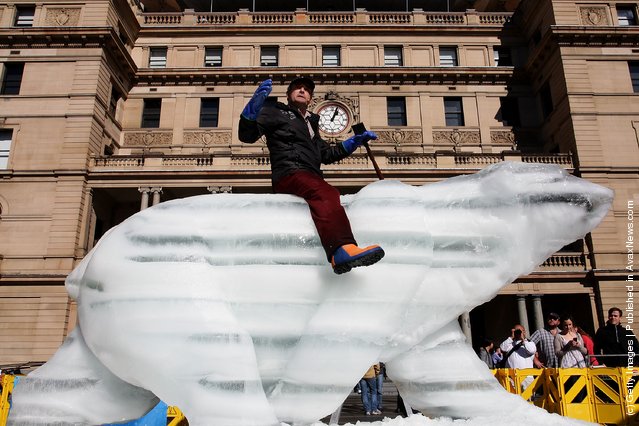
British artist, Mark Coreth sits on top of the “Sydney Ice Bear” carved from a 10 tonne block of ice to illustrate how humans affect climate change in the Arctic at Customs House on June 3, 2011 in Sydney, Australia. The public will be welcomed to touch the bear, and leave an imprint which will begin the melting process and act as a metaphor for how humans affect the environment. The ice bear's has visited six cities on it's global tour since 2009; the visit to Sydney coincides with World Environment Day on June 5. (Photo by Lisa Maree Williams/Getty Images)
Details
03 Jun 2011 08:21:00
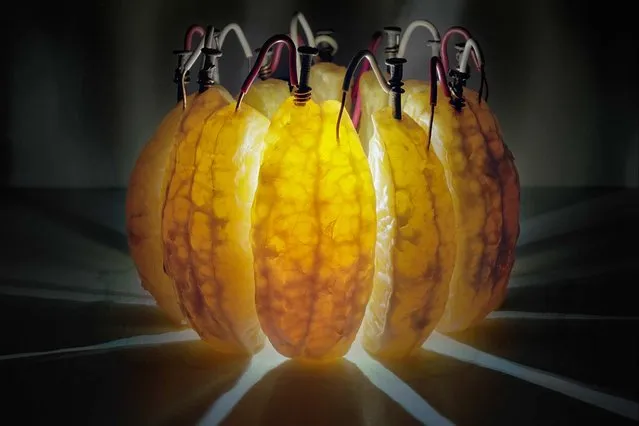
Wedges of an orange generate enough current and electrical juice – 3.5 volts – to power an LED. The fruit’s citric acid helps electrons flow from galvanized nails to copper wire in this 14-hour exposure. This image was published in September’s Visions of Earth, a trio of photos that appear in each issue of National Geographic. (Photo by Caleb Charland/National Geographic)

Wedges of an orange generate enough current and electrical juice – 3.5 volts – to power an LED. The fruit’s citric acid helps electrons flow from galvanized nails to copper wire in this 14-hour exposure. This image was published in September’s Visions of Earth, a trio of photos that appear in each issue of National Geographic. (Photo by Caleb Charland/National Geographic)
Details
06 Jan 2014 12:09:00
Green Bay Packers' Johnathan Calvin rides a bike to NFL football training camp on July 27, 2017, in Green Bay, Wis. (Photo by Morry Gash/AP Photo)

Green Bay Packers' Johnathan Calvin rides a bike to NFL football training camp on July 27, 2017, in Green Bay, Wis. (Photo by Morry Gash/AP Photo)
Details
21 Dec 2017 06:44:00
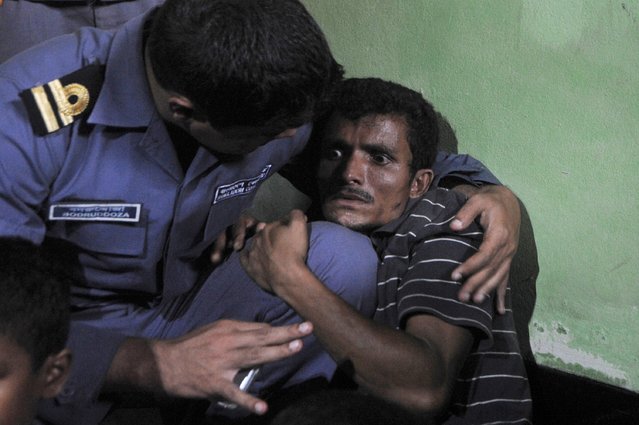
A Rohingya Muslim from Myanmar (R), who tried to cross the Naf river into Bangladesh to escape sectarian violence, cries  near his family in a Bangladeshi Coast guard station in Teknaf on June 19, 2012, before being sent back to Myanmar. (Photo by Munir Uz Zaman/AFP Photo)

A Rohingya Muslim from Myanmar (R), who tried to cross the Naf river into Bangladesh to escape sectarian violence, cries near his family in a Bangladeshi Coast guard station in Teknaf on June 19, 2012, before being sent back to Myanmar. (Photo by Munir Uz Zaman/AFP Photo)
Details
23 Jan 2014 11:48:00
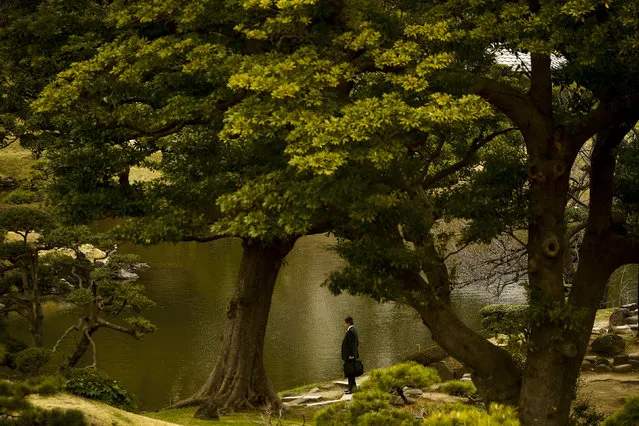
JAPAN: A businessman stands at a pond in the Kyu-Shiba-rikyu Garden on a warm and sunny day in Tokyo, Japan, March 18, 2016. (Photo by Thomas Peter/Reuters)

JAPAN: A businessman stands at a pond in the Kyu-Shiba-rikyu Garden on a warm and sunny day in Tokyo, Japan, March 18, 2016. (Photo by Thomas Peter/Reuters)
Details
26 Dec 2016 06:56:00
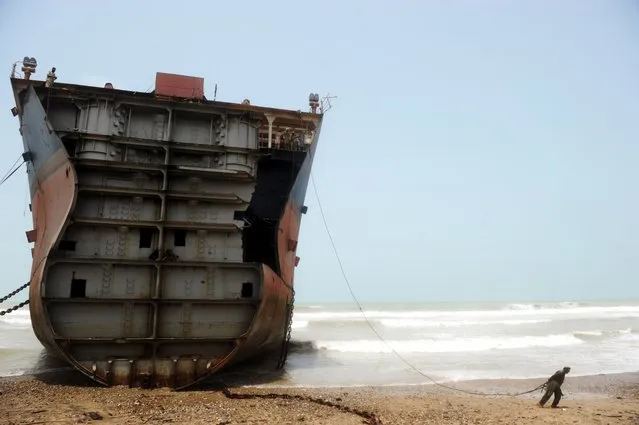
In this photograph taken on July 10, 2012, a Pakistani worker pulls on a wire he will connect to a thick chain that will in turn be used to peel away a slab of the outer structure of a beached vessel in one of the 127 ship-breaking plots in Geddani, some 40Kms west of Karachi. (Photo by Roberto Schmidt/AFP Photo)

In this photograph taken on July 10, 2012, a Pakistani worker pulls on a wire he will connect to a thick chain that will in turn be used to peel away a slab of the outer structure of a beached vessel in one of the 127 ship-breaking plots in Geddani, some 40Kms west of Karachi. (Photo by Roberto Schmidt/AFP Photo)
Details
23 Jan 2014 11:36:00
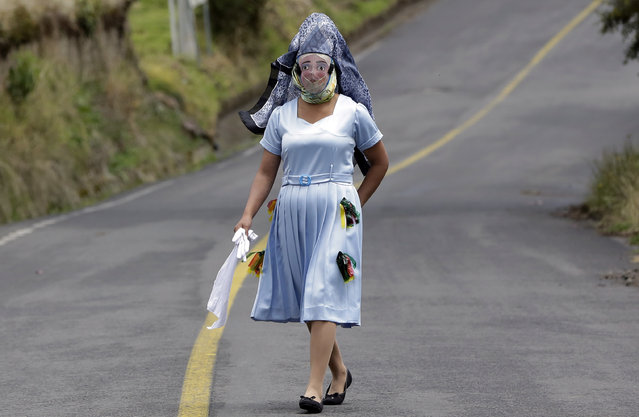
A woman dressed for la “La Diablada” festival walks down a road in Pillaro, Ecuador, Friday, January 6, 2017. Local legend holds that anyone who adopts a costume for the celebration and wears it at the event six years in a row will have good luck. (Photo by Dolores Ochoa/AP Photo)

A woman dressed for la “La Diablada” festival walks down a road in Pillaro, Ecuador, Friday, January 6, 2017. Local legend holds that anyone who adopts a costume for the celebration and wears it at the event six years in a row will have good luck. (Photo by Dolores Ochoa/AP Photo)
Details
21 Dec 2017 06:35:00
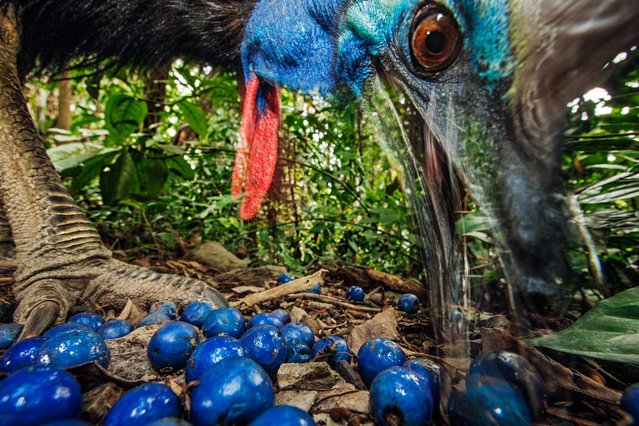
“Cassowaries are large, flightless birds related to emus and (more distantly) to ostriches, rheas, and kiwis”, writes Olivia Judson in the September issue of National Geographic magazine. (Photo by Christian Ziegler/National Geographic)

“Cassowaries are large, flightless birds related to emus and (more distantly) to ostriches, rheas, and kiwis”, writes Olivia Judson in the September issue of National Geographic magazine. How large? People-size: Adult males stand well over five foot five and top 110 pounds. Females are even taller, and can weigh more than 160 pounds. Dangerous when roused, they’re shy and peaceable when left alone. But even birds this big and tough are prey to habitat loss. The dense New Guinea and Australia rain forests where they live have dwindled. Today cassowaries might number 1,500 to 2,000. And because they help shape those same forests – by moving seeds from one place to another – “if they vanish”, Judson writes, “the structure of the forest would gradually change” too. (Photo by Christian Ziegler/National Geographic)
Details
06 Jan 2014 12:21:00