Loading...
Done
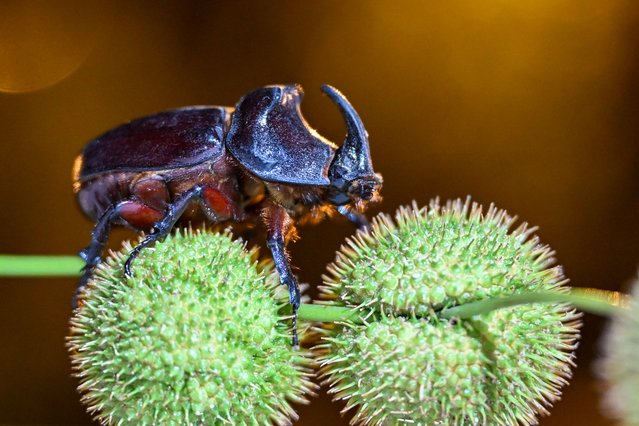
A “Rhino Beetle” (Oryctes nasicornis) is seen in Edremit, Van, Turkiye on August 2, 2024. Named “Rhino Beetle” due to the horn on its head, this beetle is commonly found in moist areas across Europe and Turkiye. (Photo by Ozkan Bilgin/Anadolu via Getty Images)

A “Rhino Beetle” (Oryctes nasicornis) is seen in Edremit, Van, Turkiye on August 2, 2024. Named “Rhino Beetle” due to the horn on its head, this beetle is commonly found in moist areas across Europe and Turkiye. (Photo by Ozkan Bilgin/Anadolu via Getty Images)
Details
24 Aug 2024 04:43:00
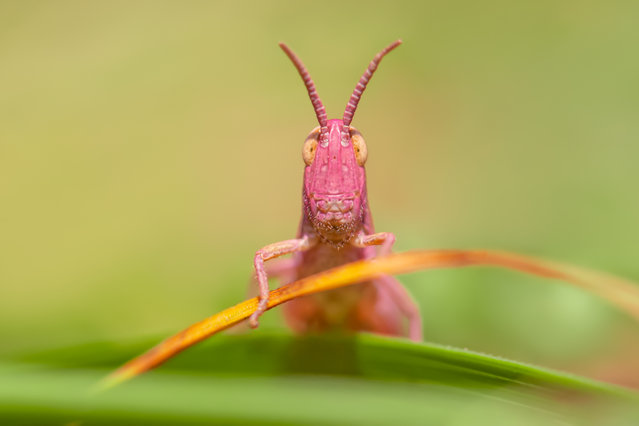
A rare grasshopper shines bright against its leafy background in North Holland, Netherlands in the first decade of October 2024. The insects are usually brown or green but turn pink due to a genetic mutation. (Photo by Roeselien Raimond/Media Drum Images)

A rare grasshopper shines bright against its leafy background in North Holland, Netherlands in the first decade of October 2024. The insects are usually brown or green but turn pink due to a genetic mutation. (Photo by Roeselien Raimond/Media Drum Images)
Details
09 Feb 2025 04:34:00
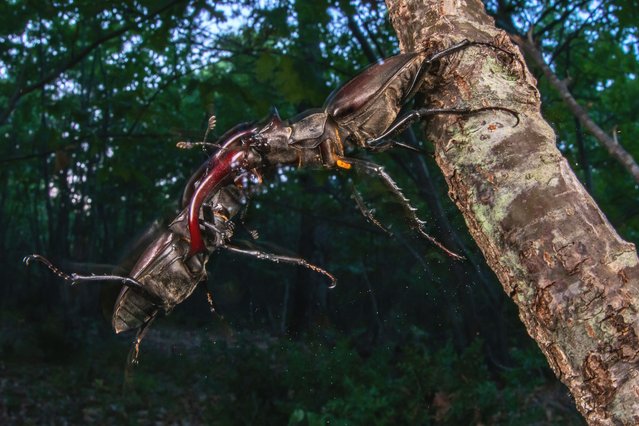
Combat between two male stag beetles, Italy, 2022. During the mating season, male stag beetles (Lucanus cervus) go into a frenzy, with lively but harmless clashes, in which bigger males often have the advantage over smaller ones due to their impressive mandibles. Longer larval development and genetic traits can increase the size of some individuals, but all saproxylic beetles are threatened by poor forest management, logging and dead wood removal to “clean” the forest. (Photo by Iacopo Nerozzi)

Combat between two male stag beetles, Italy, 2022. During the mating season, male stag beetles (Lucanus cervus) go into a frenzy, with lively but harmless clashes, in which bigger males often have the advantage over smaller ones due to their impressive mandibles. Longer larval development and genetic traits can increase the size of some individuals, but all saproxylic beetles are threatened by poor forest management, logging and dead wood removal to “clean” the forest. (Photo by Iacopo Nerozzi)

Details
20 Jul 2025 03:15:00
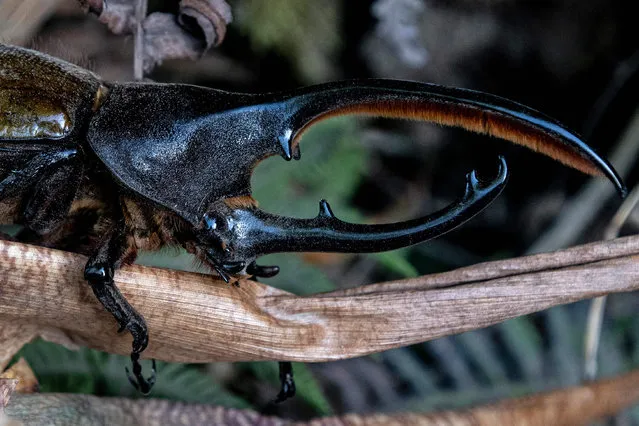
A Hercules beetle, one of the largest species of its kind, in seen at the Monteverde Cloud Forest Biological Reserve, in Puntarenas, Costa Rica, on May 23, 2023. In the Monteverde cloud forest, dense fog among the lush vegetation is increasingly rare and temperatures are increasing each year due to climate change. (Photo by Ezequiel Becerra/AFP Photo)

A Hercules beetle, one of the largest species of its kind, in seen at the Monteverde Cloud Forest Biological Reserve, in Puntarenas, Costa Rica, on May 23, 2023. In the Monteverde cloud forest, dense fog among the lush vegetation is increasingly rare and temperatures are increasing each year due to climate change. (Photo by Ezequiel Becerra/AFP Photo)
Details
21 Sep 2023 03:34:00
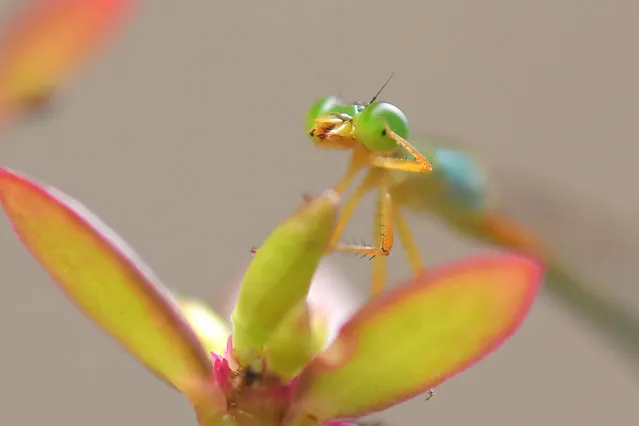
A damselfly sits on a leaf at a garden in Nagaon district in the northeastern state of Assam, India, on October 3 , 2023. (Photo by Anuwar Hazarika/NurPhoto/Rex Features/Shutterstock)

A damselfly sits on a leaf at a garden in Nagaon district in the northeastern state of Assam, India, on October 3 , 2023. (Photo by Anuwar Hazarika/NurPhoto/Rex Features/Shutterstock)
Details
31 Dec 2023 21:36:00
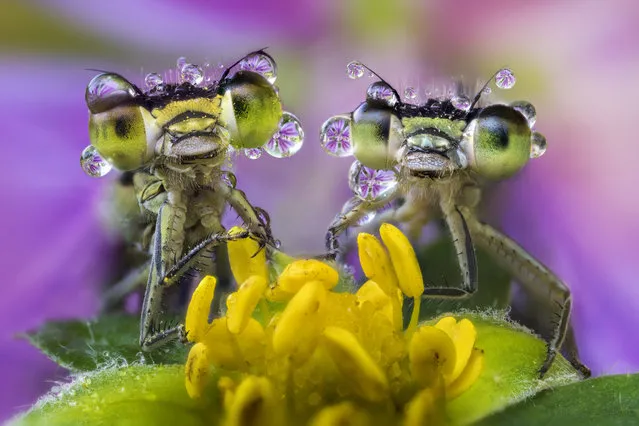
Damselflies covered in dew rest on a wild flower by the Po River, northern Italy on August 15, 2016. (Photo by Alberto Ghizzi Panizza/Barcroft Images)

Damselflies covered in dew rest on a wild flower by the Po River, northern Italy on August 15, 2016. (Photo by Alberto Ghizzi Panizza/Barcroft Images)
Details
03 Dec 2016 11:50:00
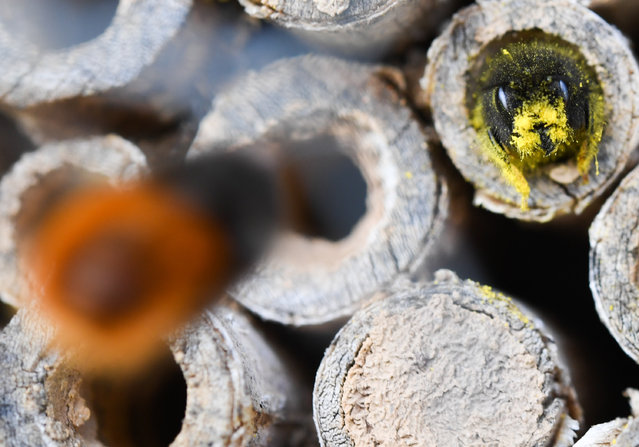
A mason bee deposits its collected pollen in an elderberry stick near Hessen, Germany on March 27, 2020. The food supply is sufficient for the eleven-month development of the brood from the egg to the finished bee. Wild bees are active in March and April and die before their offspring hatch. (Photo by Arne Dedert/dpa)

A mason bee deposits its collected pollen in an elderberry stick near Hessen, Germany on March 27, 2020. The food supply is sufficient for the eleven-month development of the brood from the egg to the finished bee. Wild bees are active in March and April and die before their offspring hatch. (Photo by Arne Dedert/dpa)
Details
22 Jul 2020 00:03:00
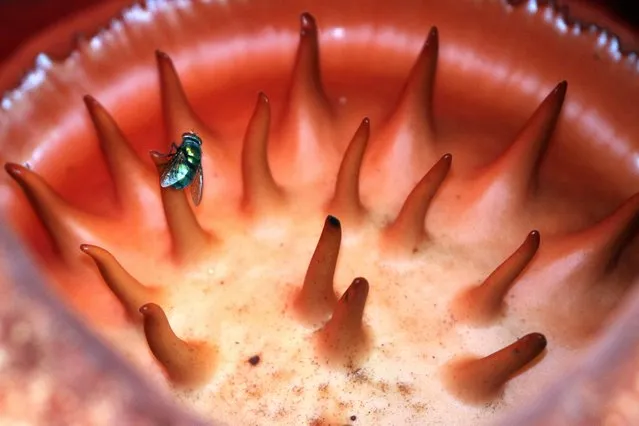
The Rafflesia Arnoldi flower (Amarphophallus titanum) which has been cultivated is seen in Palupuah Village, Agam District, West Sumatra, Indonesia, on April 13, 2022. The West Sumatera Nature Conservation Agency (BKSDA) estimates around seven Rafflesia Arnoldi flowers will bloom in Palupuah Village this year. (Photo by Adi Prima/Anadolu Agency via Getty Images)

The Rafflesia Arnoldi flower (Amarphophallus titanum) which has been cultivated is seen in Palupuah Village, Agam District, West Sumatra, Indonesia, on April 13, 2022. The West Sumatera Nature Conservation Agency (BKSDA) estimates around seven Rafflesia Arnoldi flowers will bloom in Palupuah Village this year. (Photo by Adi Prima/Anadolu Agency via Getty Images)
Details
11 Mar 2023 03:36:00