Children play at a makeshift camp for migrants and refugees at the Greek-Macedonian border near the village of Idomeni, Greece, March 29, 2016. (Photo by Marko Djurica/Reuters)
A woman and a child make a bonfire at a makeshift camp for migrants and refugees at the Greek-Macedonian border near the village of Idomeni, Greece, April 1, 2016. (Photo by Marko Djurica/Reuters)
Audience take photos of a model presenting a creation by Greek designer Dimitrios Ordoulidis during the 10th Athens Exclusive Fashion Week in Athens, Greece, October 22, 2016. (Photo by Alkis Konstantinidis/Reuters)
A young Chinese girl kicks during a kung-fu class at Ritan Park on June 11, 2016 in Beijing, China. Ritan, meaning “sun altar”, is among the oldest parks in Beijing, built in the early 1500s during the Ming dynasty for the emperor to make sacrifices to the sun. (Photo by Kevin Frayer/Getty Images)
This particular Gingko tree (aka Gingko Biloba) is not just any tree. It was reportedly planted by Tang Dynasty's Emperor Taizong, the emperor portrayed in Fang Bingbing's Empress of China, from over a thousand years ago. Take a look at these stunning photos when the Gingko tree displays its full glory in late autumn.
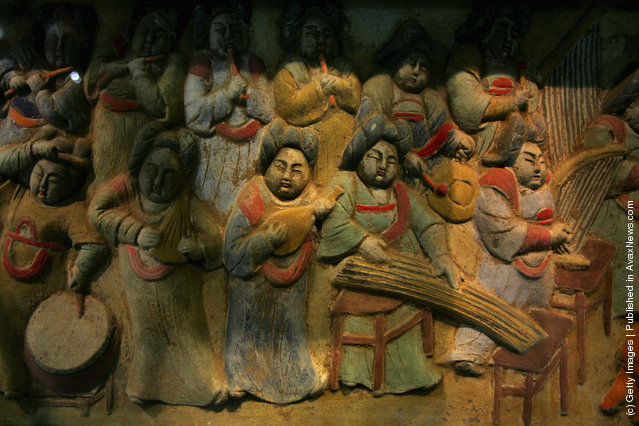
Brick-carving featuring Tang Dynasty (AD 618-907) maids performing musical instruments is seen at the Chinese Music History Museum in Xian University of Architecture and Technology on September 27, 2008 in Xian of Shaanxi Province, China. (Photo by China Photos/Getty Images)
The common brushtail possum (Trichosurus vulpecula, from the Greek for "furry tailed" and the Latin for "little fox", previously in the genus Phalangista) is a nocturnal, semi-arboreal marsupial of the family Phalangeridae, it is native to Australia, and the second largest of the possums.
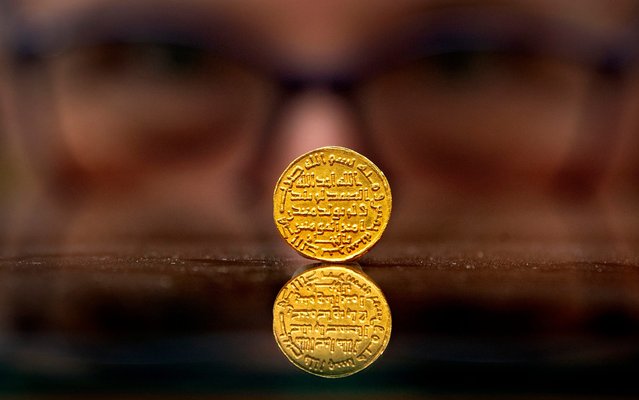
A member of staff at Morton & Eden holds an extremely rare early Islamic gold coin on Thursday September 12, 2019, which is expected to fetch £1.4m at auction in London. Measuring a 20mm across, about the size of a modern £1 piece, it is one of the world's rarest and most treasured Islamic gold coins from the first dynasty of Islam, the Umayyad gold dinar dated 105h (723AD). (Photo by Victoria Jones/PA Images via Getty Images)