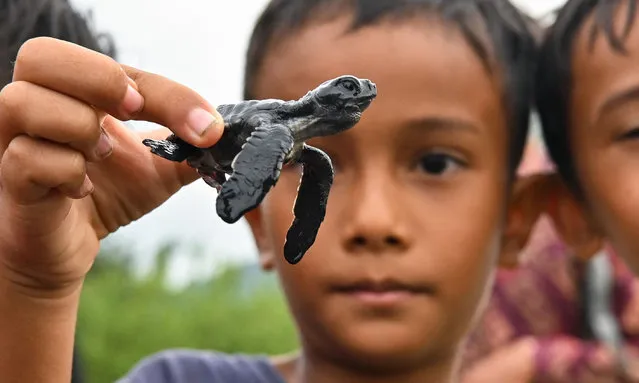
A boy holds a green sea turtle hatchling before releasing it at Pekan Bada beach on the outskirts of Banda Aceh on March 14, 2023. (Photo by Chaideer Mahyuddin/AFP Photo)
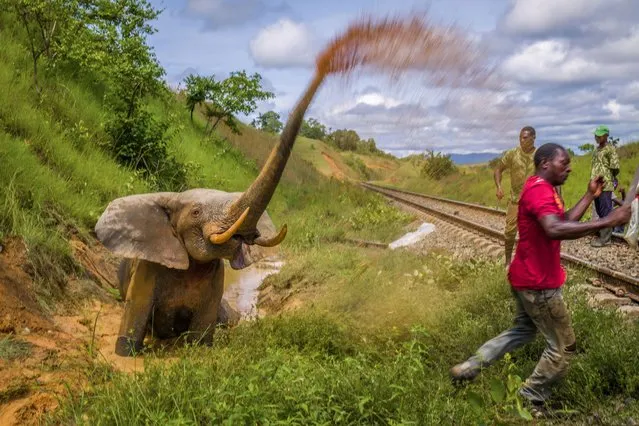
Grand prize winner: environmental photographer of the year 2023; also 1st place in the humanity v nature category; and winner of the 2023 public award. Lopé national park, Gabon, 2021. An angry elephant tries to defend itself after it was hit by a train that crosses paths the animals use within Lopé national park. Park officials decided the elephant was too severely injured to be saved. After it was killed, the park director distributed the meat to local people. As the forest loses its carrying capacity to sustain its megafauna, this kind of human-wildlife conflict is increasing. (Photo by Jasper Doest/Environmental Photography Award)
Teachers, students and sympathizers take part in an anti-government protest in Budapest on March 15, 2023, to mark the 175th anniversary of the 1848-1849 Hungarian Civic Revolution and War of Independence. (Photo by Peter Kohalmi/AFP Photo)
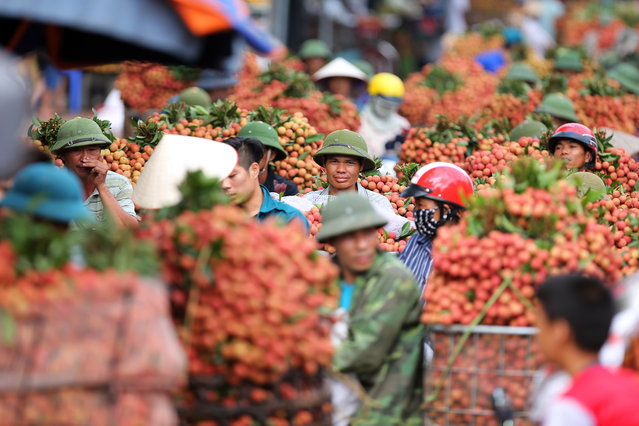
People carry lychee for sale on a motorbike on a street in Luc Ngan, Bac Giang province, Vietnam, 22 June 2016. Lychee output in Bac Giang province is expected to reach 130,000 tonnes this year. China is still Vietnam's main lychee export market so far, buying around 60 percent of the annual crop, according to official reports. (Photo by Luong Thai Linh/EPA)
Members of team China perform during the Artistic Swimming Team Free Final at the FINA Swimming World Championships in Gwangju, South Korea, 19 July 2019. (Photo by Antonio Bat/EPA/EFE/Rex Features/Shutterstock)
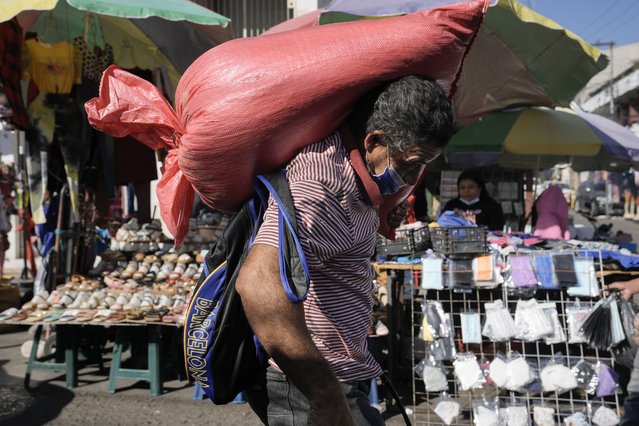
A man carries a sack of corn through the Comayaguela market on the outskirts of Tegucigalpa, days after general eletions in Honduras, Tuesday, November 30, 2021. Free Party presidential candidate Xiomara Castro, the wife of ousted former president Manuel Zelaya, has taken a commanding lead in Honduras' elections, capping a 12-year effort. (Photo by Moises Castillo/AP Photo)
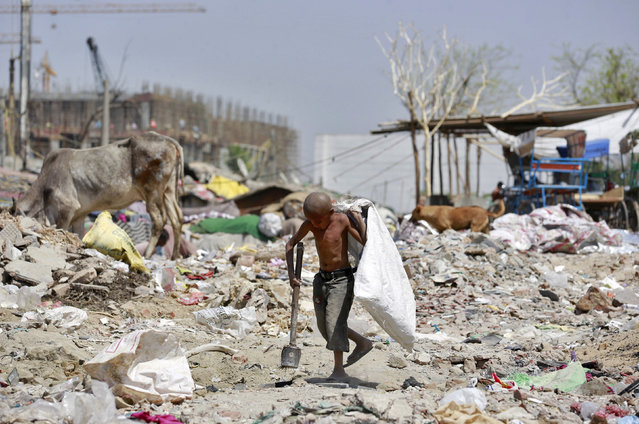
A boy looks for scrap metal using an improvised magnetic tool near a construction site in New Delhi, India, March 21, 2016. (Photo by Cathal McNaughton/Reuters)
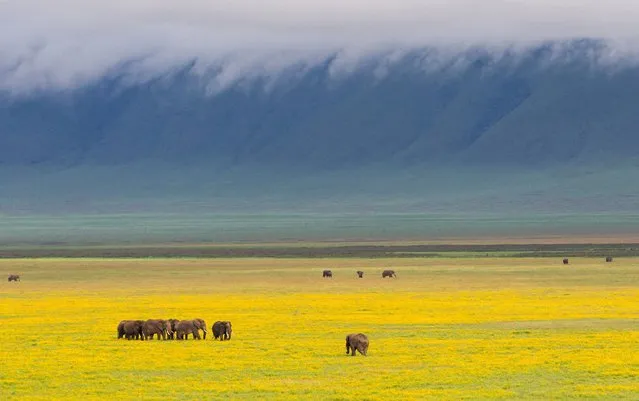
Ngorongoro Crater (Tanzania). At 610m deep and 260 sq km, this is the largest unflooded caldera in the world. A blue-green vision from above it's a haven for engangered wildlife and Maasai livestock. The crater was formed three million years ago when a giant volcano, which could have been as high as Kilimanjaro, exploded and collapsed. The caldera formed the concentric fractures in the crust cracked down to a magma reservoir deep underground. (Photo by John Bryant/Getty Images)