Loading...
Done
Japanese Manhole Covers Photos By S. Morita Part 1

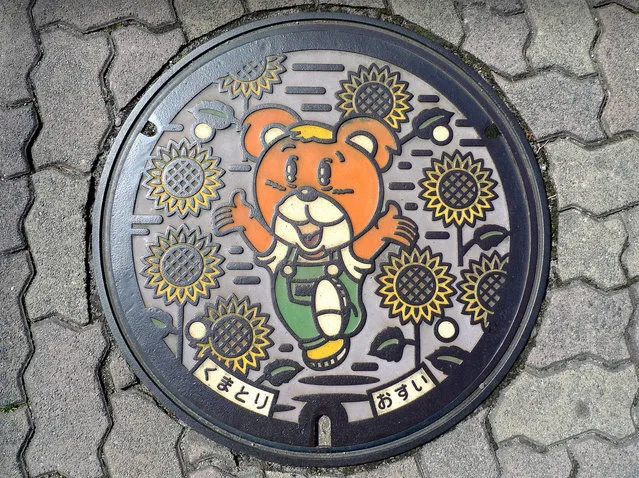
Japan is a country full of art. Much of this is housed in museums and galleries, but others are right under our feet. We speak, of Japan’s peculiar obsession with manhole covers. Almost anywhere in the country you can find manhole covers with spectacular grounds, each more beautiful and complex than the previous. In recent years, S. Morita photographer has traveled around Japan and leave us this great gathering on the beautiful and artistic Japanese manhole covers.
Details
03 Apr 2014 14:31:00


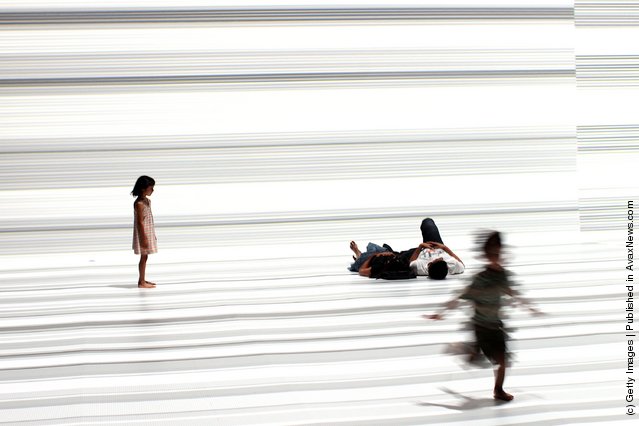
Children play at the Ryoji Ikeda exhibition “the transfinite” at the Park Avenue Armory on June 10, 2011 in New York City. The audio visual installation, which will close after tomorrow, features two back-two-back screens displaying a continual loop of sounds, fragments of numbers and strobe-lit patterns that echo the Japanese artist's interest in mathematics, the subconscious and the digital world. (Photo by Spencer Platt/Getty Images)
Details
11 Jun 2011 12:16:00


荻野目洋子 (Yoko Oginome) feat. 登美丘高校ダンス部がコ (Tomioka High School Dance Club) – ダンシング・ヒーロー (Dancing Hero)
Details
21 Jul 2020 00:03:00
Japanese Yuuka Hasumi, 17, and Ibuki Ito, 17, also from Japan, who want to become K-pop stars, perform at an Acopia School party in Seoul, South Korea, March 16, 2019. Acopia is a prep school offering young Japanese a shot at K-pop stardom, teaching them the dance moves, the songs and also the language. (Photo by Kim Hong-Ji/Reuters)

Japanese Yuuka Hasumi, 17, and Ibuki Ito, 17, also from Japan, who want to become K-pop stars, perform at an Acopia School party in Seoul, South Korea, March 16, 2019. Acopia is a prep school offering young Japanese a shot at K-pop stardom, teaching them the dance moves, the songs and also the language. (Photo by Kim Hong-Ji/Reuters)
Details
06 Jun 2019 00:01:00


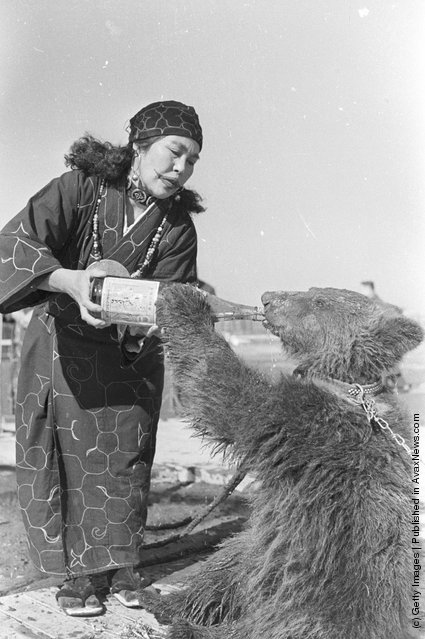
“The Ainu (アイヌ?), also called Aynu, Aino (アイノ), and in historical texts Ezo (蝦夷), are indigenous people or groups in Japan and Russia. Historically they spoke the Ainu language and related varieties and lived in Hokkaidō, the Kuril Islands, and much of Sakhalin. Most of those who identify themselves as Ainu still live in this same region, though the exact number of living Ainu is unknown. This is due to ethnic issues in Japan resulting in those with Ainu backgrounds hiding their identities and confusion over mixed heritages. In Japan, because of intermarriage over many years with Japanese, the concept of a 'pure Ainu' ethnic group is no longer feasible. Official estimates of the population are of around 25,000, while the unofficial number is upwards of 200,000 people”. – Wkipedia

Photo: A captive bear drinking from a large bottle held by an Ainu tribeswoman. (Photo by Evans/Three Lions/Getty Images). Circa 1955
Details
24 Mar 2011 14:01:00
An instructor (C) adjusts the posture of students of flight attendant major during a training session at Anhui Foreign Languages University, in Hefei, Anhui province, China, May 25, 2015. (Photo by Reuters/China Daily)

An instructor (C) adjusts the posture of students of flight attendant major during a training session at Anhui Foreign Languages University, in Hefei, Anhui province, China, May 25, 2015. (Photo by Reuters/China Daily)
Details
26 May 2015 11:05:00
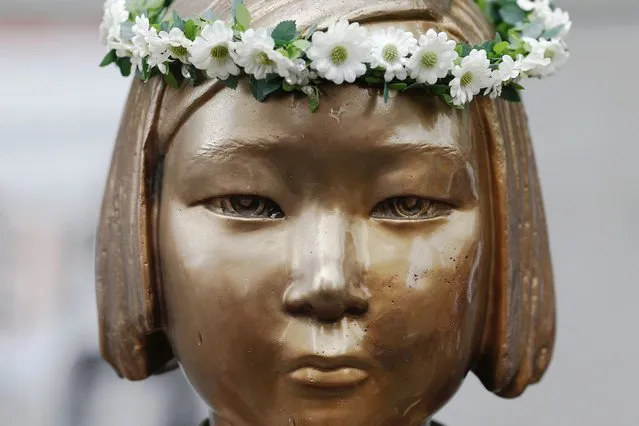
Flowers are placed on a “comfort woman” statue during the weekly Wednesday protest in front of Japanese embassy demanding for an apology and compensation from Japanese government in Seoul, South Korea, July 22, 2015. (Photo by Kim Kyung-Hoon/Reuters)

Flowers are placed on a “comfort woman” statue during the weekly Wednesday protest in front of Japanese embassy demanding for an apology and compensation from Japanese government in Seoul, South Korea, July 22, 2015. “Comfort women” is the Japanese euphemism for women who were forced into prostitution and sexually abused at Japanese military brothels before and during World War Two. (Photo by Kim Kyung-Hoon/Reuters)
Details
13 Aug 2015 11:06:00
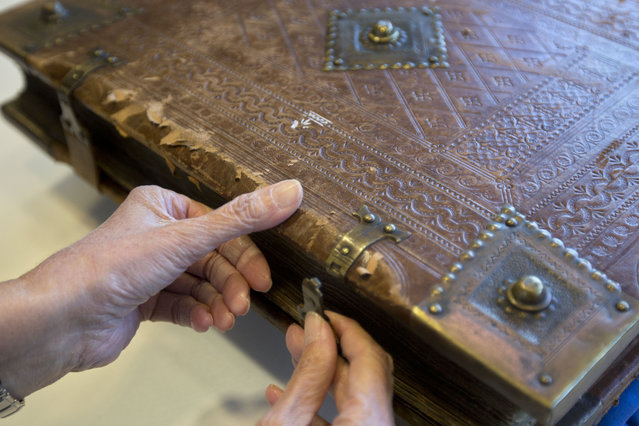
In this photo taken Sunday, October 5, 2014, a library official shows a 13th-century German prayer book containing the earliest evidence of the Yiddish language, at Israel's National Library in Jerusalem. (Photo by Sebastian Scheiner/AP Photo)

In this photo taken Sunday, October 5, 2014, a library official shows a 13th-century German prayer book containing the earliest evidence of the Yiddish language, at Israel's National Library in Jerusalem. This week, Israel's National Library gave The Associated Press a rare peek at a selection of rare historical manuscripts in its collection. (Photo by Sebastian Scheiner/AP Photo)
Details
09 Oct 2014 12:38:00