Loading...
Done
People protest getting evicted from land designated for a Petrobras refinery, at a settlement coined the “First of May Refugee Camp”, referring to the date people moved here and set up tents and shacks to live in during the new coronavirus pandemic in Itaguai, Rio de Janeiro state, Brazil, Thursday, July 1, 2021. (Photo by Silvia Izquierdo/AP Photo)

People protest getting evicted from land designated for a Petrobras refinery, at a settlement coined the “First of May Refugee Camp”, referring to the date people moved here and set up tents and shacks to live in during the new coronavirus pandemic in Itaguai, Rio de Janeiro state, Brazil, Thursday, July 1, 2021. (Photo by Silvia Izquierdo/AP Photo)
Details
02 Jul 2021 10:11:00


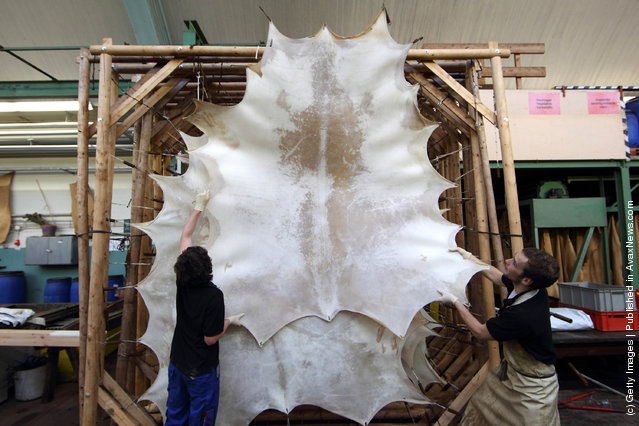
REUTLINGEN, GERMANY - NOVEMBER 17: Students hang out finished parchment leather at the LGR (Lederinstitut Gerberschule Reutlingen) tannery school on November 17, 2010 in Reutlingen, Germany. Even in early antiquity and up their hair or dried goat and sheep skins were used as material for documents. In the small Asian city Pergamon these skins were processed in large quantities for this purpose, so they formed the main trading arm of the city, of which the name is parchment is derived. In medieval times, reached the parchment is of great importance, it was such as France's production under the supervision of the University of Paris. Even now, important documents, placed on their unlimited shelf life as possible large value (eg diplomas, addresses, memory, writings, documents for primary and keystones) written on parchment...

Details
20 Nov 2011 18:17:00
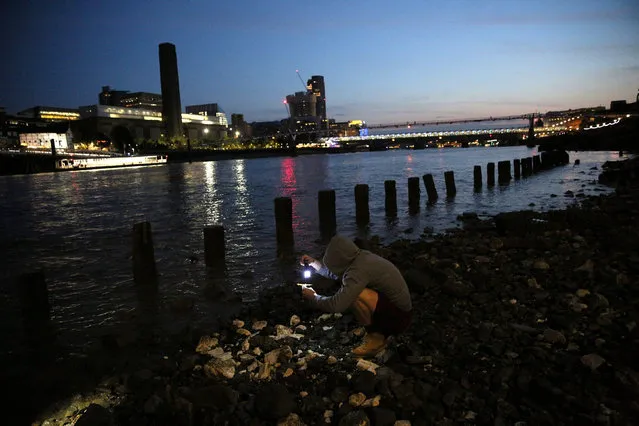
A mudlark uses a torch to look for items on the bank of the River Thames in London, Britain June 06, 2016. Mudlarking is believed to trace its origins to the 18th and 19th century, when scavengers searched the Thames' shores for items to sell. These days, history and archaeology fans are the ones hoping to find old relics such as coins, ceramics, artifacts or everyday items from across centuries. They wait for the low tide and then scour specific areas of exposed shores. "If you're in a field you could be out all day long, with the river you're restricted to about two or three hours," mudlark Nick Stevens said. While many just use the naked eye for their searches, others rely on metal detectors for which a permit from the Port of London Authority is needed. Digging also requires consent. (Photo by Neil Hall/Reuters)

A mudlark uses a torch to look for items on the bank of the River Thames in London, Britain June 06, 2016. Mudlarking is believed to trace its origins to the 18th and 19th century, when scavengers searched the Thames' shores for items to sell. These days, history and archaeology fans are the ones hoping to find old relics such as coins, ceramics, artifacts or everyday items from across centuries. their finds with the Portable Antiquities Scheme. Any item over 300 years old must be recorded. (Photo by Neil Hall/Reuters)
Details
27 Aug 2016 10:43:00
Soldier boys at Fort Dix, N.J., learn something about guns during their working hours, as they show their girlfriends at a camp dance, December 13, 1940. In front row, playing with the coin amusement gun, from left: Pvt. Tom D'Amato of West Orange; Rose Sinkewicz, behind gun site, of Trenton; Julia Ivans of Trenton, and Pvt. Vernon Landers of Kearney. Back row: Pvts. William Sargent and William Corlies of Philadelphia. (Photo by AP Photo)

Soldier boys at Fort Dix, N.J., learn something about guns during their working hours, as they show their girlfriends at a camp dance, December 13, 1940. In front row, playing with the coin amusement gun, from left: Pvt. Tom D'Amato of West Orange; Rose Sinkewicz, behind gun site, of Trenton; Julia Ivans of Trenton, and Pvt. Vernon Landers of Kearney. Back row: Pvts. William Sargent and William Corlies of Philadelphia. (Photo by AP Photo)
Details
06 Mar 2018 00:03:00
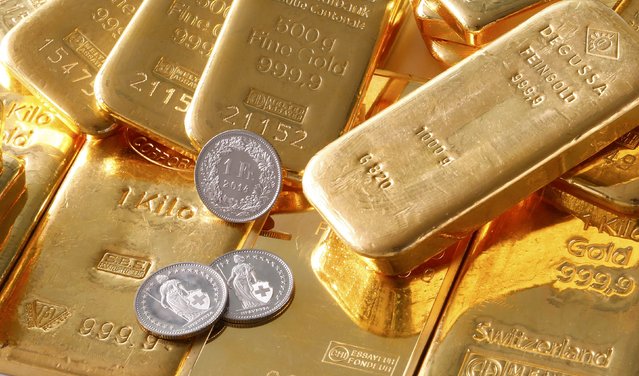
Gold bars from the vault of a bank and Swiss one franc coins are seen in this illustration picture taken in Zurich November 20, 2014. The “Save our Swiss gold” proposal, spearheaded by the right-wing Swiss People's Party (SVP), aims to ban the central bank from offloading its reserves and oblige it to hold at least 20 percent of its assets in gold. The referendum is scheduled for November 30. The SVP argues it would secure a stable Swiss franc. (Photo by Arnd Wiegmann/Reuters)

Gold bars from the vault of a bank and Swiss one franc coins are seen in this illustration picture taken in Zurich November 20, 2014. The “Save our Swiss gold” proposal, spearheaded by the right-wing Swiss People's Party (SVP), aims to ban the central bank from offloading its reserves and oblige it to hold at least 20 percent of its assets in gold. The referendum is scheduled for November 30. The SVP argues it would secure a stable Swiss franc. (Photo by Arnd Wiegmann/Reuters)
Details
22 Nov 2014 13:31:00
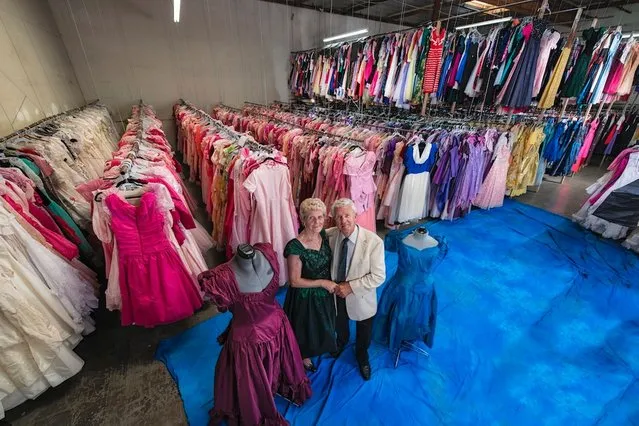
Paul Brockmans Collection Of 55,000 Dresses Bought For His Wife

There are many types of collections. Some are formed by purposefully collecting certain objects, such as stamps or coins. However, some collections are only a byproduct of an obsession, a quirk of mind. For example, Paul Brockmann got into the habit of buying his girlfriend and later his wife a dress every time they went ballroom dancing. It might seem excessive to some, but it was his way of showing his affection. Overtime, this collection grew to be enormous, counting 55,000 dresses in total. Basic math tells us that either they went ballroom dancing three times per day for every day of their lives, or he bought them in huge bundles every time.
Details
28 Mar 2015 10:11:00
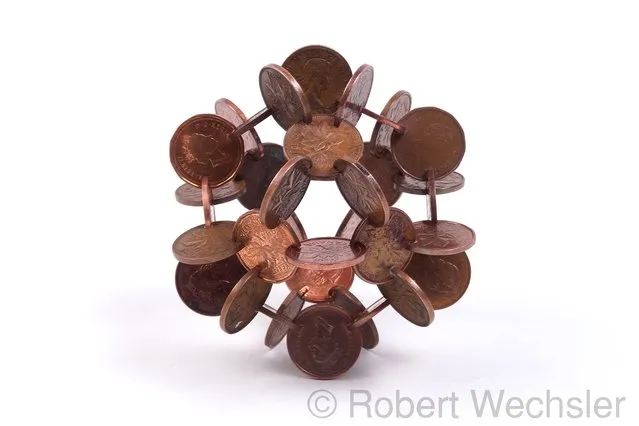
Mendicant By Robert Wechsler

American artist Robert Wechsler has realized a series of sculptural cubes made from thousands of pennies titled “The Mendicant“. Cubes achieved by notching and joining pennies in perfect orientation to one another. Joined at perpendicular angles, the coins create a lattice structure allowing tunnel like passages of light from certain angles. As one moves around them, the cubes seem to fluctuate from material to ethereal. The number of pennies increases exponentially with the size of the cube. Pictured here are three cubes differentiated with subtitles indicating the exact quantity used.
Details
21 Oct 2013 11:18:00


Defined according to wikipedia it is “a recent and informal geologic chronological term that serves to mark the evidence and extent of human activities that have had a significant global impact on the Earth’s ecosystems. The term was coined by ecologist Eugene Stoermer but has been widely popularized by the Nobel Prize-winning atmospheric chemist Paul Crutzen.”

The images here where created by Felix Pharand-Deschenes depicting how various human influences, from road and rail, to internet cables and airlines create significant patterns covering the Earth. What can we learn from these patterns in how they are influencing the environment
Details
19 Aug 2012 10:40:00