Loading...
Done
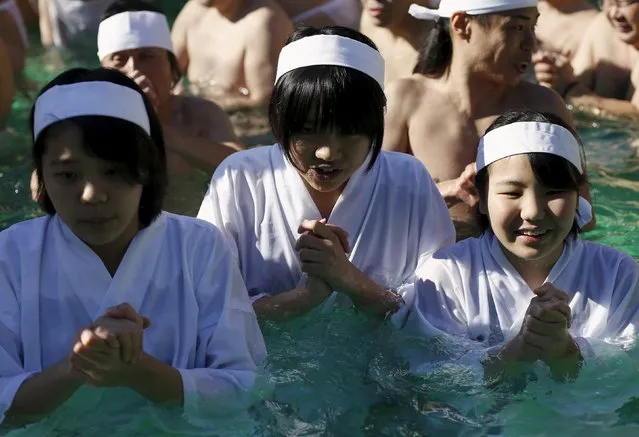
Women wearing "Shiroshozoku" or the traditional white robe pray as they bathe in ice-cold water at the Teppozu Inari shrine in Tokyo, Japan, January 10, 2016. (Photo by Yuya Shino/Reuters)

Women wearing "Shiroshozoku" or the traditional white robe pray as they bathe in ice-cold water at the Teppozu Inari shrine in Tokyo, Japan, January 10, 2016. About 100 participants took part in the Shinto ceremony to purify their souls and wish for good health in the new year. (Photo by Yuya Shino/Reuters)
Details
12 Jan 2016 08:04:00


It looks like 2024 has ended and we are still alive (although of course it's not evening yet). Well, let's wish ourselves the same in the future. If someone wants to put USDT TRC20 under the tree: TDWPvSi7RY4wNZPukDRyKghhLGTGsRNRBe (nobody will put anything, of course – but you understand, it's a ritual). Happy New Year! And now disco.
Details
31 Dec 2024 04:28:00
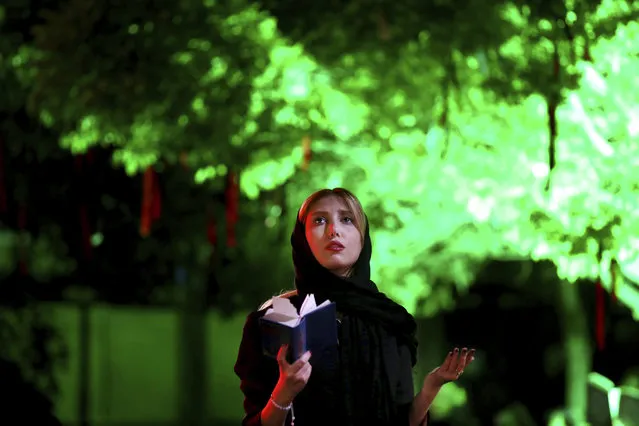
An Iranian Shiite Muslim prays in Laylat al-Qadr, or the night of destiny, during holy fasting month of Ramadan after midnight, in central Tehran, Iran, early Sunday, June 18, 2017. Laylat al-Qadr is the night when Muslims believe the Quran was first revealed to prophet Muhammad. Worshipers gather in religious ceremonies to pray, ask forgiveness and make wishes on one of the most important nights of the Islamic calendar. Shiite Muslims, the vast majority of Iranians, believe the night happens either on 19th, 21st or 23rd of the holy month of Ramadan. (Photo by Ebrahim Noroozi/AP Photo)

An Iranian Shiite Muslim prays in Laylat al-Qadr, or the night of destiny, during holy fasting month of Ramadan after midnight, in central Tehran, Iran, early Sunday, June 18, 2017. Laylat al-Qadr is the night when Muslims believe the Quran was first revealed to prophet Muhammad. Worshipers gather in religious ceremonies to pray, ask forgiveness and make wishes on one of the most important nights of the Islamic calendar. Shiite Muslims, the vast majority of Iranians, believe the night happens either on 19th, 21st or 23rd of the holy month of Ramadan. (Photo by Ebrahim Noroozi/AP Photo)
Details
18 Jun 2017 03:43:00
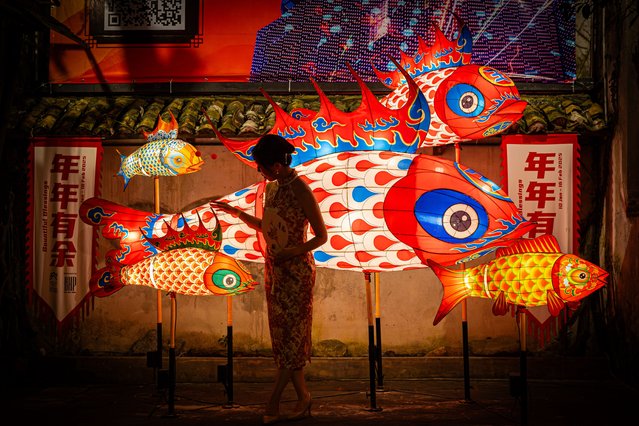
A woman dressed in a cheongsam interacts gracefully with vibrant fish lanterns at Kwai Chai Hong, a heritage revival alley in Chinatown, on January 09, 2025, in Kuala Lumpur, Malaysia. Kwai Chai Hong celebrates the Lunar New Year with an immersive art installation titled Bountiful Blessings, inspired by the idiom “Nian Nian You Yu”, which translates to “Wishing an Abundance Year After Year”, blending traditional fish lanterns with modern lights to inspire abundance and prosperity, inviting visitors to embark on a cultural journey of generosity and abundance for future generations. (Photo by Annice Lyn/Getty Images)

A woman dressed in a cheongsam interacts gracefully with vibrant fish lanterns at Kwai Chai Hong, a heritage revival alley in Chinatown, on January 09, 2025, in Kuala Lumpur, Malaysia. Kwai Chai Hong celebrates the Lunar New Year with an immersive art installation titled Bountiful Blessings, inspired by the idiom “Nian Nian You Yu”, which translates to “Wishing an Abundance Year After Year”, blending traditional fish lanterns with modern lights to inspire abundance and prosperity, inviting visitors to embark on a cultural journey of generosity and abundance for future generations. (Photo by Annice Lyn/Getty Images)
Details
12 Feb 2025 03:54:00
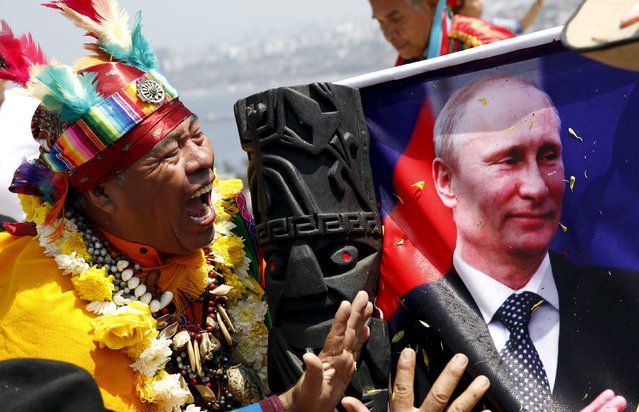
Peruvian shamans holding a poster of Russia's President Vladimir Putin perform a ritual of predictions for the new year at Morro Solar hill in Chorrillos, Lima, Peru, December 29, 2015. (Photo by Mariana Bazo/Reuters)

Peruvian shamans holding a poster of Russia's President Vladimir Putin perform a ritual of predictions for the new year at Morro Solar hill in Chorrillos, Lima, Peru, December 29, 2015. The ritual is an end-of-the-year tradition and the shamans called for world peace and wished good luck for the upcoming elections in Peru and the U.S. (Photo by Mariana Bazo/Reuters)
Details
01 Jan 2016 08:06:00
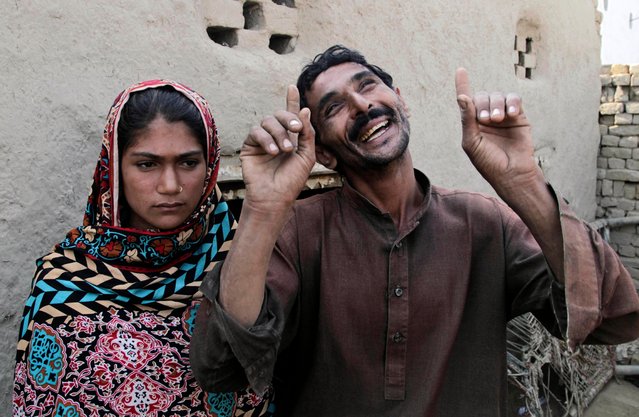
In this Tuesday, December 20, 2016 photo, Mohammad Ramzan, right, reacts while talking to The Associated Press with his young bride Saima in Jampur, Pakistan. Saima was given as a bride to the older man by her father so he could marry the groom’s sister, a practice of exchanging girls that is entrenched in conservative regions of Pakistan. It even has its own name in Urdu: Watta Satta, “give and take”. A mix of interests – family obligations, desire for sons, a wish to hand off a girl to a husband – can lead to a young teen in an a marriage she never sought. (Photo by K.M. Chaudhry/AP Photo)

In this Tuesday, December 20, 2016 photo, Mohammad Ramzan, right, reacts while talking to The Associated Press with his young bride Saima in Jampur, Pakistan. Saima was given as a bride to the older man by her father so he could marry the groom’s sister, a practice of exchanging girls that is entrenched in conservative regions of Pakistan. It even has its own name in Urdu: Watta Satta, “give and take”. A mix of interests – family obligations, desire for sons, a wish to hand off a girl to a husband – can lead to a young teen in an a marriage she never sought. (Photo by K.M. Chaudhry/AP Photo)
Details
31 Dec 2016 10:08:00
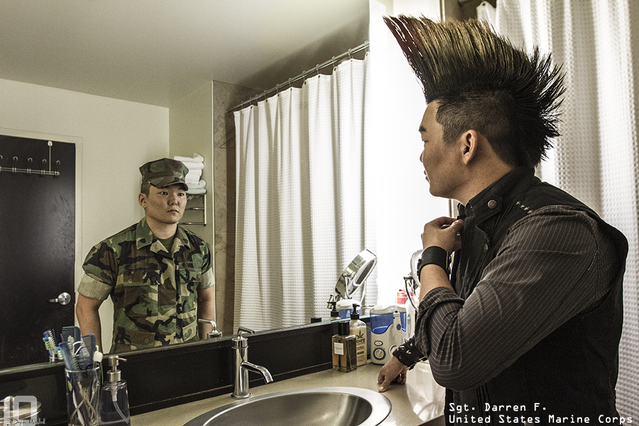
The Veteran Art Project By Devin Mitchell

Each day as we look in the mirror, we think that we know ourselves. We are used to the image that we see before us, but the mirror can show us much more than we ever hoped to see. Sometimes it only shows basic emotions, while at other times it can highlight the deepest crevices of our soul. If you wish, in the reflection of the mirror you can see your deepest thoughts, masks that you wear every day, your desires, and of course the people that you think about. But are you brave enough to look deep within your soul? Will you dive headlong or shy away from your true image? Those that will muster up the courage necessary will realize it was well worth the effort. (Photo by Devin Mitchell)
Details
30 Nov 2014 12:42:00
A relative (L) of Champa Devi, 88, sits next to her body, minutes after her death at Mukti Bhavan (Salvation House) at Varanasi, in the northern Indian state of Uttar Pradesh, June 21, 2014. (Photo by Danish Siddiqui/Reuters)

A relative (L) of Champa Devi, 88, sits next to her body, minutes after her death at Mukti Bhavan (Salvation House) at Varanasi, in the northern Indian state of Uttar Pradesh, June 21, 2014. The city of Varanasi, on the banks of the River Ganges, is widely considered Hinduism's holiest city and many Hindus believe that dying there and having their remains scattered in the Ganges allows their soul to escape a cycle of death and rebirth, attaining “moksha” or salvation. “Mukti Bhavan” or “Salvation House”, is a charity-run hostel that caters for people who wish to come to Varanasi to die. Guests can normally stay up to two weeks after which, if they haven't yet passed away, they are gently asked to leave. (Photo by Danish Siddiqui/Reuters)
Details
24 Jul 2014 12:32:00