Loading...
Done
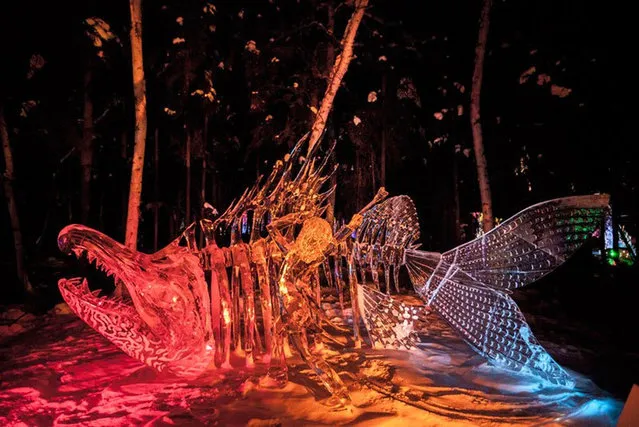
Ice Alaska – World Ice Art Championships 2013

Every year in Fairbanks, Alaska, the World Ice Art Championships takes place, and it is no cute little side hobby. Praised as one of the world’s largest ice sculpting competitions and exhibitions, the World Ice Art Championships has grown into a month-long event featuring more than 70 teams from around the world. The works are stunning and often massive in both size and visual appeal.


Details
23 Dec 2013 08:12:00
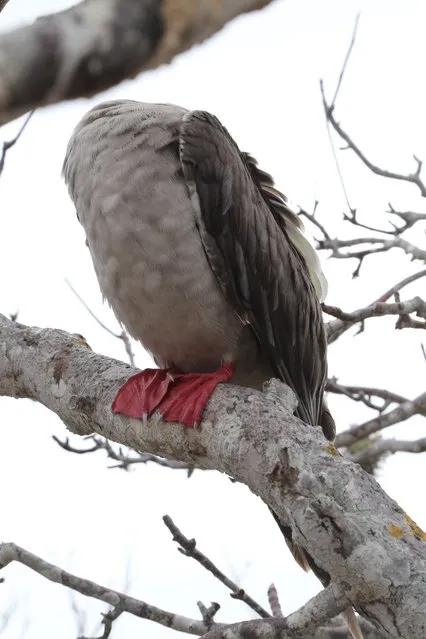
Red-Footed Booby

The red-footed booby is the smallest of all boobies at about 70 centimetres (28 in) in length and with a wingspan of up to 1 metre (3.3 ft). It has red legs, and its bill and throat pouch are coloured pink and blue.

See Also: Blue
Details
05 Oct 2014 10:24:00
Model and Reebok Easytone Ambassador Miranda Kerr reveals a 3D image shot by Rankin during a Reebok Satisfaction photo call

Model and Reebok Easytone Ambassador Miranda Kerr reveals a 3D image shot by Rankin during a Reebok Satisfaction photo call on the roof of the Bayerisch Hof Hotel on April 17, 2012 in Munich, Germany. (Photo by Alexander Hassenstein/Reebok)
Details
18 Apr 2012 12:19:00
The Toyota FCV Plus fuel cell concept car is displayed on media day at the Paris auto show, in Paris, France, September 29, 2016. (Photo by Benoit Tessier/Reuters)

The Toyota FCV Plus fuel cell concept car is displayed on media day at the Paris auto show, in Paris, France, September 29, 2016. (Photo by Benoit Tessier/Reuters)
Details
30 Sep 2016 09:20:00
A machine assembles powder, cartridges and bullets tips together to make 300 AAC Blackouts at Barnes Bullets in Mona, Utah, January 6, 2015. (Photo by George Frey/Reuters)

A machine assembles powder, cartridges and bullets tips together to make 300 AAC Blackouts at Barnes Bullets in Mona, Utah, January 6, 2015. (Photo by George Frey/Reuters)
Details
09 Jan 2016 08:00:00


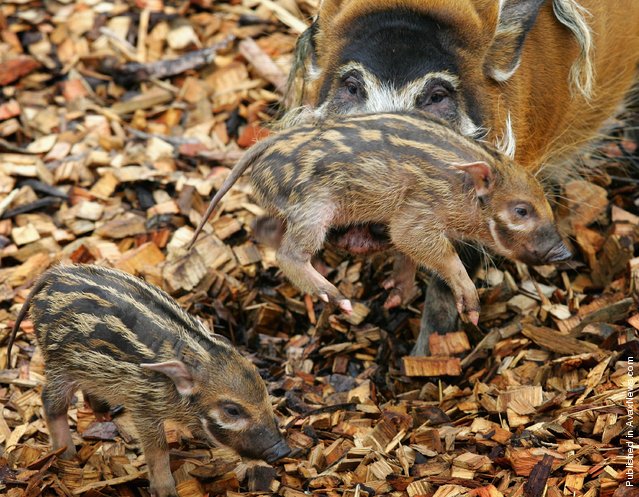
“The Red River Hog (Potamochoerus porcus), also known as the Bush Pig (but not to be confused with P. larvatus, common name “Bushpig”), is a wild member of the pig family living in Africa, with most of its distribution in the Guinean and Congolian forests. It is rarely seen away from rainforests, and generally prefers areas near rivers or swamps.

Red River Hogs eat grass, berries, roots, insects, molluscs, small vertebrates and carrion. They are capable of causing damage to plantations. Red River Hogs typically live in herds of 6-20 members led by a dominant boar. Sows rear 3-6 piglets at a time.”

Photo: Two 17 day old red river hoglet twins forage for food next to their mother Bahiti at London Zoo on August 23, 2007 in London, England. Red River hoglets inhabit the forests and swamps of West and Central Africa. The recent additions to the London Zoo pig pen have been eagerly awaited by zoo keepers. (Photo by Chris Jackson/Getty Images)
Details
18 Mar 2011 15:15:00
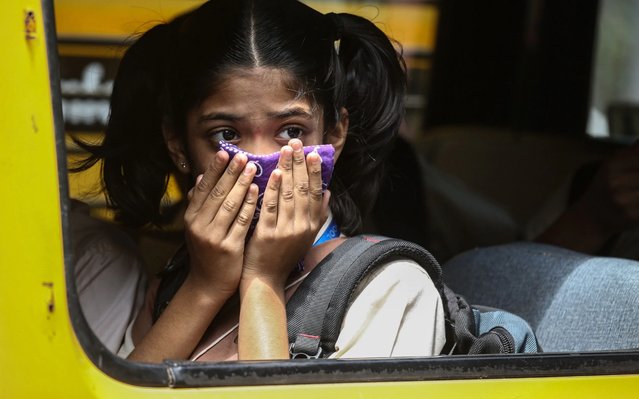
An Indian girl student covers her face as a precaution against the coronavirus outbreak, in Mumbai, India, 12 March 2020. According to media reports, more than 70 people in India have tested positive for COVID-19. The World Health Organisation declared the novel coronavirus or COVID-19 as global pandemic. (Photo by Divyakant Solanki/EPA/EFE/Rex Features/Shutterstock)

An Indian girl student covers her face as a precaution against the coronavirus outbreak, in Mumbai, India, 12 March 2020. According to media reports, more than 70 people in India have tested positive for COVID-19. The World Health Organisation declared the novel coronavirus or COVID-19 as global pandemic. (Photo by Divyakant Solanki/EPA/EFE/Rex Features/Shutterstock)
Details
14 Mar 2020 00:07:00
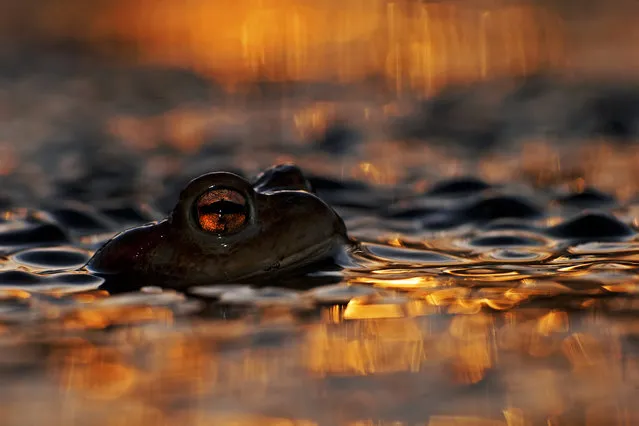
“Eye of a toad”. Animal Portraits, Łukasz Bożycki, Poland.  (Photo by Łukasz Bożycki)

“Eye of a toad”. Animal Portraits, Łukasz Bożycki, Poland. Early spring sees a pond near Łukasz’s home city of Warsaw, Poland, full of mating frogs and a few toads. On this March day, Łukasz shared the pond with them for an evening, sitting in the icy water in his chest-high waders, keeping as still as possible, despite the numbing cold, so that the amphibians could get used to him. “I wanted to find a fresh way of portraying the amphibians”, he says, “at water level”. Using a telephoto lens, he focused on one lone toad and waited for the sun to dip almost below the horizon before pressing the shutter, using flash to bring out the details in the shadow. His prize was “the glorious pool of sunset colour” and fiery glow of the toad’s eye. Nikon D80 + 70-300mm f4.5-5.6 lens + extension tube; 1/125 sec at f9 (-2.3 e/v); ISO 100; built-in flash. (Photo by Łukasz Bożycki)

Details
28 Aug 2013 11:45:00