Loading...
Done
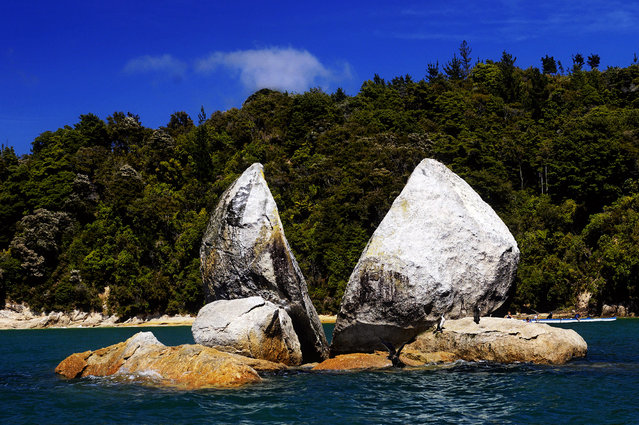
Split Apple Rock

Split Apple Rock is a geological rock formation in The Tasman Bay off the northern coast of the South Island of New Zealand. Made of granite, it is in the shape of an apple which has been cut in half. It is a popular tourist attraction in the waters of the Tasman Sea approximately 50 metres off the coast between Kaiteriteri and Marahau. The rock sits in shallow water at low tide and is accessible by wading. It is also a point of interest for the many tourist boats and pleasure craft which operate along the shores of the Abel Tasman National Park. The cleft to produce two sides of the 'apple' was a natural occurrence. It is unknown when this happened and therefore the cleaving of the rock has attracted mythological explanations.
Details
19 Oct 2013 10:58:00
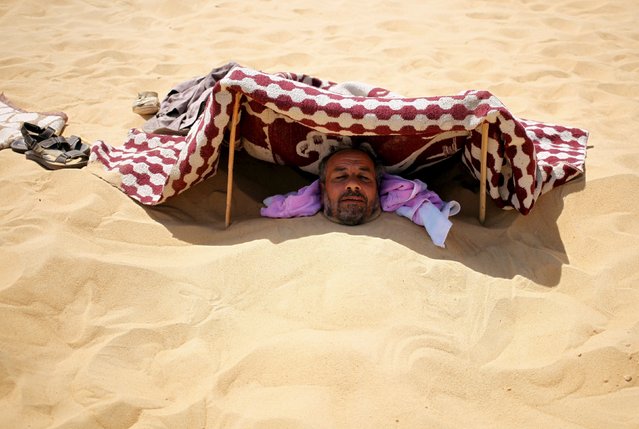
A patient buried in the hot sand looks out from under a shade that protects his face from the sun in Siwa, Egypt, August 12, 2015. (Photo by Asmaa Waguih/Reuters)

A patient buried in the hot sand looks out from under a shade that protects his face from the sun in Siwa, Egypt, August 12, 2015. In the searing heat of summer in western Egypt, at the hottest time of the day, sufferers of rheumatism, joint pain, infertility or impotence lie buried neck-deep in the sand of Siwa near Dakrour Mountain. Locals say taking a sand bath is a natural therapy with powers to cure many medical conditions. (Photo by Asmaa Waguih/Reuters)
Details
28 Aug 2015 12:07:00
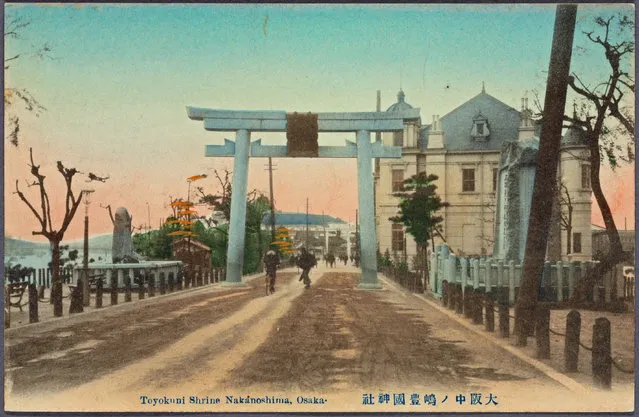
Toyokuni Shrine Nakanoshima, Osaka, Japan. (Photo by New York Public Library/Caters News)

These timeless postcards offer an eye-opening glimpse into life in Japan in the early 20th century. Taken from hand-colored photographs, the postcards showcase the still beauty of the country, depicting a nation on the cusp of modernization. The images feature solemn fishermen, bustling streets, temples and shrines: a country yet to be influenced by Western culture. The tinting effect brings out the rich colors of the natural surroundings, with trees, flowers and cherry blossoms jumping from the original black-and-white images. Here: Toyokuni Shrine Nakanoshima, Osaka, Japan. (Photo by New York Public Library/Caters News)
Details
02 Apr 2016 09:33:00
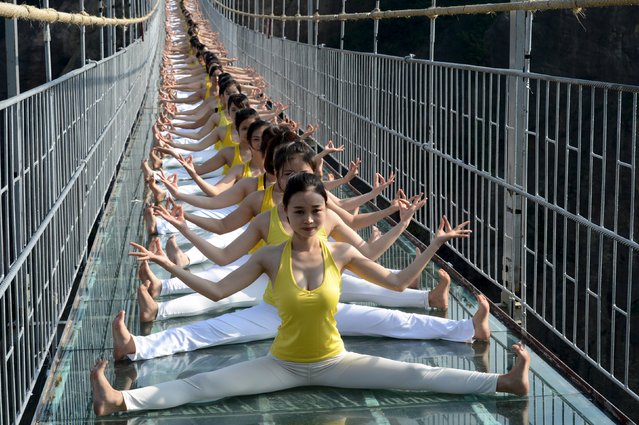
Women practice yoga during a performance on a glass bridge at the Shiniuzhai National Geo-park in Pingjiang county, Hunan province, China, November 5, 2015. (Photo by Reuters/China Daily)

Women practice yoga during a performance on a glass bridge at the Shiniuzhai National Geo-park in Pingjiang county, Hunan province, China, November 5, 2015. About hundred yoga fans put on the show to promote the concept of green life and the idea of harmony between human and nature on Thursday, according to local media. (Photo by Reuters/China Daily)
Details
08 Nov 2015 08:06:00
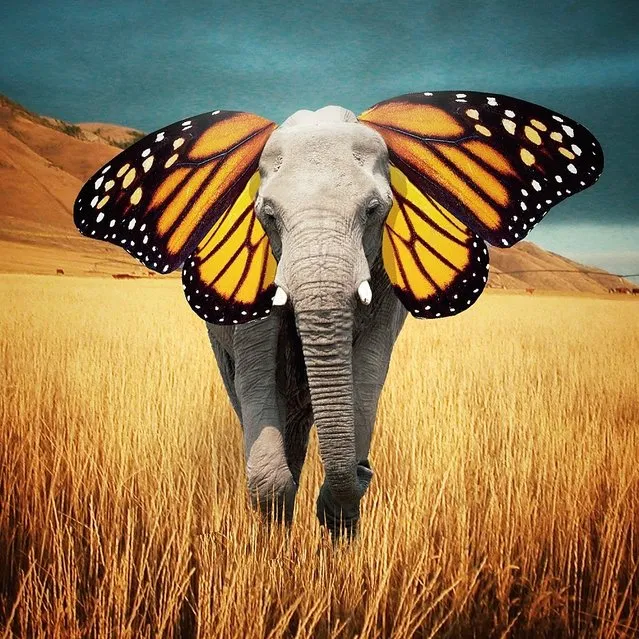
Surreal Photos By Robert Jahns A.K.A. Nois7

A not-so-famous photographer Robert Jahns can do impossible things with common photos. He takes two pictures and joins them into a single composition. Thanks to this creative idea, which is based on the combination of contrasts, ordinary photos become interesting and attractive. Jahns combines several pictures into one seamless scene. A leafless crown of the tree, layered onto deer antlers, creates a real and natural continuation of the deer`s head. Likewise, a rollercoaster with an overview of the city frightens us by being very realistic. (Photo by Robert Jahns A.K.A. Nois7)
Details
21 Jan 2015 13:07:00
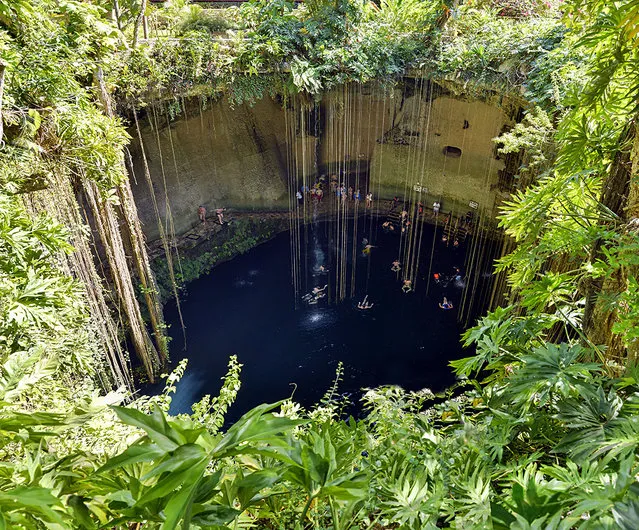
Cenote In Mexico

A cenote is a natural phenomenon, a sinkhole in the Earth’s surface. The Yucatan Peninsula in Mexico has an estimated 7,000 cenotes because it is primarily made up of porous limestone. For millions of years, rainfall slowly ate away at the limestone and a huge system of underground caves and caverns was formed. Many filled with water from rain or from the underground water table. When the roof of a water filled cave collapses, a cenote is born. The water found in a cenote may be fresh water, salt water, or both. Structurally it may be completely open, like a lake, almost completely closed with just a small opening at the top, or somewhere in between.
Details
06 Oct 2013 09:45:00
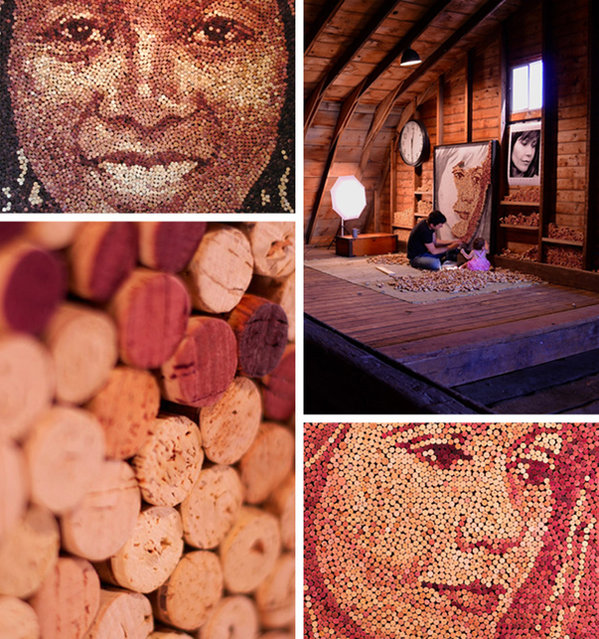
Wine Cork Portraits By Scott Gundersen

Grand Rapids (Michigan) based illustrator and artist Scott Gundersen creates his portraits from thousands of used and recycled corks. Starting with a large photograph that’s transferred to a drawing, Gundersen pins each cork to the canvas, creating a correlation between the hues of the wine-stained corks and the value of light or shadow in the portrait. Scott Gundersen has made these incredible portraits, one using 3,621, 3,842 and the other using 9,217 natural wine corks.
Details
22 Nov 2013 11:42:00
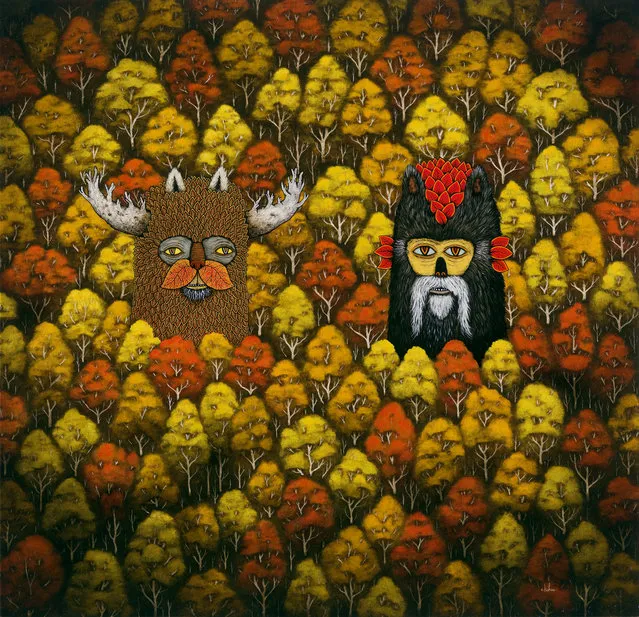
Strange Wanderings By Andy Kehoe

Andy Kehoe recently returned to New York for his third solo show with Jonathan LeVine Gallery. Entitled Luminous Reverie, this show explores the idea of experiencing a lucid moment while drifting along in a daydream. We enjoyed the works, which continued the new direction that he premiered during a show in Los Angeles last year (covered). Again, Kehoe explores the technique of painting layers upon layers of resin and creating a natural 3-D visual element for the viewers to enjoy. This show will be up until June 15th, so stop by and check it out if you’re in NYC.
Details
05 Feb 2014 11:28:00