Loading...
Done
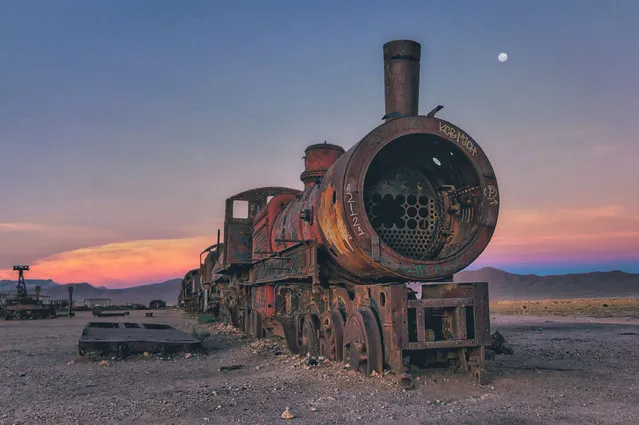
Many of the trains and locomotives are British imports and have been eroded by the harsh Bolivian climate. (Photo by Chris Staring/Rex Features/Shutterstock)

Chris Staring photographs a mysterious train graveyard in the heart of southern Bolivia, where the skeletons of British steam locomotives and rail cars rust away on the edge of the world’s largest salt flats. More than 100 rail cars and locomotives can be found in different states of decay in the train graveyard. (Photo by Chris Staring/Rex Features/Shutterstock)
Details
03 Jul 2016 10:46:00
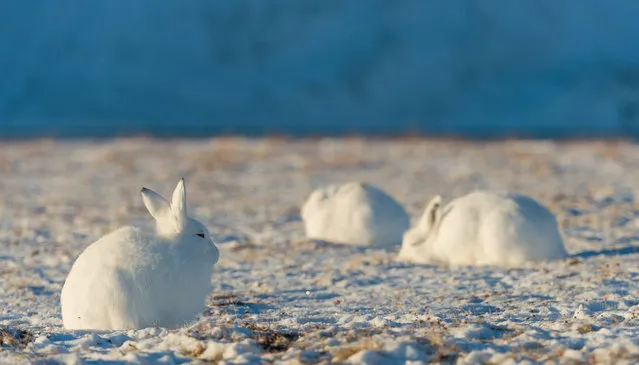
Arctic Hare

The arctic hare, or polar rabbit, is a species of hare which is adapted largely to polar and mountainous habitats. The arctic hare survives with a thick coat of fur and usually digs holes in the ground or under snow to keep warm and sleep. Arctic hares look like rabbits but have shorter ears, are taller when standing, and, unlike rabbits, can thrive in cold climates. They can travel together with many other hares, sometimes huddling with dozens or more, but are usually found alone, taking, in some cases, more than one partner. The arctic hare can run up to 60 kilometres per hour (40 mph). Its predators include the arctic wolf, arctic fox, and ermine.
Details
17 Mar 2014 13:56:00


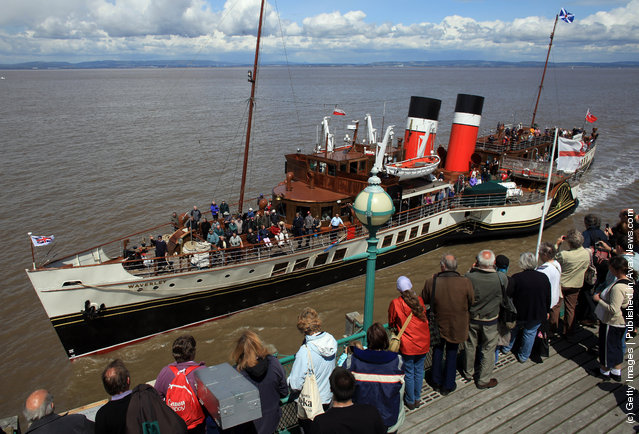
Passengers watch as The Waverley, the world's last remaining seagoing passenger paddle steamer arrives at Clevedon Pier on June 10, 2011 in Clevedon, England. Built in 1946, the trust which owns and operates the Waverley, is warning that this could be the last season for the vessel and is appealling for more public funding saying it is struggling to make ends meet in the current financial climate due in part to rising fuel costs. Restored in 1973 after service on Loch Long in Scotland, since 2003, Waverley has been listed in the British National Register of Historic Ships core collection as 'a vessel of pre-eminent national importance'. (Photo by Matt Cardy/Getty Images)
Details
11 Jun 2011 12:02:00
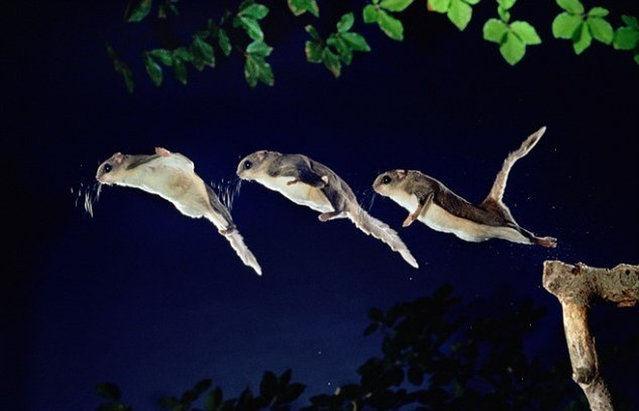
 Flying Squirrel

Flying squirrels are not capable of powered flight like birds or bats; instead, they glide between trees. They are capable of obtaining lift within the course of these flights, with flights recorded to 90 meters (295 ft). The direction and speed of the animal in midair is varied by changing the positions of its two arms and legs, largely controlled by small cartilaginous wrist bones. This changes the tautness of the patagium, a furry parachute-like membrane that stretches from wrist to ankle. It has a fluffy tail that stabilizes in flight. The tail acts as an adjunct airfoil, working as an air brake before landing on a tree trunk.
Details
07 Aug 2012 16:29:00
Billboard acts as a mood-meter by analyzing Twitter and guaging the number of happy and sad emoticons used at any given moment, causing the billboard's face to change between a smile and a frown

A billboard for JELL-O stands at the corner of Grand Street and West Broadway on August 2, 2011 in New York City. The billboard acts as a mood-meter by analyzing Twitter and guaging the number of happy and sad emoticons used at any given moment, causing the billboard's face to change between a smile and a frown. (Photo by Andrew Burton/Getty Images)
Details
03 Aug 2011 11:46:00
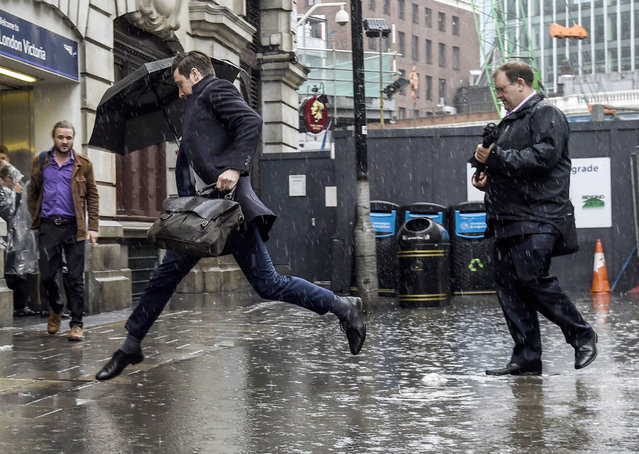
A man jumps over a puddle outside Victoria Station, as heavy rain falls,  in London, Monday June 20, 2016. Monday marks the Summer Solstice – the longest day of the year and the astronomical change of seasons when days are longest and nights are shortest in the Northern Hemisphere. (Photo by Lauren Hurley/PA Wire via AP Photo)

A man jumps over a puddle outside Victoria Station, as heavy rain falls, in London, Monday June 20, 2016. Monday marks the Summer Solstice – the longest day of the year and the astronomical change of seasons when days are longest and nights are shortest in the Northern Hemisphere. (Photo by Lauren Hurley/PA Wire via AP Photo)
Details
21 Jun 2016 07:25:00
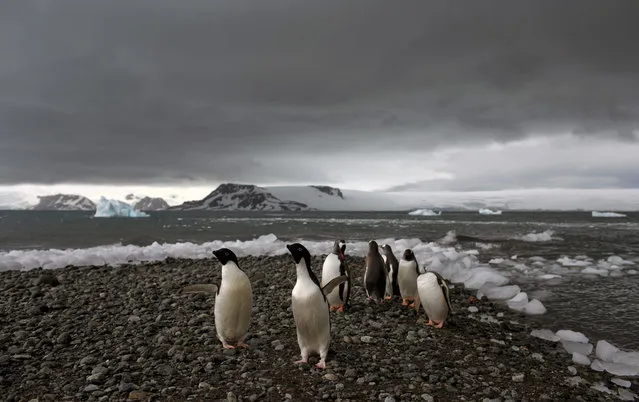
In this January 27, 2015 photo, penguins walk on the shore of Bahia Almirantazgo in Antarctica.  Antarctica “is big and it's changing and it affects the rest of the planet and we can't afford to ignore what's going on down there”, said David Vaughan, science director of the British Antarctic Survey. (Photo by Natacha Pisarenko/AP Photo)

In this January 27, 2015 photo, penguins walk on the shore of Bahia Almirantazgo in Antarctica. Antarctica “is big and it's changing and it affects the rest of the planet and we can't afford to ignore what's going on down there”, said David Vaughan, science director of the British Antarctic Survey. (Photo by Natacha Pisarenko/AP Photo)
Details
22 Feb 2015 10:45:00
After finding the bricklaying business too full of ups and downs, this amazing young girl decided to take a shot at iron girdering for a change. She is Miss “Collie” Collier, a reporter for the Chicago Herald-Examiner. August 17, 1920. (Photo by Bettmann Archive/Getty Images)

After finding the bricklaying business too full of ups and downs, this amazing young girl decided to take a shot at iron girdering for a change. She is Miss “Collie” Collier, a reporter for the Chicago Herald-Examiner. August 17, 1920. (Photo by Bettmann Archive/Getty Images)
Details
25 Apr 2021 07:43:00