Loading...
Done
Taras Mychalewych, 75, poses for a portrait with his vaccination card after receiving his coronavirus disease (COVID-19) vaccine at a rural vaccination site in Columbus, New Mexico, U.S., April 16, 2021. (Photo by Paul Ratje/Reuters)

Taras Mychalewych, 75, poses for a portrait with his vaccination card after receiving his coronavirus disease (COVID-19) vaccine at a rural vaccination site in Columbus, New Mexico, U.S., April 16, 2021. (Photo by Paul Ratje/Reuters)
Details
19 Apr 2021 09:51:00
Women dancing at the disco club Xenon in New York City in 1978. (Photo by Waring Abbott/Getty Images)

Women dancing at the disco club Xenon in New York City, USA in 1978. Xenon was a popular disco in Manhattan in the late 1970s and early 1980s. It was the only nightclub popular enough to compete with Studio 54. (Photo by Waring Abbott/Getty Images)
Details
20 Mar 2018 00:01:00
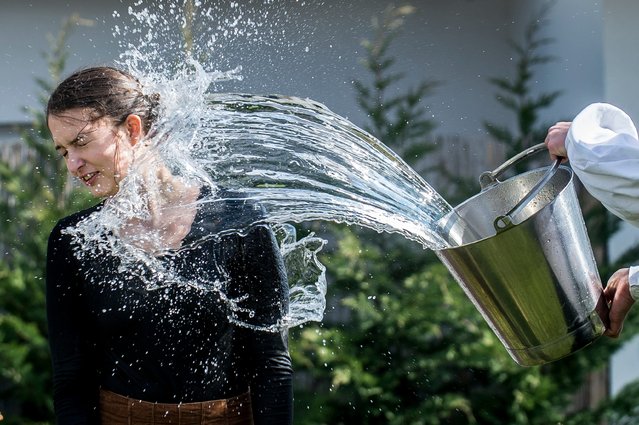
Members of the Mayossa folk dance group pour water on a young woman in Kiskunmajsa, Hungary on April 2, 2018. According to an old Hungarian tradition, celebrated for several hundred years, young men pour water on young women, who in exchange present their sprinklers with beautifully colored eggs on Easter Monday. (Photo by Sandor Ujvari/EPA/EFE/Rex Features/Shutterstock)

Members of the Mayossa folk dance group pour water on a young woman in Kiskunmajsa, Hungary on April 2, 2018. According to an old Hungarian tradition, celebrated for several hundred years, young men pour water on young women, who in exchange present their sprinklers with beautifully colored eggs on Easter Monday. (Photo by Sandor Ujvari/EPA/EFE/Rex Features/Shutterstock)
Details
08 Apr 2018 07:48:00
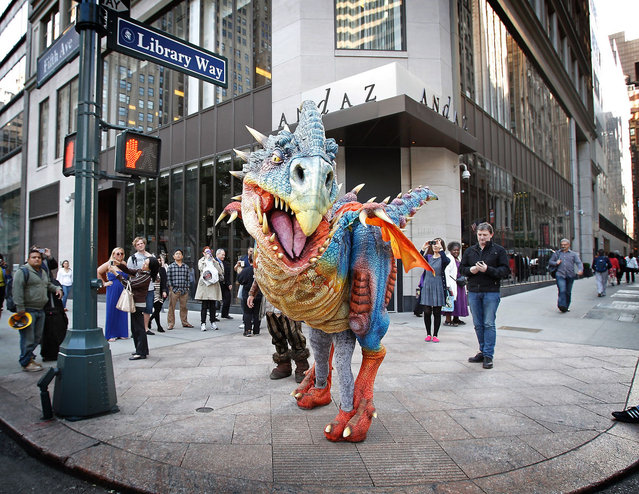
The Baby Nager dragon, from DreamWorks’ new “How to Train Your Dragon” Live Spectacular touring musical, shows off it’s colors outside of the New York Public Library

The Baby Nager dragon, from DreamWorks’ new “How to Train Your Dragon” Live Spectacular touring musical, shows off it’s colors outside of the New York Public Library. (Photo by Mark Von Holden)
Details
19 May 2012 13:05:00
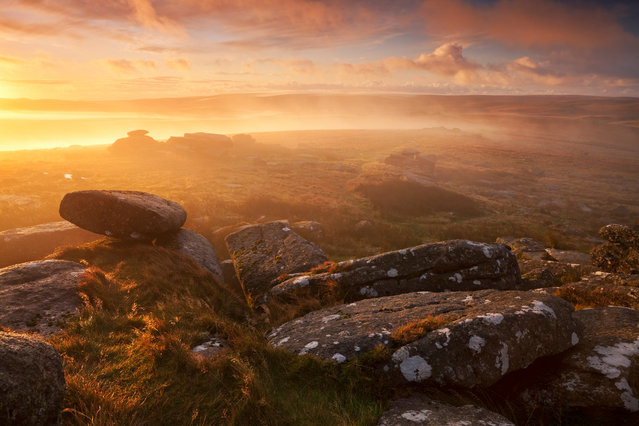
Sunrise over a moor viewed from Littaford Tor, Dartmoor, UK, 2016. Autumn visits the windswept moors and granite tors of Dartmoor earlier than the rest of the south-west. While there aren’t many trees here, autumn shades appear in golden ferns and tan heather. Littaford Tors, near Two Bridges and a mile from Princetown, is a short walk and can be combined with a visit to the adjacent Wistman’s Wood. (Photo by Stuart Holmes)

Sunrise over a moor viewed from Littaford Tor, Dartmoor, UK, 2016. Autumn visits the windswept moors and granite tors of Dartmoor earlier than the rest of the south-west. While there aren’t many trees here, autumn shades appear in golden ferns and tan heather. Littaford Tors, near Two Bridges and a mile from Princetown, is a short walk and can be combined with a visit to the adjacent Wistman’s Wood. (Photo by Stuart Holmes)
Details
03 Nov 2016 13:02:00
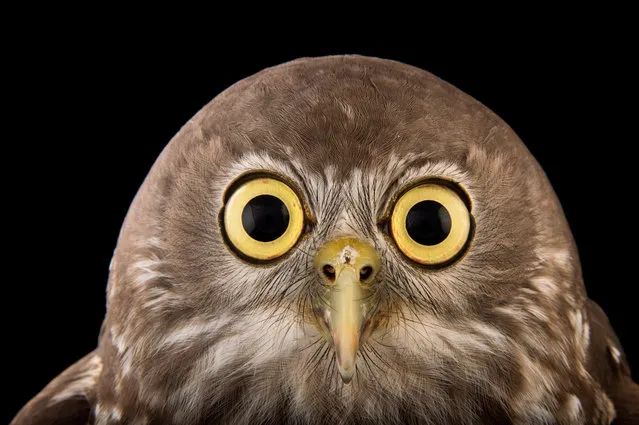
The National Geographic Photo Ark is a travelling exhibition of photographer Joel Sartore’s quest to create a photo archive of biodiversity around the world. So far, Sartore has captured studio portraits of more than 6,000 species – a number that he hopes to double. On 1 July, the ark will open at Melbourne zoo – the first time it has been exhibited in the southern hemisphere. More than 50 portraits will be on display, including many of Australian endangered animals being protected by programs at the zoo itself. These captions have been edited from text supplied by Melbourne zoo. Here: Barking owl. So-named because its call sounds like a barking dog, these birds are native to Australia, Indonesia and Papua New Guinea. In Victoria they are listed as an endangered species, and in 2003 there were estimated to be fewer than 50 breeding pairs. The main threat to the species in Victoria is loss of habitat, especially large trees with hollows in which they can nest and on which many of their prey depend. Apart from a bark, they may utter a chilling scream when they feel threatened. (Photo by Joel Sartore/National Geographic Photo Ark/The Guardian)

The National Geographic Photo Ark is a travelling exhibition of photographer Joel Sartore’s quest to create a photo archive of biodiversity around the world. So far, Sartore has captured studio portraits of more than 6,000 species – a number that he hopes to double. On 1 July, the ark will open at Melbourne zoo – the first time it has been exhibited in the southern hemisphere. More than 50 portraits will be on display, including many of Australian endangered animals being protected by programs at the zoo itself. These captions have been edited from text supplied by Melbourne zoo. Here: Barking owl. (Photo by Joel Sartore/National Geographic Photo Ark/The Guardian)
Details
01 Jul 2017 07:45:00
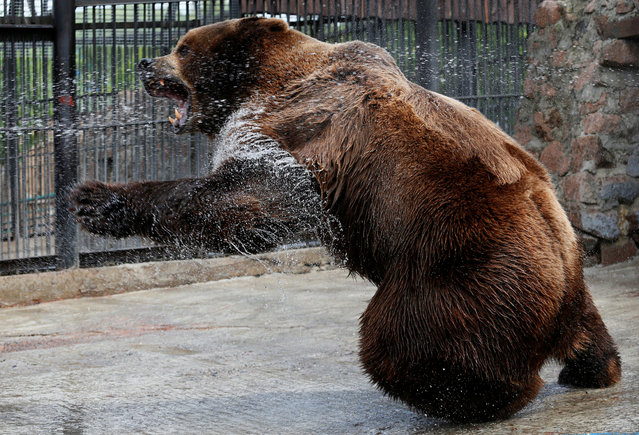
Buyan, a male Siberian brown bear, cools down under a stream of water sprayed by an employee in an enclosure on a hot summer day, at the Royev Ruchey zoo in Krasnoyarsk, Russia on June 14, 2019. (Photo by Ilya Naymushin/Reuters)

Buyan, a male Siberian brown bear, cools down under a stream of water sprayed by an employee in an enclosure on a hot summer day, at the Royev Ruchey zoo in Krasnoyarsk, Russia on June 14, 2019. (Photo by Ilya Naymushin/Reuters)
Details
09 Jan 2020 00:05:00
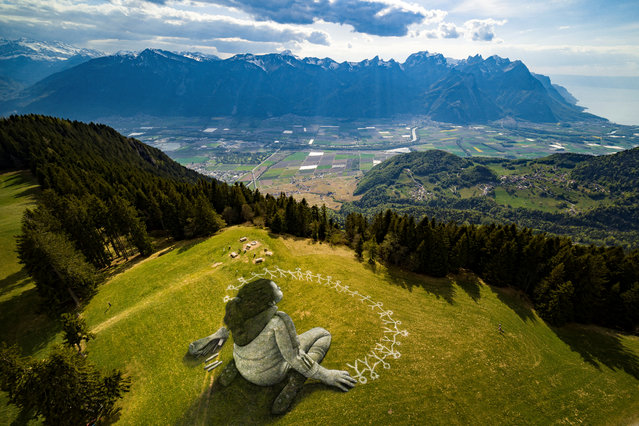
An artwork called “Beyond Crisis” by French artist Guillaume Legros aka Saype and created with an eco paint made out of chalk and coal over a 3000 sqm field is pictured during the coronavirus disease (COVID-19) outbreak in Leysin, Switzerland, April 24, 2020 in this picture obtained by Reuters April 26, 2020. (Photo by Valentin Flauraud/SAYPE/Handout via Reuters)

An artwork called “Beyond Crisis” by French artist Guillaume Legros aka Saype and created with an eco paint made out of chalk and coal over a 3000 sqm field is pictured during the coronavirus disease (COVID-19) outbreak in Leysin, Switzerland, April 24, 2020 in this picture obtained by Reuters April 26, 2020. (Photo by Valentin Flauraud/SAYPE/Handout via Reuters)
Details
27 May 2020 00:05:00