Loading...
Done
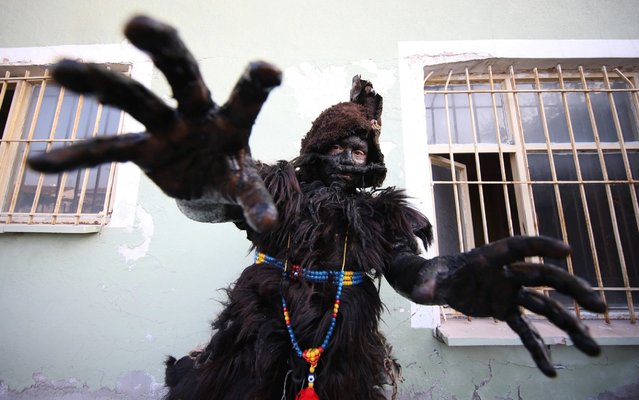
A leather worker with his frightening types of clothes prepares after painted themselves using chimney soot as they participate in a programme within the September 6 celebrations, in Balikesir, Turkey on September 06, 2019. According to the story, “Tulutabaklar” were painting themselves with ash and wearing goatskin or sheep skin to frighten the Greek soldiers occupying Balikesir during the National Struggle period. Every year on September 6, Tulutabaklar perform this ritual as part of the celebration of liberation of the city for 96 years. (Photo by Ali Atmaca/Anadolu Agency via Getty Images)

A leather worker with his frightening types of clothes prepares after painted themselves using chimney soot as they participate in a programme within the September 6 celebrations, in Balikesir, Turkey on September 06, 2019. According to the story, “Tulutabaklar” were painting themselves with ash and wearing goatskin or sheep skin to frighten the Greek soldiers occupying Balikesir during the National Struggle period. Every year on September 6, Tulutabaklar perform this ritual as part of the celebration of liberation of the city for 96 years. (Photo by Ali Atmaca/Anadolu Agency via Getty Images)
Details
09 Sep 2019 00:05:00
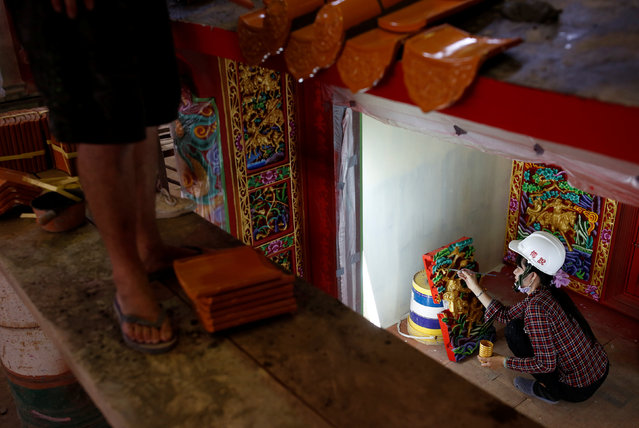
An employee paints a ready-made Chinese traditional temple at the Chuanso factory that manufactures religious objects in Pingtung, Taiwan July 5, 2016. (Photo by Tyrone Siu/Reuters)

Some companies in Taiwan spend months building temples with bricks and cement, but Lin Fu-Chun's firm simply pours concrete into a giant mould and waits for it to dry. The 78-year-old Lin said his temple factory, Chuanso, needed just over six weeks to finish a building that normally took six months with conventional methods – and moulding was 40 percent cheaper. Here: An employee paints a ready-made Chinese traditional temple at the Chuanso factory that manufactures religious objects in Pingtung, Taiwan July 5, 2016. (Photo by Tyrone Siu/Reuters)
Details
29 Jul 2016 12:57:00
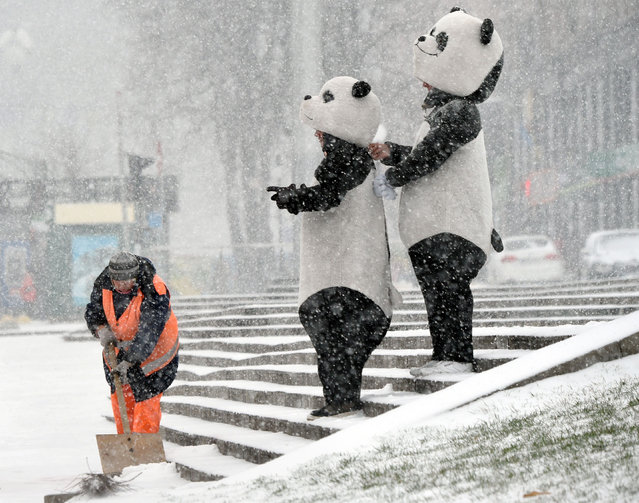
A communal worker removes the snow from steps next people dressed as pandas near the center of the Ukrainian capital Kiev, on November 14, 2018, during an heavy snowfall, the first one of this autumn season. (Photo by Sergei Supinsky/AFP Photo)

A communal worker removes the snow from steps next people dressed as pandas near the center of the Ukrainian capital Kiev, on November 14, 2018, during an heavy snowfall, the first one of this autumn season. (Photo by Sergei Supinsky/AFP Photo)
Details
15 Nov 2018 09:08:00
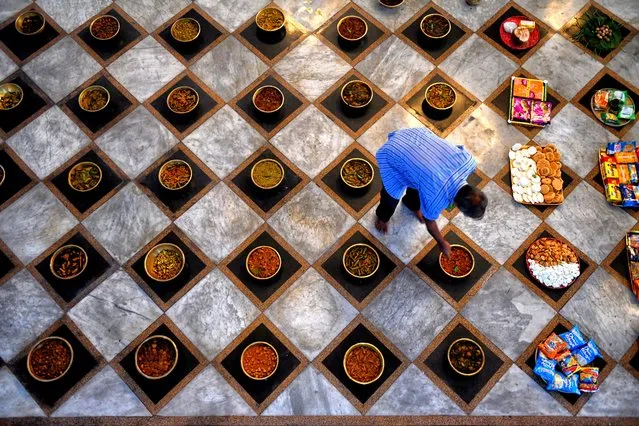
A Hindu devotee prepares for Annakut or Goverdhan puja at Naba Brindaban temple in Kolkata on November 14, 2023. Annakut or Govardhan Puja is a Hindu festival in which devotees prepare and offer a large variety of vegetarian food to Lord Krishna as a sign of gratitude for saving them from floods as per Hindu Mythology. (Photo by Avishek Das/SOPA Images/Rex Features/Shutterstock)

A Hindu devotee prepares for Annakut or Goverdhan puja at Naba Brindaban temple in Kolkata on November 14, 2023. Annakut or Govardhan Puja is a Hindu festival in which devotees prepare and offer a large variety of vegetarian food to Lord Krishna as a sign of gratitude for saving them from floods as per Hindu Mythology. (Photo by Avishek Das/SOPA Images/Rex Features/Shutterstock)
Details
29 Nov 2023 00:00:00
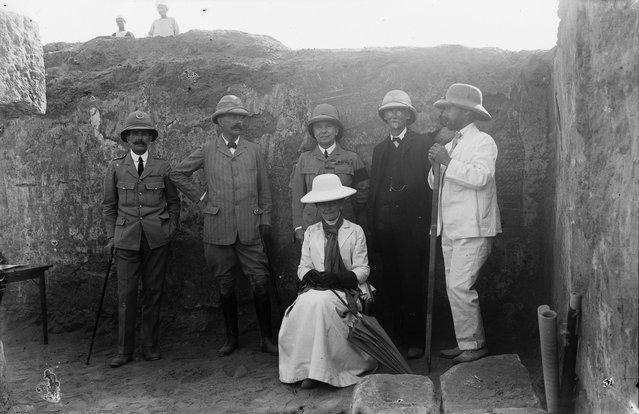
Remarkable discoveries were made, like the decapitated head of a bronze statue of Roman emperor Augustus, sacked from a raid on Roman garrisons further north in Egypt. Here: A group visiting the excavations at Meroë, including (from left) Midwinter Bey, director of Sudan Railways; Lord Kitchener; General Sir Francis Reginald Wingate, Sirdar of the Egyptian Army; Professor Archibald Sayce; John Garstang; and Lady Catherine Wingate, 1911. (Photo by Garstang Museum of Archaeology)

The city of Meroë laid undiscovered for two millennia before British archaeologist John Garstang excavated it in the early 20th century. Garstang took the radical decision to document his discoveries with photography – and immortalised an ancient world. “Meroë: Africa’s Forgotten Empire” is being shown until 14 September at Garstang Museum of Archaeology, Liverpool. Here: A group visiting the excavations at Meroë, including (from left) Midwinter Bey, director of Sudan Railways; Lord Kitchener; General Sir Francis Reginald Wingate, Sirdar of the Egyptian Army; Professor Archibald Sayce; John Garstang; and Lady Catherine Wingate, 1911. (Photo by Garstang Museum of Archaeology)
Details
15 Jun 2016 14:49:00
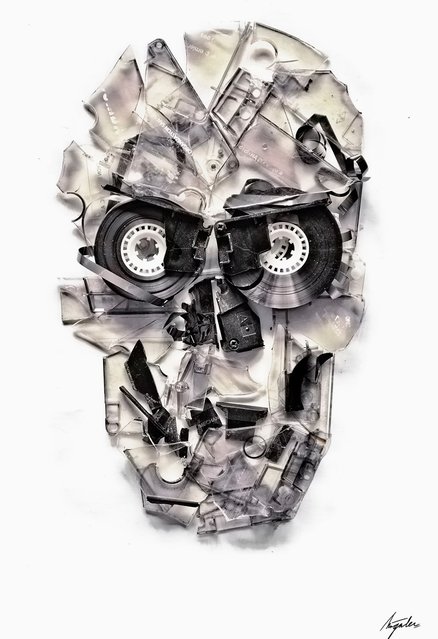
Skull Art By Ali Gulec

Istanbul-based Ali Gulec is a graphic artist with a difference. His surreal illustrations are like identikit drawings aiming to prosecute the material arts. Working on the margins of what is possible with his medium, Gulec's forms, figures, and situations are remarkable for their clarity and strength of purpose, and maintain an iconographic intensity that would make any rock band bereft of an album cover salivate with admiration.
Details
17 Feb 2016 08:00:00
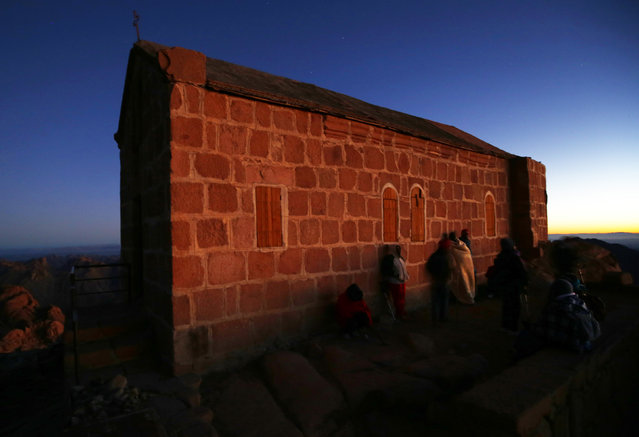
Tourists watch the sunrise and pray outside a church on the summit of Mount Moses, near the city of Saint Catherine, in the Sinai Peninsula, south of Egypt, December 9, 2015. (Photo by Amr Abdallah Dalsh/Reuters)

Tourists watch the sunrise and pray outside a church on the summit of Mount Moses, near the city of Saint Catherine, in the Sinai Peninsula, south of Egypt, December 9, 2015. (Photo by Amr Abdallah Dalsh/Reuters)
Details
20 Dec 2015 08:05:00
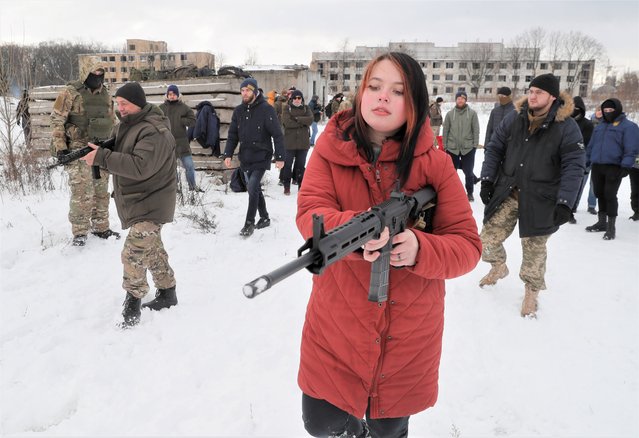
Ukrainians attend an open military training for civilians on a training range in Kiev, Ukraine, 30 January 2022. According to a survey conducted by the Kiev International Institute of Sociology (KIIS) from December 2021, 50.2 percent of Ukrainians said they would resist in case of a Russian military intervention into their city, town or village. Every third respondent to the poll said they were ready to engage in armed resistance, and 21.7 percent said they were ready to participate in civil resistance actions. (Photo by Sergey Dolzhenko/EPA/EFE)

Ukrainians attend an open military training for civilians on a training range in Kiev, Ukraine, 30 January 2022. According to a survey conducted by the Kiev International Institute of Sociology (KIIS) from December 2021, 50.2 percent of Ukrainians said they would resist in case of a Russian military intervention into their city, town or village. Every third respondent to the poll said they were ready to engage in armed resistance, and 21.7 percent said they were ready to participate in civil resistance actions. (Photo by Sergey Dolzhenko/EPA/EFE)
Details
31 Jan 2022 06:47:00