Loading...
Done
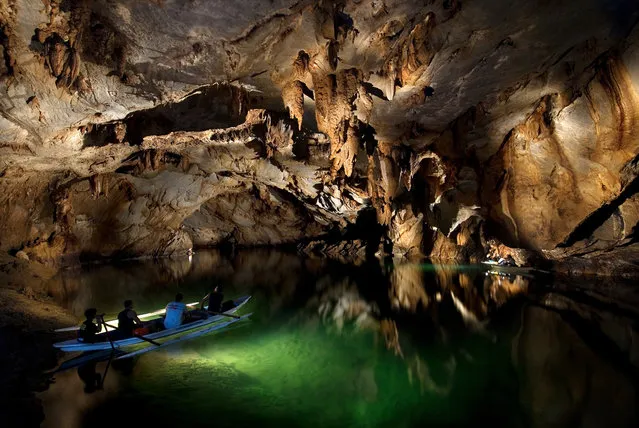
Underground River

The Puerto Princesa Subterranean River National Park is located about 50 kilometres (30 mi) north of the city centre of Puerto Princesa, Palawan, Philippines. The river is also called Puerto Princesa Underground River. The national park is located in the Saint Paul Mountain Range on the northern coast of the island. It is bordered by St. Paul Bay to the north and the Babuyan River to the east. The City Government of Puerto Princesa has managed the National Park since 1992. The park is also known as St. Paul's Subterranean River National Park, or St. Paul Underground River. The entrance to the Subterranean River is a short hike from the town of Sabang.
Details
16 Jul 2012 11:37:00
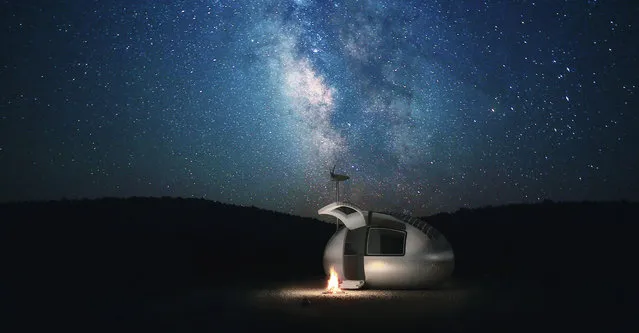
Ecocapsules By Nice Architects

A Slovakian company has designed an egg-shaped and cozy micro-home that should work ideally for anybody who wants to “go off the grid” and “live off the land” – the Ecocapsule.
Details
29 May 2015 11:13:00
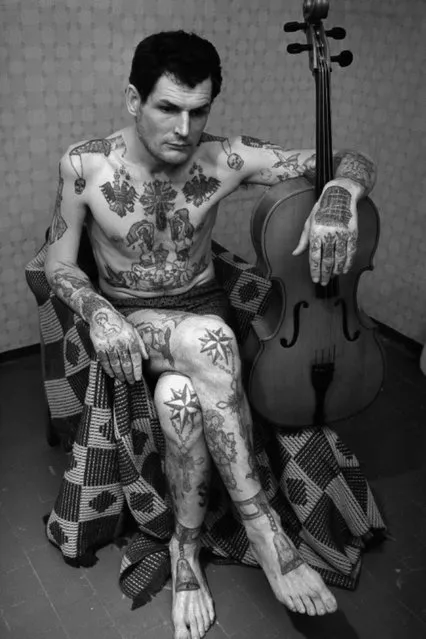
Crime Tatoo  Part 2

Tattoos are commonly used among criminals to show gang membership and record the wearer's personal history—such as his or her skills, specialties, accomplishments and convictions. They are also used as a means of personal expression. Certain designs have developed recognized coded meanings. The code systems can be quite complex and because of the nature of what they encode, the tattoo designs are not widely recognized.
Details
24 Apr 2013 09:49:00
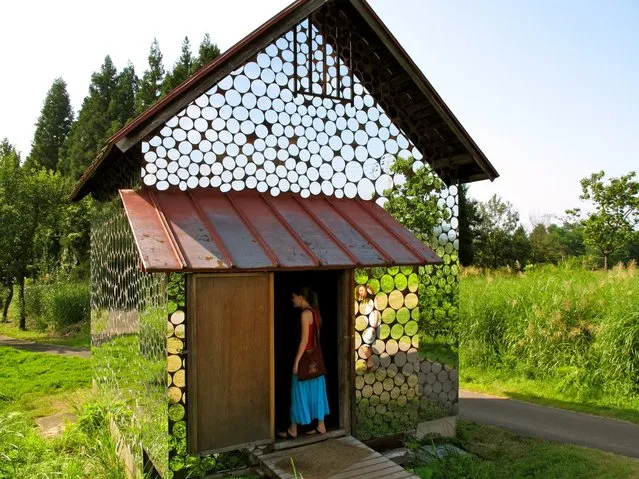
Glass House By Harumi Yukutake

This project features a house covered (inside and out) with thousands of round mirrors that makes it nearly camouflaged. The round mirrors have different shapes and size because each one was handcut by the artist. Visitors are in for a unique experience when the mirrors interactive with nature, glistening as it reflects sunlight while gently flickers when the wind blows.
Details
25 Jan 2014 17:05:00
A woman smokes marijuana during the annual 4/20 marijuana rally on Parliament Hill in Ottawa, Ontario, Canada, April 20, 2017. (Photo by Chris Wattie/Reuters)

A woman smokes marijuana during the annual 4/20 marijuana rally on Parliament Hill in Ottawa, Ontario, Canada, April 20, 2017. (Photo by Chris Wattie/Reuters)
Details
22 Apr 2017 09:38:00
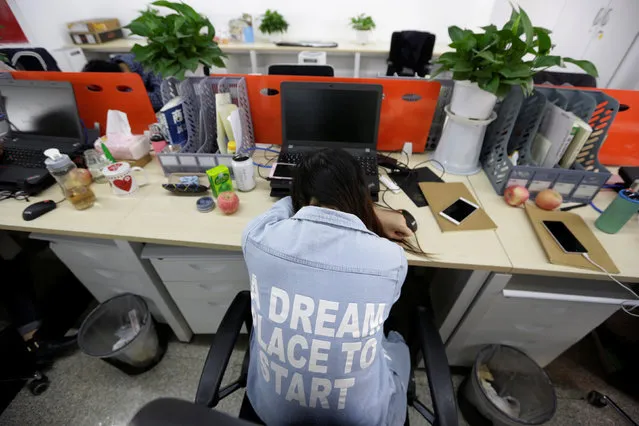
Yang Juan, an employee at Goopal Group, takes a nap in her seat after lunch, in Beijing, China, April 21, 2016. (Photo by Jason Lee/Reuters)

Yang Juan, an employee at Goopal Group, takes a nap in her seat after lunch, in Beijing, China, April 21, 2016. Office workers sleeping on the job is a common sight in China, where a surplus of cheap labour can lead to downtime at work. But in China's technology sector, where business is growing faster than many start-up firms can hire new staff, workers burn the midnight oil to meet deadlines and compete with their rivals. Some companies provide sleeping areas and beds for workers to rest during late nights. (Photo by Jason Lee/Reuters)
Details
12 May 2016 14:53:00
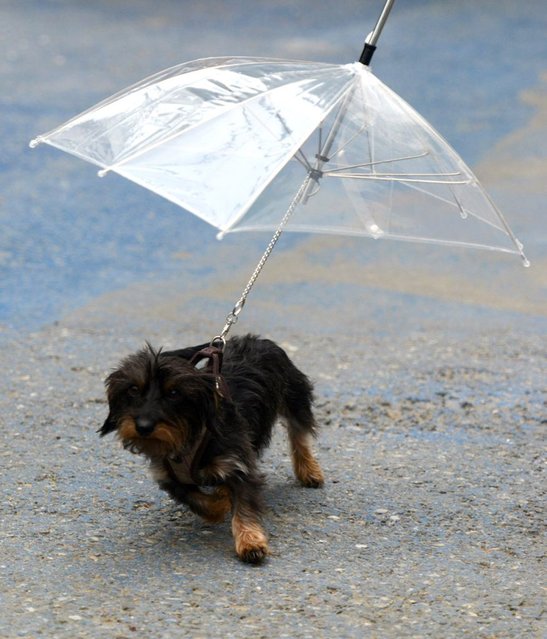
Dog puppy “Sandy” protects against the rain with an umbrella fixed on her leash during a stroll in Rust, southern Germany, on May 26, 2013. (Photo by Patrick Seeger/AFP Photo)

Dog puppy “Sandy” protects against the rain with an umbrella fixed on her leash during a stroll in Rust, southern Germany, on May 26, 2013. (Photo by Patrick Seeger/AFP Photo)
Details
02 Jun 2013 07:43:00
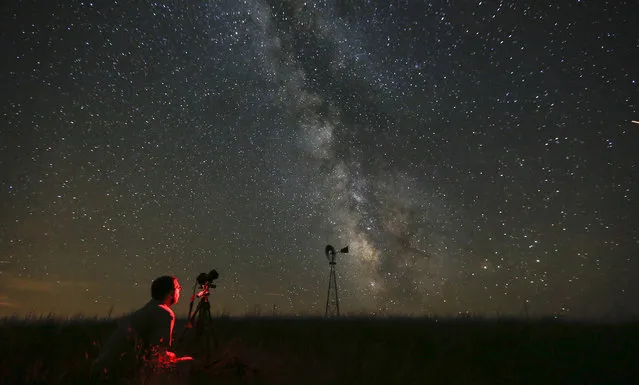
In this Wednesday, July 23, 2014 file photo, Omaha photographer Lane Hickenbottom photographs the night sky in a pasture near Callaway, Neb. With no moon in the sky, the Milky Way was visible to the naked eye. More than one-third of the world’s population can no longer see the Milky Way because of man-made lights, according to a scientific paper by Light Pollution Science and Technology Institute's Fabio Falchi and his team members, published on Friday, June 10, 2016. (Photo by Travis Heying/The Wichita Eagle via AP Photo)

In this Wednesday, July 23, 2014 file photo, Omaha photographer Lane Hickenbottom photographs the night sky in a pasture near Callaway, Neb. With no moon in the sky, the Milky Way was visible to the naked eye. More than one-third of the world’s population can no longer see the Milky Way because of man-made lights, according to a scientific paper by Light Pollution Science and Technology Institute's Fabio Falchi and his team members, published on Friday, June 10, 2016. (Photo by Travis Heying/The Wichita Eagle via AP Photo)
Details
11 Jun 2016 12:37:00