Loading...
Done
Tridacna Gigas, or Giant Clams

“The giant clam, Tridacna gigas (known as pā’ua in Cook Islands Māori), is the largest living bivalve mollusc. T. gigas is one of the most endangered clam species. It was mentioned as early as 1825 in scientific reports. One of a number of large clam species native to the shallow coral reefs of the South Pacific and Indian oceans, they can weigh more than 200 kilograms (440 lb) measure as much as 120 cm (47 in) across, and have an average lifespan in the wild of 100 years or more”. – Wikipedia

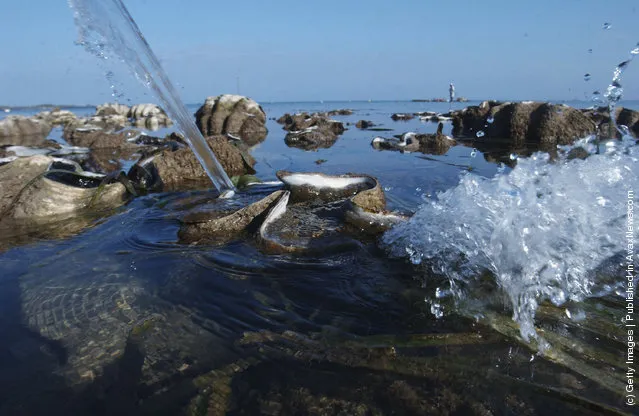
Photo: Tridacna Gigas, or Giant Clams spew water as a traditional fisherman passes by a small sanctuary on January 23, 2004 near Bolinao in the Northern Philippines. The clams, prime builders for coral reefs and providing shelter for spawning fish and other marine life, are exposed by low tides in the sanctuary. Overfishing and pollution throughout the country are not only threatening food security, but are also starting to choke one of the few working clam sanctuaries in the world. (Photo by David Greedy/Getty Images)
Details
01 Oct 2011 13:10:00
World's Ugliest Dog

It's that time of year again when dogs with unusually large heads, hairless bodies and other oddities compete to be the World's Ugliest Dog. This year's winner? A 2-year-old mutt named Peanut, whose wild white and brown hair, bulging eyes and protruding teeth belie his sweet, energetic personality. Peanut's owner, Holly Chandler of Greenville, North Carolina, says he was seriously burned as a puppy and she wants to use her pet to raise awareness about animal abuse. She plans to use the $1,500 prize to pay for other animals' veterinary bills. The contest, held at the Sonoma-Marin Fairgrounds in Petaluma, California, is in its 26 year. The dogs are scored by a three-judge panel in several categories, including special or unusual attributes, personality and natural ugliness.
Details
24 Jun 2014 10:04:00
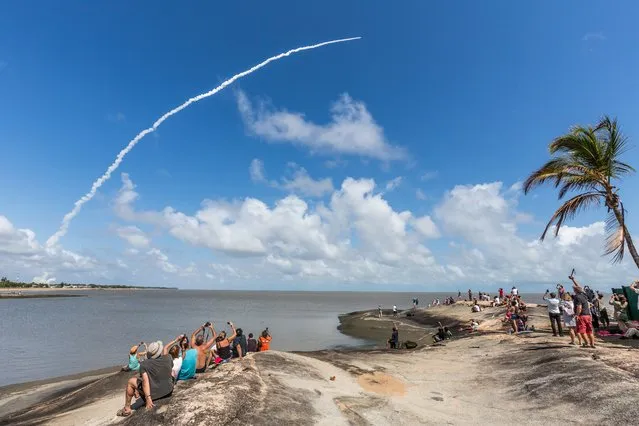
People take photos as an Ariane 5 space rocket with a payload of four Galileo satellites lifts off from ESA's European Spaceport in Kourou, French Guiana, on November 17, 2016. Ariane 5 successfully launched on November 17 four satellites which will be part of the Galileo global satellite navigation system. (Photo by Jody Amiet/AFP Photo)

People take photos as an Ariane 5 space rocket with a payload of four Galileo satellites lifts off from ESA's European Spaceport in Kourou, French Guiana, on November 17, 2016. Ariane 5 successfully launched on November 17 four satellites which will be part of the Galileo global satellite navigation system. (Photo by Jody Amiet/AFP Photo)
Details
18 Nov 2016 15:38:00
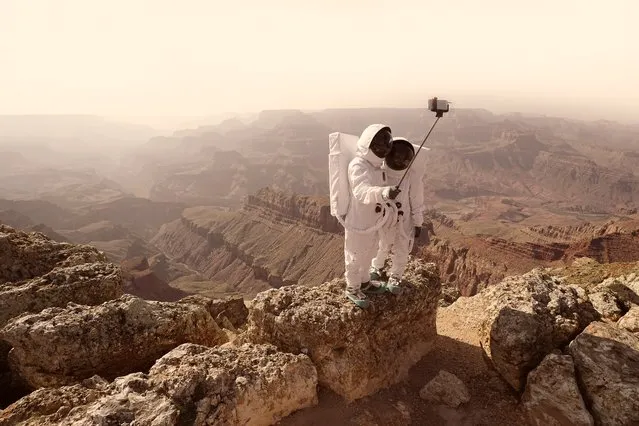
Professional conceptual category winner. Greetings from Mars, by Julien Mauve, France. Mauve says: “I have always wondered what it would be like to discover a totally different world ... and to photograph it for the first time as if I was Ansel Adams. So I came up with this project, which is about space exploration and discovery. But it’s also about our behavior in front of landscapes and how we create pictures that will share our personal story with the world”. (Photo by Julien Mauve)

Professional conceptual category winner. Greetings from Mars, by Julien Mauve, France. Mauve says: “I have always wondered what it would be like to discover a totally different world ... and to photograph it for the first time as if I was Ansel Adams. So I came up with this project, which is about space exploration and discovery. But it’s also about our behavior in front of landscapes and how we create pictures that will share our personal story with the world”. (Photo by Julien Mauve)
Details
23 Apr 2016 13:57:00
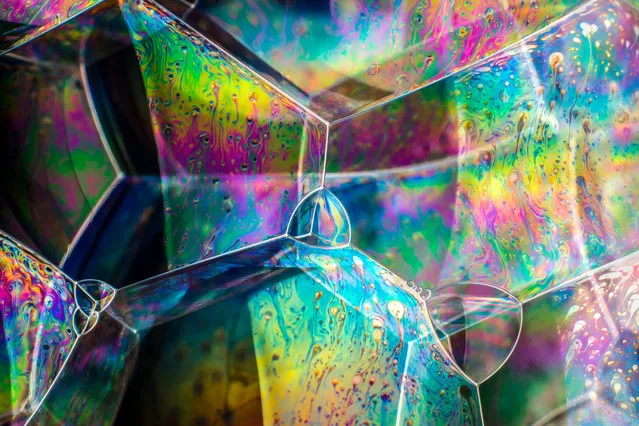
Soap Bubble Structures by Kym Cox. Bubbles optimise space and minimise their surface area for a given volume of air. This phenomenon makes them a useful tool in many areas of research, in particular, materials science and ‘packing’ – how things fit together. Bubble walls drain under gravity, thin at the top, thick at the bottom, which interferes with travelling lightwaves to create bands of colour. Black spots show the wall is too thin for interference colours, indicating the bubble is about to burst. (Photo by Kym Cox/2019 Science Photographer of the Year/RPS)

Soap Bubble Structures by Kym Cox. Bubbles optimise space and minimise their surface area for a given volume of air. This phenomenon makes them a useful tool in many areas of research, in particular, materials science and “packing” – how things fit together. Bubble walls drain under gravity, thin at the top, thick at the bottom, which interferes with travelling lightwaves to create bands of colour. Black spots show the wall is too thin for interference colours, indicating the bubble is about to burst. (Photo by Kym Cox/2019 Science Photographer of the Year/RPS)
Details
15 Aug 2019 00:03:00
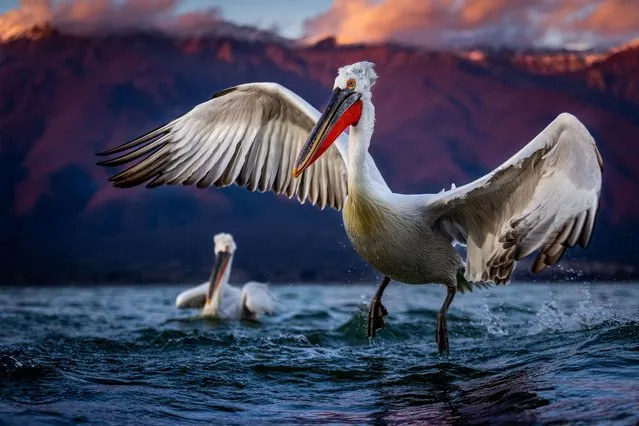
Dalmatian pelicans on Lake Kerkini in Greece captured over the space of one week (16-21 January 2023) by tour guide photographer Sean Weekly. The Dalmatian pelicans resemble the winged dinosaur pterodactyl as they swoop, splash and feed in the waters of Lake Kerkini in Greece. With wings outstretched, and colourful faces and beaks on display, the birds appear to be in paradise, with the awe-inspiring Kerkini mountains as a mesmerising backdrop. (Photo by Sean Weekly/Animal News Agency)

Dalmatian pelicans on Lake Kerkini in Greece captured over the space of one week (16-21 January 2023) by tour guide photographer Sean Weekly. The Dalmatian pelicans resemble the winged dinosaur pterodactyl as they swoop, splash and feed in the waters of Lake Kerkini in Greece. With wings outstretched, and colourful faces and beaks on display, the birds appear to be in paradise, with the awe-inspiring Kerkini mountains as a mesmerising backdrop. (Photo by Sean Weekly/Animal News Agency)
Details
05 Feb 2023 05:57:00
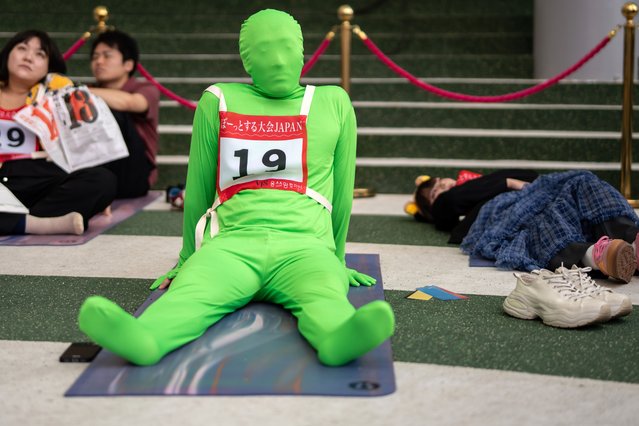
Participants compete to do nothing during the Space-out competition at World Expo 2025 on September 27, 2025 in Osaka, Japan. For 90 minutes, participants sat in silence, trying to remain in a dazed state without distraction. The winner was determined not by activity but by calmness maintaining the most stable heart rate amid the lively crowds of the Osaka Expo site. (Photo by Tomohiro Ohsumi/Getty Images)

Participants compete to do nothing during the Space-out competition at World Expo 2025 on September 27, 2025 in Osaka, Japan. For 90 minutes, participants sat in silence, trying to remain in a dazed state without distraction. The winner was determined not by activity but by calmness maintaining the most stable heart rate amid the lively crowds of the Osaka Expo site. (Photo by Tomohiro Ohsumi/Getty Images)
Details
25 Nov 2025 05:19:00
A man gestures to a robot at a restaurant in Hefei, Anhui province, December 26, 2014. (Photo by Reuters/Stringer)

A man gestures to a robot at a restaurant in Hefei, Anhui province, December 26, 2014. The restaurant, with a space of 1300 square metres and a total of 30 robots to cook meals, deliver dishes and welcome costumers, was reported to be the biggest robot restaurant in China. (Photo by Reuters/Stringer)
Details
28 Dec 2014 12:11:00