Loading...
Done
A family dressed in traditional chinese clothes celebrates the Chinese New Year in Chinatown in Bangkok, Thailand February 8, 2016. (Photo by Jorge Silva/Reuters)

A family dressed in traditional chinese clothes celebrates the Chinese New Year in Chinatown in Bangkok, Thailand February 8, 2016. (Photo by Jorge Silva/Reuters)
Details
09 Feb 2016 13:40:00
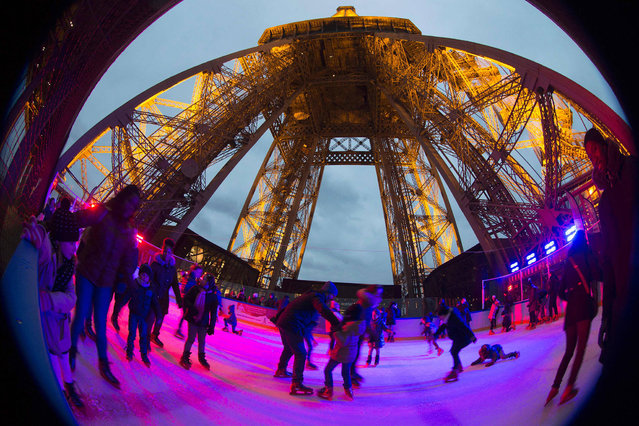
People enjoy skating at the open air Christmas ice rink on the first floor of the Eiffel Tower after its reopening on December 19, 2016 in Paris The ice rink of about 200 square metres and on the first floor of the tower (57 metres above the ground) is open to the public until February 19, 2017. (Photo by Joel Saget/AFP Photo)

People enjoy skating at the open air Christmas ice rink on the first floor of the Eiffel Tower after its reopening on December 19, 2016 in Paris The ice rink of about 200 square metres and on the first floor of the tower (57 metres above the ground) is open to the public until February 19, 2017. (Photo by Joel Saget/AFP Photo)
Details
21 Dec 2016 09:51:00
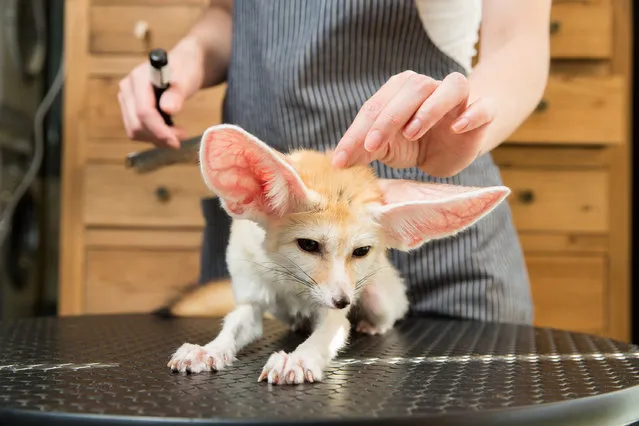
A fennec fox (Vulpes zerda) is groomed in a pet store in central Beijing. Native to the Sahara in North Africa, the species became a popular pet after being depicted as a character in Disney’s 2016 animated movie Zootopia. Individuals can cost between $2,000–$3,000. (Photo by Sean Gallagher/The Guardian)

A dramatic rise in owning exotic pets in China is fuelling global demand for threatened species. The growing trade in alligators, snakes, monkeys, crocodiles and spiders is directly linked to species loss in some of the world’s most threatened ecosystems. Here: A fennec fox (Vulpes zerda) is groomed in a pet store in central Beijing. Native to the Sahara in North Africa, the species became a popular pet after being depicted as a character in Disney’s 2016 animated movie Zootopia. Individuals can cost between $2,000–$3,000. (Photo by Sean Gallagher/The Guardian)
Details
23 Sep 2017 08:04:00
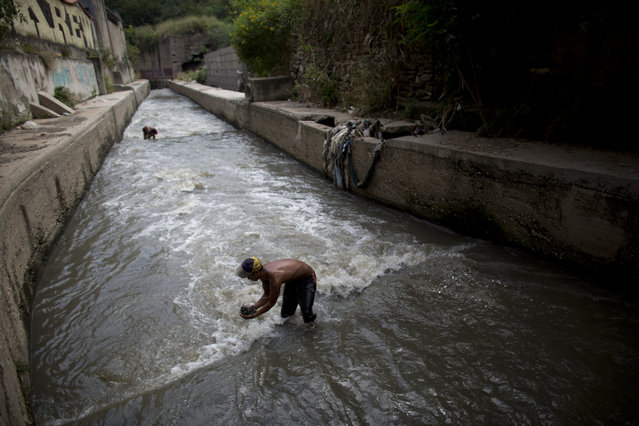
In this November 30, 2017 photo, Douglas scoops up mud from the bottom of the polluted Guaire River, in search of gold and anything valuable he can sell, in Caracas, Venezuela. Some stretches of the river smell of sewer while others emit a toxic odor of fuel, a stench that stays in ones nose for hours after leaving the water. (Photo by Ariana Cubillos/AP Photo)

In this November 30, 2017 photo, Douglas scoops up mud from the bottom of the polluted Guaire River, in search of gold and anything valuable he can sell, in Caracas, Venezuela. Some stretches of the river smell of sewer while others emit a toxic odor of fuel, a stench that stays in ones nose for hours after leaving the water. (Photo by Ariana Cubillos/AP Photo)
Details
11 Jan 2018 07:35:00
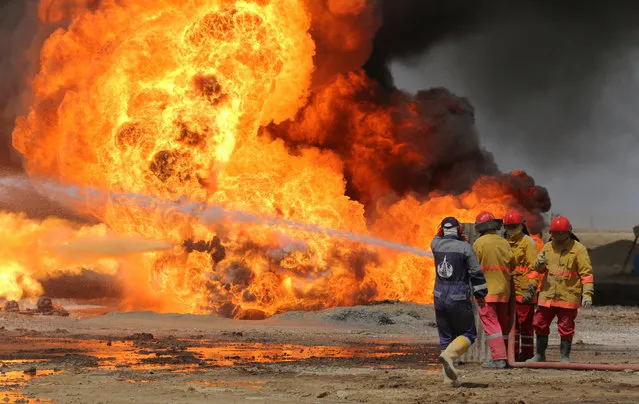
Iraqi firefighters try to stop the fire of burning oil wells in Kirkuk, northern Iraq, 02 June 2016. Two Khabbaz oil field wells in Kirkuk Province, northern Iraq, exploded by suspected insurgents, a security official said. (Photo by EPA/Stringer)

Iraqi firefighters try to stop the fire of burning oil wells in Kirkuk, northern Iraq, 02 June 2016. Two Khabbaz oil field wells in Kirkuk Province, northern Iraq, exploded by suspected insurgents, a security official said. (Photo by EPA/Stringer)
Details
24 May 2018 00:01:00
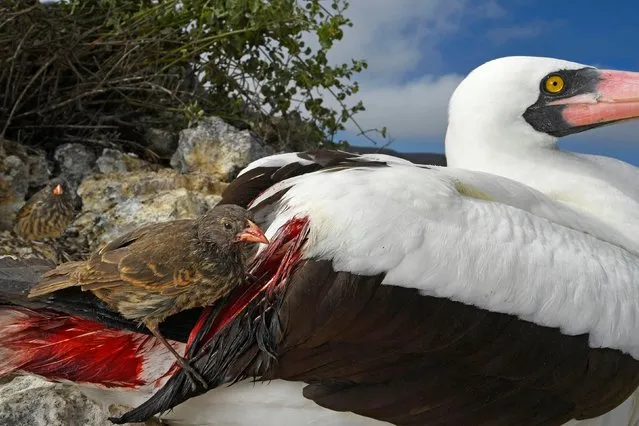
Bloodthirsty by Thomas P Peschak, Germany/South Africa — winner, Behaviour: birds. When rations run short on Wolf Island, in the remote northern Galápagos, the sharp-beaked ground finches become vampires. Their sitting targets are Nazca boobies and other large birds. The finches rely on a scant diet of seeds and insects, which regularly dries up, so they drink blood to survive. ‘I’ve seen more than half a dozen finches drinking from a single Nazca booby,’ says Tom. Rather than leave their nests the boobies tolerate the vampires, and the blood loss doesn’t seem to cause permanent harm. (Photo by Thomas P Peschak/2018 Wildlife Photographer of the Year)

Bloodthirsty by Thomas P. Peschak, Germany/South Africa — winner, Behaviour: birds. When rations run short on Wolf Island, in the remote northern Galápagos, the sharp-beaked ground finches become vampires. Their sitting targets are Nazca boobies and other large birds. The finches rely on a scant diet of seeds and insects, which regularly dries up, so they drink blood to survive. ‘I’ve seen more than half a dozen finches drinking from a single Nazca booby,’ says Tom. Rather than leave their nests the boobies tolerate the vampires, and the blood loss doesn’t seem to cause permanent harm. (Photo by Thomas P. Peschak/2018 Wildlife Photographer of the Year)
Details
19 Oct 2018 00:05:00
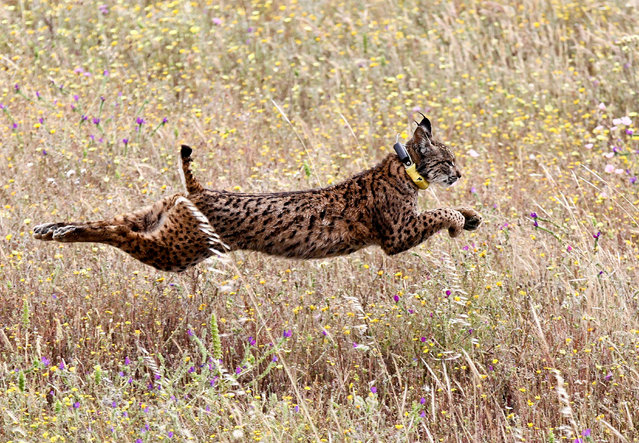
Iberian lynx Mistral jumps in a field after being released by Portugal's Minister of Environment Joao Matos Fernandes (unseen) and others in the Mount Milhouro (Herdade da Cela) region in Mertola, Portugal, 13 May 2016. Mistralis the 18th lynx bred in captivity released since late 2014. (Photo by Nuno Veiga/EPA)

Iberian lynx Mistral jumps in a field after being released by Portugal's Minister of Environment Joao Matos Fernandes (unseen) and others in the Mount Milhouro (Herdade da Cela) region in Mertola, Portugal, 13 May 2016. Mistralis the 18th lynx bred in captivity released since late 2014. (Photo by Nuno Veiga/EPA)
Details
15 May 2016 11:55:00
A woman cuts her hair during a protest against the death of Iranian Mahsa Amini and the government of Iran on October 02, 2022 in Istanbul, Turkey. (Photo by Chris McGrath/Getty Images)

A woman cuts her hair during a protest against the death of Iranian Mahsa Amini and the government of Iran on October 02, 2022 in Istanbul, Turkey. (Photo by Chris McGrath/Getty Images)
Details
14 Oct 2022 04:42:00