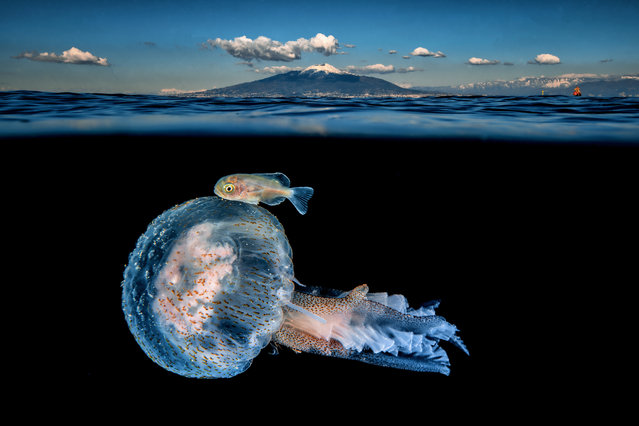
Jellyfish with a juvenile imperial blackfish (Schedophilus ovalis) in Castellammare di Stabia, Naples, Italy, winter 2023. (Photo by Marco Gargiulo/Media Drum Images)
Nick Krist makes a funny face as he and his son, Noah, 8, take a selfie before a baseball game between the Los Angeles Angels and the Minnesota Twins, Wednesday, July 22, 2015, in Anaheim, Calif. (Photo by Jae C. Hong/AP Photo)
I know, this answer was a little too short, so let me explain in a little more detail.
Imagine tossing a coin. Normally, any normal coin toss has two possible outcomes - heads or tails - with each one having a 50% chance of happening. Ideally, that is, because factors like the force of your finger tossing the coin, gravity, the wind, the moon phase and a passing TARDIS can all influence the outcome of the toss - but I have deviated from the subject.
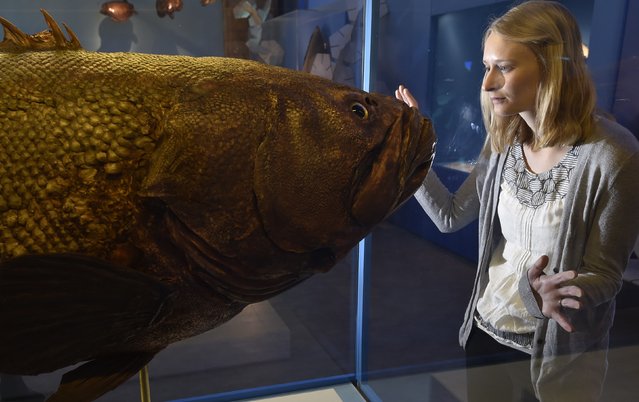
Museum employee Victoria views a giant grouper fish specimen at the Natural History Museum in west London March 25, 2015. It forms part of a new exhibition, “Coral Reefs: Secret Cities of the Sea”, featuring a panoramic virtual dive and over 250 specimens from the Museum's coral, fish and marine invertebrate collection, which opens on March 27. (Photo by Toby Melville/Reuters)
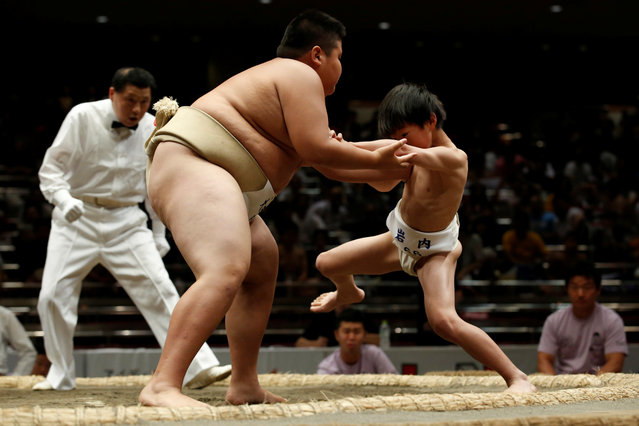
Elementary school sumo wrestlers compete in the sumo ring during the Wanpaku sumo-wrestling tournament in Tokyo, Japan July 30, 2017. (Photo by Kim Kyung-Hoon/Reuters)
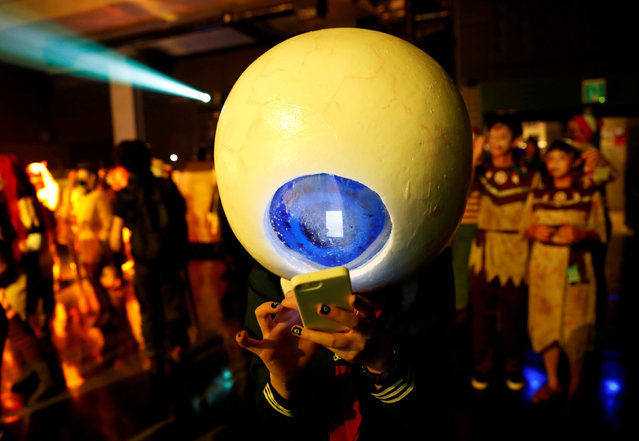
A participant in costume uses a mobile phone at a Halloween event in Kawasaki, south of Tokyo, Japan October 29, 2017. (Photo by Kim Kyung-Hoon/Reuters)
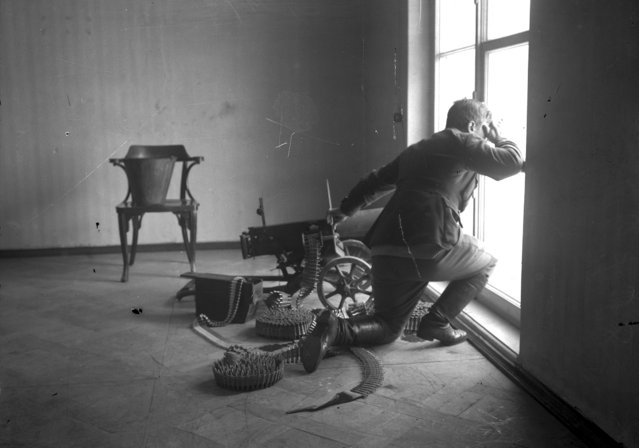
In this photo taken in October 1917, provided by Russian State Documentary Film and Photo Archive, a machine gunner looks through a window at his position near the Kremlin in Moscow, Russia. The 1917 Bolshevik Revolution was long before the digital revolution allowed anyone to instantly document events. But the clumsy cameras of the time still caught some images that capture the period's drama. (Photo by Russian State Documentary Film and Photo Archive via AP Photo)