Loading...
Done
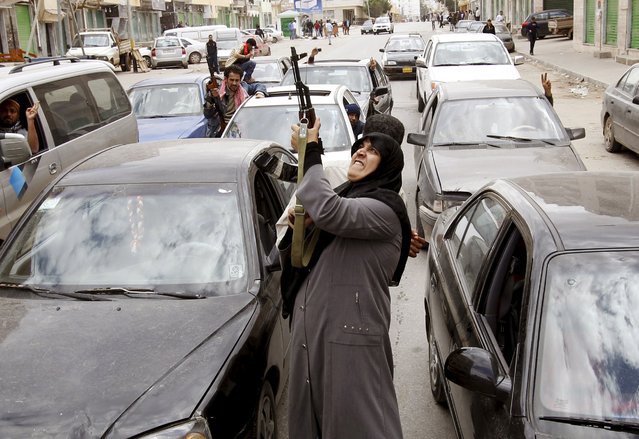
A rebel fighter supporter shoots an AK-47 rifle as she reacts to the news of the withdrawal of Libyan leader Muammar Gaddafi's forces from Benghazi March 19, 2011. The conflict was sparked by clashes in Benghazi and escalated into a rebellion that spread across the country. Gaddafi was captured and killed on October 20, 2011. Libya is currently caught up in a conflict between two rival factions who once battled together against the late Libyan leader. (Photo by Goran Tomasevic/Reuters)

A rebel fighter supporter shoots an AK-47 rifle as she reacts to the news of the withdrawal of Libyan leader Muammar Gaddafi's forces from Benghazi March 19, 2011. The conflict was sparked by clashes in Benghazi and escalated into a rebellion that spread across the country. Gaddafi was captured and killed on October 20, 2011. Libya is currently caught up in a conflict between two rival factions who once battled together against the late Libyan leader. (Photo by Goran Tomasevic/Reuters)
Details
12 Feb 2016 12:56:00
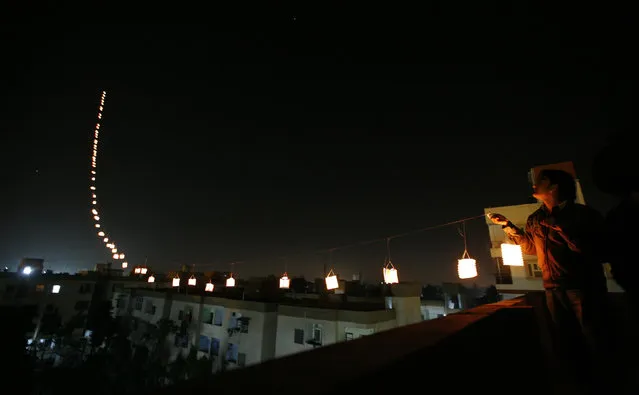
A man flies a kite made of 110 Tukkal or paper lanterns for the Hindu festival of “Makar Sankranti”, which marks the start of spring, in Ahmedabad January 13, 2011. (Photo by Amit Dave/Reuters)

A man flies a kite made of 110 Tukkal or paper lanterns for the Hindu festival of “Makar Sankranti”, which marks the start of spring, in Ahmedabad January 13, 2011. (Photo by Amit Dave/Reuters)
Details
28 Mar 2016 10:39:00
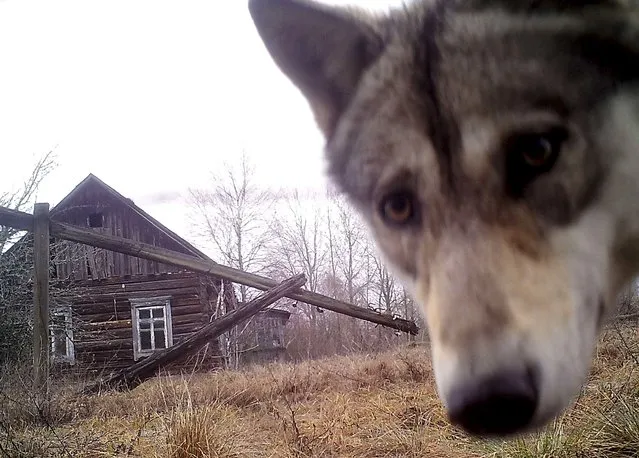
A wolf looks into the camera at the 30 km (19 miles) exclusion zone around the Chernobyl nuclear reactor in the abandoned village of Orevichi, Belarus, March 2, 2016. (Photo by Vasily Fedosenko/Reuters)

A wolf looks into the camera at the 30 km (19 miles) exclusion zone around the Chernobyl nuclear reactor in the abandoned village of Orevichi, Belarus, March 2, 2016. What happens to the environment when humans disappear? Thirty years after the Chernobyl nuclear disaster, booming populations of wolf, elk and other wildlife in the vast contaminated zone in Belarus and Ukraine provide a clue. (Photo by Vasily Fedosenko/Reuters)
Details
08 Apr 2016 15:13:00
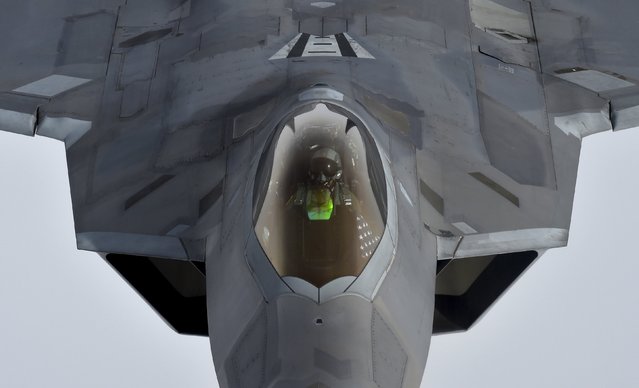
A pilot looks up from a U.S. F-22 Raptor fighter as it prepares to refuel in mid-air with a KC-135 refuelling plane over European airspace during a flight to Britain from Mihail Kogalniceanu air base in Romania April 25, 2016. (Photo by Toby Melville/Reuters)

A pilot looks up from a U.S. F-22 Raptor fighter as it prepares to refuel in mid-air with a KC-135 refuelling plane over European airspace during a flight to Britain from Mihail Kogalniceanu air base in Romania April 25, 2016. (Photo by Toby Melville/Reuters)
Details
26 Apr 2016 11:43:00
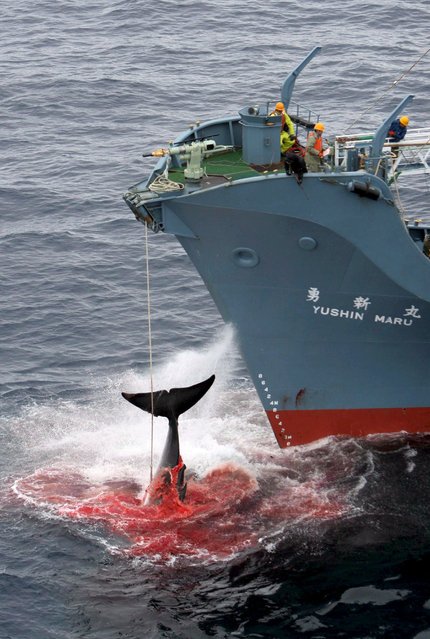
A file photograph dated 07 January 2006 and released by Greenpeace, showing the Yushin Maru, a factory ship in a Japanese whaling fleet, injuring a whale with it's first harpoon attempt. A UN court in The Hague on 31 March 2014 halted Japan's much-criticized whaling programme, ruling that it contravenes a 1986 moratorium on whale hunting. Japan must end its 'research whaling' programme, the International Court of Justice (ICJ) said. (Photo by Kate Davison/EPA)

A file photograph dated 07 January 2006 and released by Greenpeace, showing the Yushin Maru, a factory ship in a Japanese whaling fleet, injuring a whale with it's first harpoon attempt. A UN court in The Hague on 31 March 2014 halted Japan's much-criticized whaling programme, ruling that it contravenes a 1986 moratorium on whale hunting. Japan must end its 'research whaling' programme, the International Court of Justice (ICJ) said. Japan said the programme was for scientific research and permitted under international conventions. Australia had brought the case to the ICJ in 2010, charging that Japan was breaching international law by killing hundreds of whales every year for commercial purposes. Japan was “deeply disappointed” by the ruling, an unnamed government official was quoted by the Kyodo News agency as saying. But the official said Japan would stand by the ruling. (Photo by Kate Davison/EPA)
Details
01 Apr 2014 08:38:00
Library, 2007. Photographer Lori Nix says this is the most popular image she has made for this project that she calls “The City”. (Photo by Lori Nix)

Photographer Lori Nix hand-crafted dioramas are fictional scenes of a post-apocalyptic world in which plants and decay reclaim both grand and mundane structures. Each structure is built in Nix's living room and can take over half a year to build. Photo: Library, 2007. Photographer Lori Nix says this is the most popular image she has made for this project that she calls “The City”. (Photo by Lori Nix)
Details
18 Apr 2014 10:02:00
A rainbow is seen near a cloud south of Corvallis, Ore., Monday, May 19, 2014. (Photo by Andy Cripe/AP Photo/The Corvallis Gazette-Times)

A rainbow is seen near a cloud south of Corvallis, Ore., Monday, May 19, 2014. (Photo by Andy Cripe/AP Photo/The Corvallis Gazette-Times)
Details
22 May 2014 10:00:00
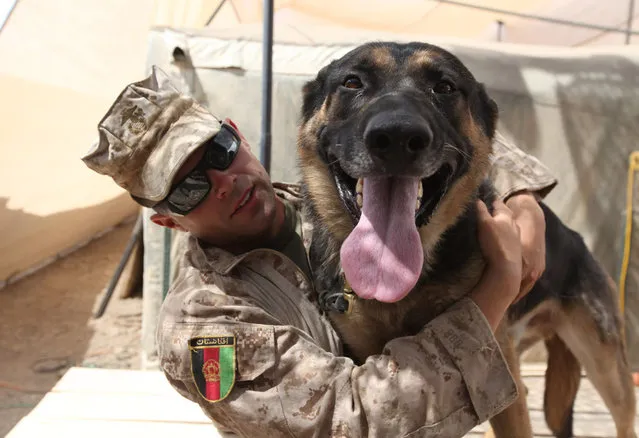
Afghanistan: Dogs of War Part 1

Throughout the course of the long war in Afghanistan, Coalition troops have relied on thousands of military working dogs to help keep them safe, and make their jobs easier. The dogs are trained to detect explosives, to find illegal drugs, to search for missing comrades, or target enemy combatants. Not only are they active on the front lines, but behind the lines they serve as therapy dogs, service dogs, and loyal companions. They also share the same risks as the ground troops, suffering injuries and sometimes death on the battlefields. Gathered here are images of these dogs and their handlers in Afghanistan and back home, from over the past several years, part of the ongoing series here on Afghanistan.
Details
03 Jun 2014 21:02:00