Loading...
Done
Filipino artist Leeroy New poses with a makeshift mask he designed with recycled materials as he adapts to the effects of the coronavirus disease (COVID-19) pandemic in the art industry, in his studio in Quezon City, Metro Manila, Philippines, May 28, 2020. (Photo by Eloisa Lopez/Reuters)

Filipino artist Leeroy New poses with a makeshift mask he designed with recycled materials as he adapts to the effects of the coronavirus disease (COVID-19) pandemic in the art industry, in his studio in Quezon City, Metro Manila, Philippines, May 28, 2020. (Photo by Eloisa Lopez/Reuters)
Details
30 May 2020 00:07:00
Youths cover their faces with plastic bags while pushing a handcart during rainfall in Peshawar, Pakistan, Sunday, July 12, 2020. (Photo by Muhammad Sajjad/AP Photo)

Youths cover their faces with plastic bags while pushing a handcart during rainfall in Peshawar, Pakistan, Sunday, July 12, 2020. (Photo by Muhammad Sajjad/AP Photo)
Details
14 Jul 2020 00:07:00
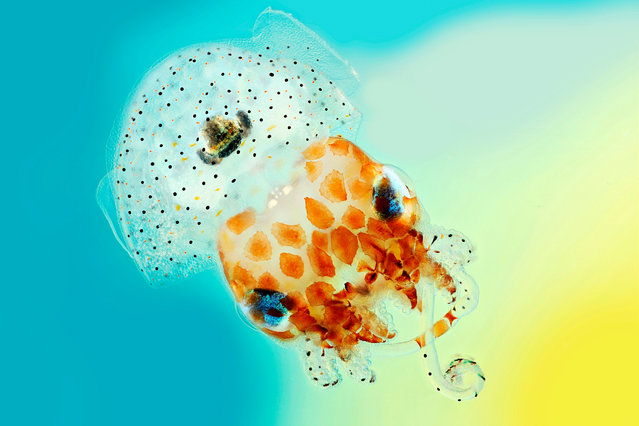
With its huge eyes, comical name and diminutive size, Mark R. Smith’s image of a baby Hawaiian bobtail squid can’t help but raise a smile. A curiously endearing creature, the cephalopod is just 1.5cm across, its mantle cavity bearing more than a passing resemblance to a rather natty shower cap. But it is also a beautiful example of symbiosis – nature’s version of “I’ll scratch your back if you scratch mine” – for on the underside of the squid is a light organ which houses bioluminescent bacteria. The squid offers the bacteria protection and food, while the bacteria emit a glow – a handy trait that the squid uses to offset its silhouette, helping it to evade predators in the depths below. Mark R. Smith’s entry combines several images of a Hawaiian bobtail squid with different focus lengths to create a final picture with greater depth of field than normal. (Photo by Mark R. Smith/Wellcome Images/Macroscopic Solutions)

With its huge eyes, comical name and diminutive size, Mark R. Smith’s image of a baby Hawaiian bobtail squid can’t help but raise a smile. A curiously endearing creature, the cephalopod is just 1.5cm across, its mantle cavity bearing more than a passing resemblance to a rather natty shower cap. But it is also a beautiful example of symbiosis – nature’s version of “I’ll scratch your back if you scratch mine” – for on the underside of the squid is a light organ which houses bioluminescent bacteria. The squid offers the bacteria protection and food, while the bacteria emit a glow – a handy trait that the squid uses to offset its silhouette, helping it to evade predators in the depths below. Mark R. Smith’s entry combines several images of a Hawaiian bobtail squid with different focus lengths to create a final picture with greater depth of field than normal. (Photo by Mark R. Smith/Wellcome Images/Macroscopic Solutions)
Details
08 Mar 2017 00:05:00
A Goodwood official prepares to brave the rain on the opening day of the Glourious Goodwood, racing festivall at Goodwood Racecourse, Chichester, England on July 30, 2019. (Photo by David Hartley/PA Wire Press Association)

A Goodwood official prepares to brave the rain on the opening day of the Glourious Goodwood, racing festivall at Goodwood Racecourse, Chichester, England on July 30, 2019. (Photo by David Hartley/PA Wire Press Association)
Details
01 Aug 2019 00:05:00
Brenda, a Honduran girl who is seeking asylum in the U.S., is carried from the Rio Grande in distress, where she had been bathing across the river from a Brownsville, Texas U.S. Customs and Border Protection tent facility as immigration hearings were being held by video teleconference, in Matamoros, Mexico September 12, 2019. Most of the people living in an encampment near the Gateway International Bridge have been sent back under the “Remain in Mexico” program, officially named Migrant Protection Protocols (MPP). (Photo by Veronica G. Cardenas/Reuters)

Brenda, a Honduran girl who is seeking asylum in the U.S., is carried from the Rio Grande in distress, where she had been bathing across the river from a Brownsville, Texas U.S. Customs and Border Protection tent facility as immigration hearings were being held by video teleconference, in Matamoros, Mexico September 12, 2019. Most of the people living in an encampment near the Gateway International Bridge have been sent back under the “Remain in Mexico” program, officially named Migrant Protection Protocols (MPP). (Photo by Veronica G. Cardenas/Reuters)
Details
15 Sep 2019 00:07:00
People celebrate the traditional Fiesta de las Aguedas on February 6, 2022 in Andavias, Zamora, Castilla y Leon, Spain. This celebration, also known as “El dia de las mujeres”, is a deep-rooted tradition in Castilla y Leon, especially in rural areas. The day of the Aguedas has its origin in the cult of Santa Agueda, and is celebrated every February 5. During this day, women are the protagonists and take over the city. For their part, the town councils give them the baton as a sign of authority. Around seven days of festivities are celebrated where the attendees dance, eat, sing, and even jump over a bonfire. (Photo By Emilio Fraile/Europa Press via Getty Images)

People celebrate the traditional Fiesta de las Aguedas on February 6, 2022 in Andavias, Zamora, Castilla y Leon, Spain. This celebration, also known as “El dia de las mujeres”, is a deep-rooted tradition in Castilla y Leon, especially in rural areas. The day of the Aguedas has its origin in the cult of Santa Agueda, and is celebrated every February 5. (Photo By Emilio Fraile/Europa Press via Getty Images)
Details
31 Mar 2022 06:18:00
A preserved Sumatran Tiger (Panthera tigris sumatrae) that was collected by the Natural Resources Conservation Board (BKSDA) as evidence is burnt in Palembang, Indonesia on March 18, 2022. (Photo by Novaa Wahyudi/Antara Foto via Reuters)

A preserved Sumatran Tiger (Panthera tigris sumatrae) that was collected by the Natural Resources Conservation Board (BKSDA) as evidence is burnt in Palembang, Indonesia on March 18, 2022. (Photo by Novaa Wahyudi/Antara Foto via Reuters)
Details
26 May 2022 04:34:00
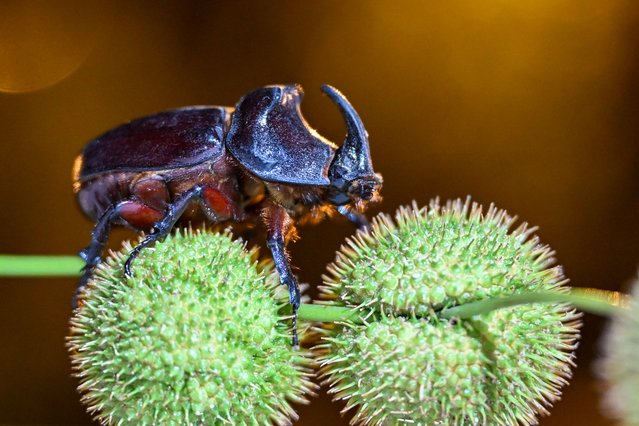
A “Rhino Beetle” (Oryctes nasicornis) is seen in Edremit, Van, Turkiye on August 2, 2024. Named “Rhino Beetle” due to the horn on its head, this beetle is commonly found in moist areas across Europe and Turkiye. (Photo by Ozkan Bilgin/Anadolu via Getty Images)

A “Rhino Beetle” (Oryctes nasicornis) is seen in Edremit, Van, Turkiye on August 2, 2024. Named “Rhino Beetle” due to the horn on its head, this beetle is commonly found in moist areas across Europe and Turkiye. (Photo by Ozkan Bilgin/Anadolu via Getty Images)
Details
24 Aug 2024 04:43:00