Loading...
Done
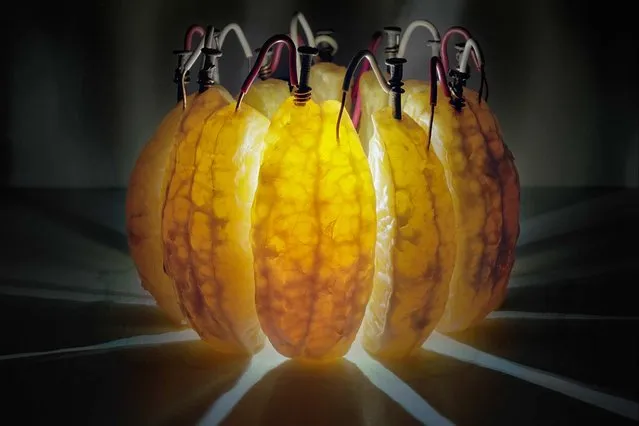
Wedges of an orange generate enough current and electrical juice – 3.5 volts – to power an LED. The fruit’s citric acid helps electrons flow from galvanized nails to copper wire in this 14-hour exposure. This image was published in September’s Visions of Earth, a trio of photos that appear in each issue of National Geographic. (Photo by Caleb Charland/National Geographic)

Wedges of an orange generate enough current and electrical juice – 3.5 volts – to power an LED. The fruit’s citric acid helps electrons flow from galvanized nails to copper wire in this 14-hour exposure. This image was published in September’s Visions of Earth, a trio of photos that appear in each issue of National Geographic. (Photo by Caleb Charland/National Geographic)
Details
06 Jan 2014 12:09:00
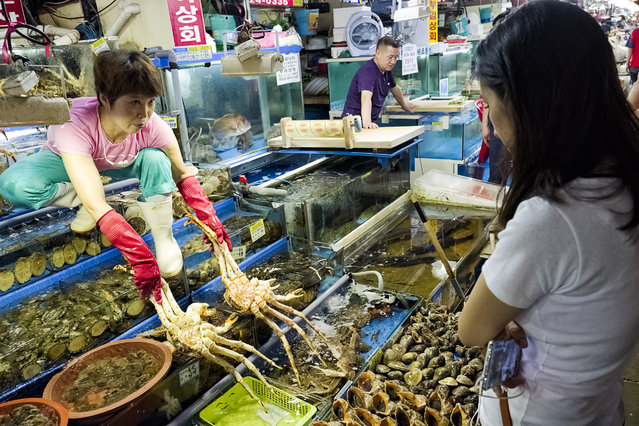
A sales woman of a fish shop shows king crabs to a customer and negotiates the price in Noryangjin Fish Market is seen on August 1, 2015 in Seoul, South Korea. Noryangjin Fish Market was established in 1927 as Gyeongseong Susan in Jung-gu near Seoul Station and moved to its current location in 1971. (Photo by Shin Woong-jae/The Washington Post)

A sales woman of a fish shop shows king crabs to a customer and negotiates the price in Noryangjin Fish Market is seen on August 1, 2015 in Seoul, South Korea. Noryangjin Fish Market was established in 1927 as Gyeongseong Susan in Jung-gu near Seoul Station and moved to its current location in 1971. (Photo by Shin Woong-jae/The Washington Post)
Details
11 Sep 2015 12:21:00
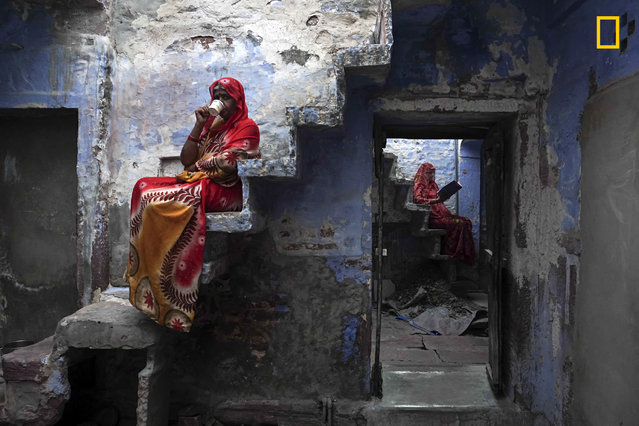
“These Rajasthani sisters were sitting on the staircase inside their house relaxing and enjoy a cup of masala chai”. (Photo by Firdaus Hadzri/National Geographic Travel Photographer of the Year Contest)

“These Rajasthani sisters were sitting on the staircase inside their house relaxing and enjoy a cup of masala chai”. (Photo by Firdaus Hadzri/National Geographic Travel Photographer of the Year Contest)
Details
13 Apr 2018 00:01:00
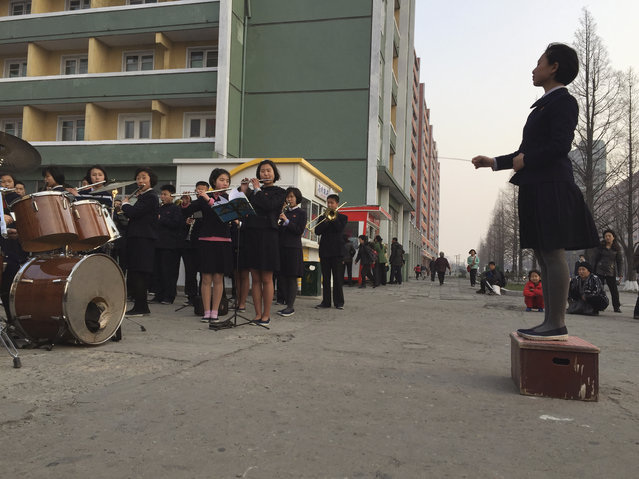
Schoolchildren play music to entertain and inspire people on their way home from work Tuesday, March 29, 2016 in Pyongyang, North Korea. North Korea has called a 70-day loyalty drive areas of a major congress of the ruling party scheduled for early May and everyone from students to coal miners have been mobilized nationwide to demonstrate their devotion to the leadership. (Photo by Eric Talmadge/AP Photo)

Schoolchildren play music to entertain and inspire people on their way home from work Tuesday, March 29, 2016 in Pyongyang, North Korea. North Korea has called a 70-day loyalty drive areas of a major congress of the ruling party scheduled for early May and everyone from students to coal miners have been mobilized nationwide to demonstrate their devotion to the leadership. (Photo by Eric Talmadge/AP Photo)
Details
12 Apr 2016 11:03:00
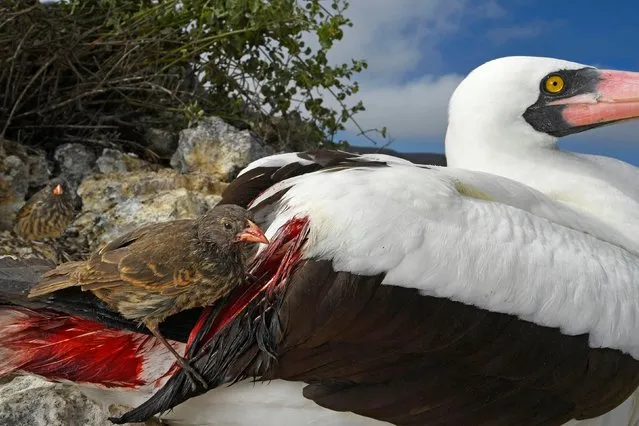
Bloodthirsty by Thomas P Peschak, Germany/South Africa — winner, Behaviour: birds. When rations run short on Wolf Island, in the remote northern Galápagos, the sharp-beaked ground finches become vampires. Their sitting targets are Nazca boobies and other large birds. The finches rely on a scant diet of seeds and insects, which regularly dries up, so they drink blood to survive. ‘I’ve seen more than half a dozen finches drinking from a single Nazca booby,’ says Tom. Rather than leave their nests the boobies tolerate the vampires, and the blood loss doesn’t seem to cause permanent harm. (Photo by Thomas P Peschak/2018 Wildlife Photographer of the Year)

Bloodthirsty by Thomas P. Peschak, Germany/South Africa — winner, Behaviour: birds. When rations run short on Wolf Island, in the remote northern Galápagos, the sharp-beaked ground finches become vampires. Their sitting targets are Nazca boobies and other large birds. The finches rely on a scant diet of seeds and insects, which regularly dries up, so they drink blood to survive. ‘I’ve seen more than half a dozen finches drinking from a single Nazca booby,’ says Tom. Rather than leave their nests the boobies tolerate the vampires, and the blood loss doesn’t seem to cause permanent harm. (Photo by Thomas P. Peschak/2018 Wildlife Photographer of the Year)
Details
19 Oct 2018 00:05:00
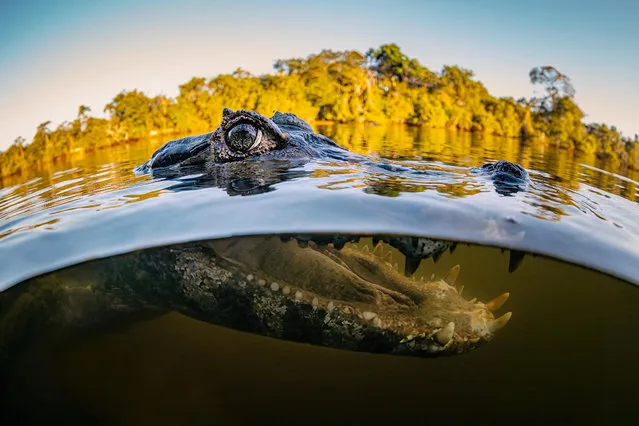
A caiman in the Pantanal region of Brazil in 2021. They are used to seeing humans, allowing the photographer, Leighton Lum, a close-up shot. (Photo by Leighton Lum/Caters News Agency)

A caiman in the Pantanal region of Brazil in 2021. They are used to seeing humans, allowing the photographer, Leighton Lum, a close-up shot. (Photo by Leighton Lum/Caters News Agency)
Details
02 Sep 2021 02:14:00
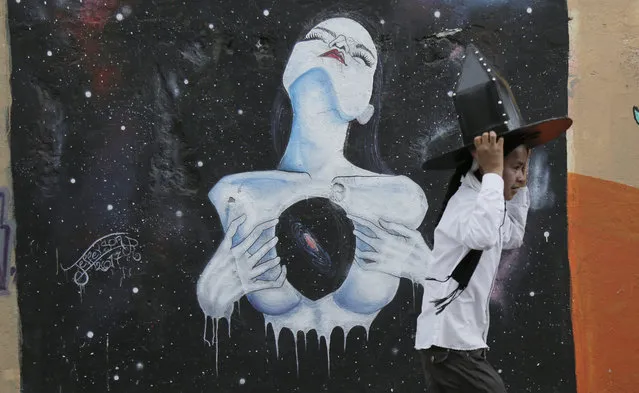
A youth in costume hurries past a mural after dancing at the Sun Festival in Cotacachi, Ecuador, Sunday, June 24, 2018. Across the Andes, from the tip of Argentina as far north as Colombia, indigenous communities are gathering for the southern hemisphere's winter solstice to honor the ancient sun god. (Photo by Dolores Ochoa/AP Photo)

A youth in costume hurries past a mural after dancing at the Sun Festival in Cotacachi, Ecuador, Sunday, June 24, 2018. Across the Andes, from the tip of Argentina as far north as Colombia, indigenous communities are gathering for the southern hemisphere's winter solstice to honor the ancient sun god. (Photo by Dolores Ochoa/AP Photo)
Details
26 Jun 2018 00:03:00
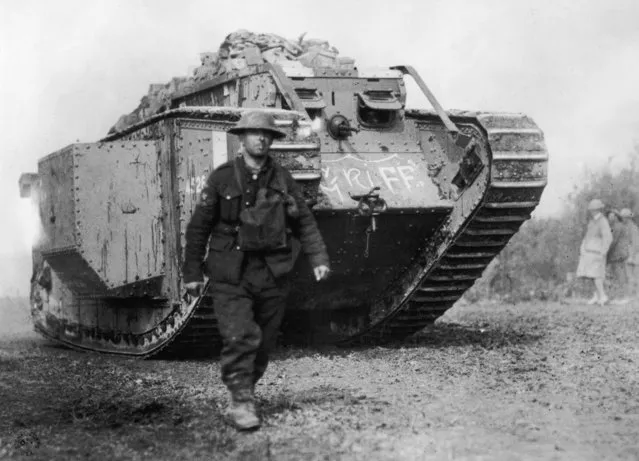
An American soldier walks ahead of an MKIV British-made tank, circa 1918. (Photo by Hulton Archive/Getty Images)

An American soldier walks ahead of an MKIV (Mark IV) British-made tank, circa 1918. (Photo by Hulton Archive/Getty Images)
Details
16 Nov 2018 00:05:00