Loading...
Done
Undated handout photo issued by Vogue of Zendaya appearing in the May issue British Vogue. Zendaya has spoken of her concerns surrounding her potential future children having to deal with her level of fame and the movie industry becoming “bored” of her. The 27-year-old American actress, known for teen show Euphoria and the Dune films, has been romantically linked to her Spider-Man: Homecoming co-star Tom Holland since 2021. Issue date: Tuesday, April 9, 2024. (Photo by Carlijn Jacobs/British Vogue/PA Wire)

Undated handout photo issued by Vogue of Zendaya appearing in the May issue British Vogue. Zendaya has spoken of her concerns surrounding her potential future children having to deal with her level of fame and the movie industry becoming “bored” of her. The 27-year-old American actress, known for teen show Euphoria and the Dune films, has been romantically linked to her Spider-Man: Homecoming co-star Tom Holland since 2021. Issue date: Tuesday, April 9, 2024. (Photo by Carlijn Jacobs/British Vogue/PA Wire)
Details
28 Apr 2024 03:28:00
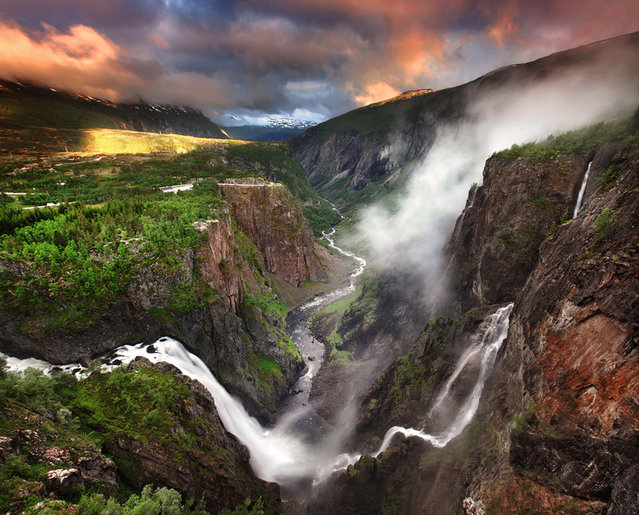
Voringfossen Waterfall In Norway

Vøringfossen is the 83rd highest waterfall in Norway on the basis of total fall. It lies at the top of Måbødalen in the municipality of Eidfjord, in Hordaland, not far from Highway 7, which connects Oslo with Bergen. It has a total drop of 182 meters, and a major drop of 163 meters. It is perhaps the most famous in the country and a major tourist attraction on the way down from Hardangervidda to Hardangerfjord. The name Vøringfossen (Old Norse Vyrðingr) is derived from the verb vyrða (English: esteem, revere). The last element fossen, the finite form of foss (waterfall), is a later addition.
Details
02 Dec 2013 10:58:00
A decades-old television. (Photo by Mark C. O'Flaherty)

The official name for this tiny speck of land – the size of 12 football pitches – is Hashima, but few call it that. In English, its most commonly used name means “Battleship Island” and, viewed from a certain angle offshore, its silhouette is uncannily dreadnought in nature. It was a mining facility until 1974, when it was abandoned to the elements, before partially reopening as a tourist attraction in 2009. Photo: A decades-old television. (Photo by Mark C. O'Flaherty)
Details
15 Jun 2014 11:24:00
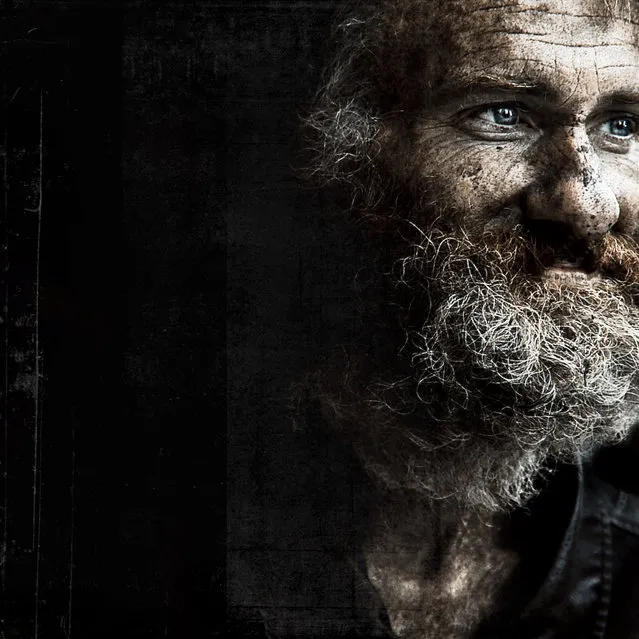
Untitled

Untitled. (Photo by Lee Jeffries). P.S. The person in the photo – poured-out our yard keeper Volodya (it has no surnames, therefore it's simple – Volodya). It too the homeless, and too the good person (it's visible according to eyes). Looks after stray dogs and cats, every day feeds crowd of pigeons in a yard... I am on friendly terms with it. =) (Forgive please me for bad English – Translate.ru very much tried to inform to you my scanty thought).

Details
26 Oct 2012 12:31:00
Russian trio Serebro

“Serebro (Серебро, Silver) are a Russian trio, formed in Moscow, Russia in 2006. Serebro is currently one of the most popular Russian bands. They are also famously known as the band who finished third in the Eurovision Song Contest 2007 in Helsinki with the song “Song #1”. On 30 July 2011, Serebro premiered their eighth single, “Mama Lover” at Europa Plus Live. It is their third official English language release after “Song #1” and “Like Mary Warner”. On 15 September 2011, the music video for “Mama Luba” (Russian version of “Mama Lover”) was released”. – Wikipedia

Photo: Russian trio «Serebro», 2008
Details
30 Sep 2011 11:56:00
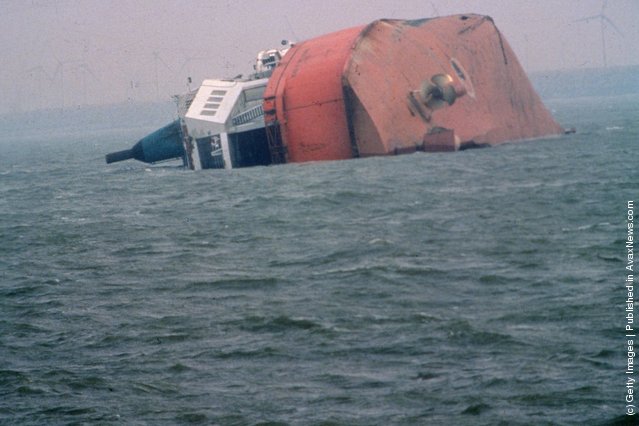
The wreck of the Herald of Free Enterprise, which capsized near Zeebrugge on the 6th of March 1987

“MS Herald of Free Enterprise was a roll-on roll-off (RORO) car and passenger ferry owned by Townsend Thoresen. She was one of three ships commissioned by the company to operate on the Dover–Calais route across the English Channel. The ferry capsized on the night of 6 March 1987, moments after leaving the Belgian port of Zeebrugge, killing 193 passengers and crew. This was the deadliest maritime disaster involving a British ship in peacetime since the sinking of the Iolaire in 1919”. – Wikipedia

Photo: The wreck of the Herald of Free Enterprise, which capsized near Zeebrugge on the 6th of March 1987. (Photo by Hulton Archive/Getty Images). 1987
Details
06 Mar 2012 13:26:00
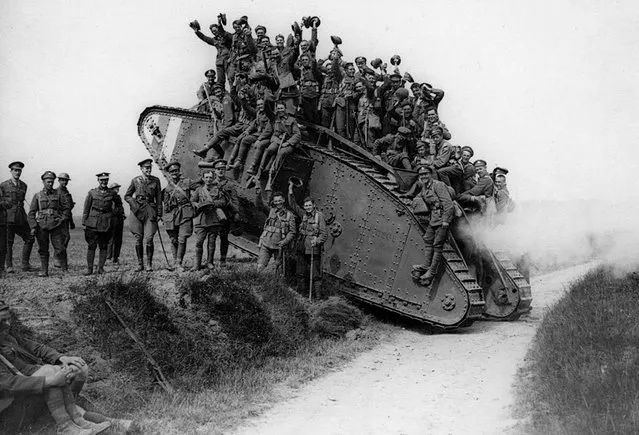
These black-and-white photos are taken from the new book “Armoured Warfare in the First World War 1916 – 1918” by Anthony Tucker-Jones and published by Pen & Sword Military. “Interestingly the British, French and Germans took completely different approaches with varying results”. The British military produced “Little Willie” in Autumn 1915 weighing 18 tonnes, which had a crew of two plus four gunners. “Inspired by a tracked artillery tractor “Little Willie” was referred to as a water tank – hence the name tank – to ensure secrecy”, said Anthony. “This led to the strange looking Mark I with its peculiar rhomboid shape, designed to cross trenches with guns in sponsons on either side. The Germans saw the tank as unchivalrous and were slow to grasp its utility. They favoured the Stormtrooper (specialist soldiers used to infiltrate enemy trenches) and artillery, not the tank”, said Anthony. “However, they didn’t hesitate to make use of captured British tanks. Although the tank helped secure victory and German soldiers dubbed it “Germany’s Downfall” the country was ultimately brought to its knees by the Allies blockade”. Here: British troops hitch a ride on a Mark IV after the massed tank fleet spearheading attack at Cambrai on November 20, 1917. (Photo by Anthony Tucker-Jones/Mediadrumworld.com)

These black-and-white photos are taken from the new book “Armoured Warfare in the First World War 1916 – 1918” by Anthony Tucker-Jones and published by Pen & Sword Military. Here: British troops hitch a ride on a Mark IV after the massed tank fleet spearheading attack at Cambrai on November 20, 1917. (Photo by Anthony Tucker-Jones/Mediadrumworld.com)
Details
23 Feb 2017 00:02:00
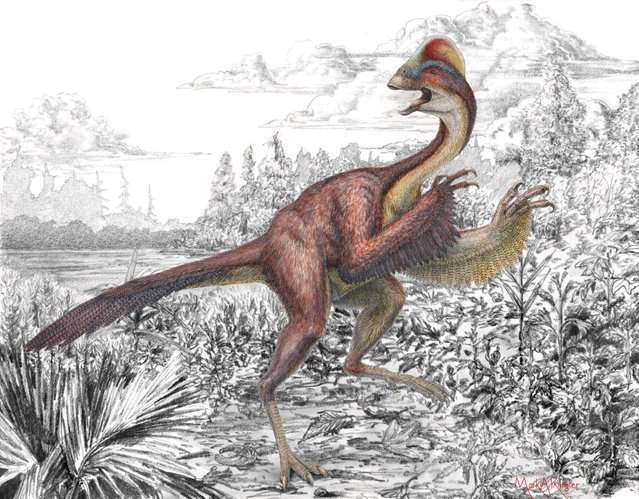
Life reconstruction of the new oviraptorosaurian dinosaur species Anzu wyliei in its 66 million-year-old environment in western North America as seen in an undated handout illustration by Mark A. Klinger, Carnegie Museum of Natural History. Some 18,000 species, great and small, were discovered in 2014, adding to the 2 million already known, scientists said on May 21, 2015 as they released a “Top 10” list that highlights the diversity of life. (Photo by Mark A. Klingler/Reuters/Carnegie Museum of Natural History)

Life reconstruction of the new oviraptorosaurian dinosaur species Anzu wyliei in its 66 million-year-old environment in western North America as seen in an undated handout illustration by Mark A. Klinger, Carnegie Museum of Natural History. Some 18,000 species, great and small, were discovered in 2014, adding to the 2 million already known, scientists said on May 21, 2015 as they released a “Top 10” list that highlights the diversity of life. Anzu wyliei, one of the top 10, dubbed “the chicken from hell”, is extinct. The feathered dinosaur whose partial skeletons were unearthed in the Dakotas was a contemporary of T. rex and Triceratops. (Photo by Mark A. Klingler/Reuters/Carnegie Museum of Natural History)
Details
22 May 2015 12:31:00