Loading...
Done
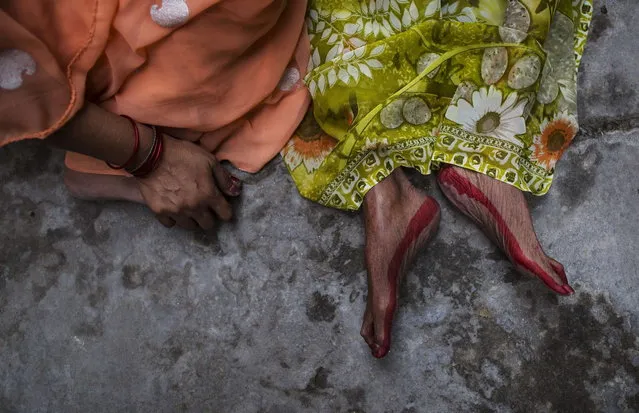
A relative (L) of Champa Devi, 88, sits next to her body, minutes after her death at Mukti Bhavan (Salvation House) at Varanasi, in the northern Indian state of Uttar Pradesh, June 21, 2014. (Photo by Danish Siddiqui/Reuters)

A relative (L) of Champa Devi, 88, sits next to her body, minutes after her death at Mukti Bhavan (Salvation House) at Varanasi, in the northern Indian state of Uttar Pradesh, June 21, 2014. The city of Varanasi, on the banks of the River Ganges, is widely considered Hinduism's holiest city and many Hindus believe that dying there and having their remains scattered in the Ganges allows their soul to escape a cycle of death and rebirth, attaining “moksha” or salvation. “Mukti Bhavan” or “Salvation House”, is a charity-run hostel that caters for people who wish to come to Varanasi to die. Guests can normally stay up to two weeks after which, if they haven't yet passed away, they are gently asked to leave. (Photo by Danish Siddiqui/Reuters)
Details
24 Jul 2014 12:32:00
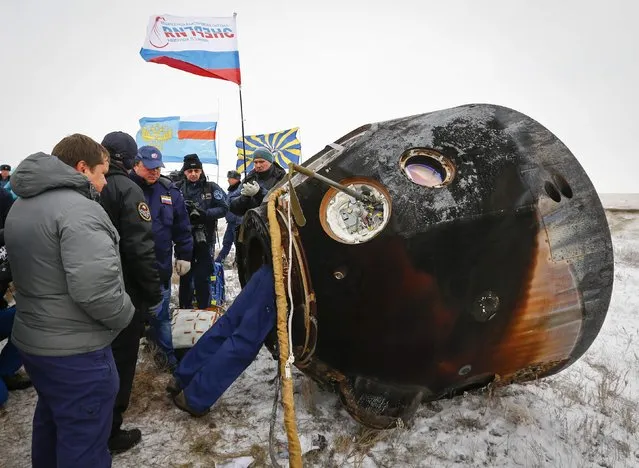
Ground personnel work next to the Soyuz TMA-13M capsule of the International Space Station (ISS) crew of Alexander Gerst of Germany, Maxim Suraev of Russia and Reid Wiseman of the U.S. after its landing near the town of Arkalyk in northern Kazakhstan November 10, 2014. (Photo by Shamil Zhumatov/Reuters)

Ground personnel work next to the Soyuz TMA-13M capsule of the International Space Station (ISS) crew of Alexander Gerst of Germany, Maxim Suraev of Russia and Reid Wiseman of the U.S. after its landing near the town of Arkalyk in northern Kazakhstan November 10, 2014. A veteran Russian cosmonaut and two International Space Station crewmates, one from the United States and one from Germany, returned safely to Earth on Sunday with a parachute landing of their Soyuz capsule in Kazakhstan, ending 5-1/2 months in orbit. (Photo by Shamil Zhumatov/Reuters)
Details
10 Nov 2014 13:58:00
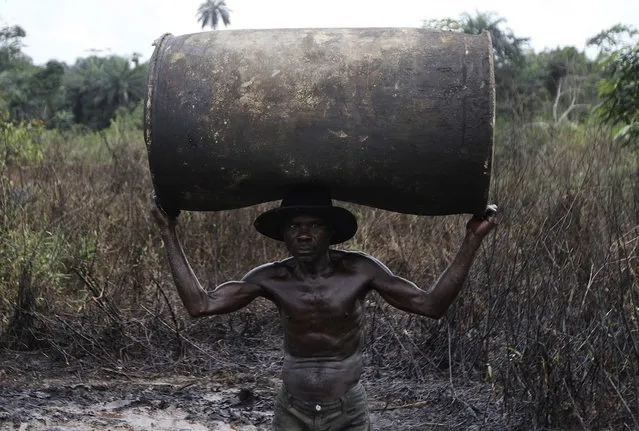
Ebiowei, 48, carries an empty oil container on his head to a place where it would be filled with refined fuel at an illegal refinery site near river Nun in Nigeria's oil state of Bayelsa November 27, 2012. (Photo by Akintunde Akinleye/Reuters)

Ebiowei, 48, carries an empty oil container on his head to a place where it would be filled with refined fuel at an illegal refinery site near river Nun in Nigeria's oil state of Bayelsa November 27, 2012. Locals in the industry say workers can earn $50 to $60 a day. Thousands of people in Nigeria engage in a practice known locally as “oil bunkering” – hacking into pipelines to steal crude then refining it or selling it abroad. The practice, which leaves oil spewing from pipelines for miles around, managed to lift around a fifth of Nigeria's two million barrel a day production last year according to the finance ministry. (Photo by Akintunde Akinleye/Reuters)
Details
18 Jan 2013 14:29:00
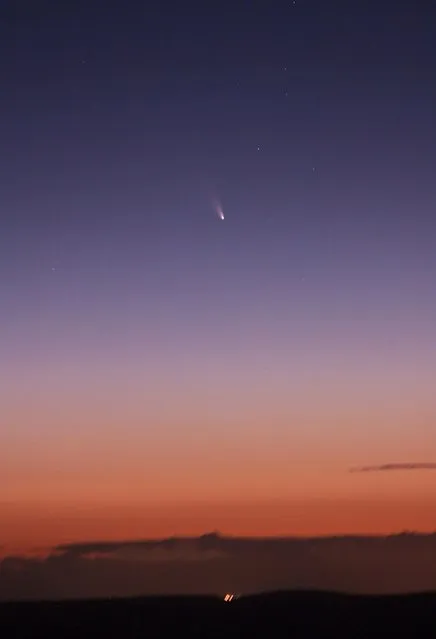
This image provided by NASA shoaws the comet PANSTARRS as seen from Mount Dale, Western Australia on March 5, 2013. According to NASA on March 10, it will make its closest approach to the sun about 28 million miles (45 million kilometers) away. As it continues its nightly trek across the sky, the comet may get lost in the sun's glare but should return and be visible to the naked eye by March 12. (Photo by AP Photo/NASA)

It’s time to start watching for Comet PANSTARRS, one of two comets to get excited about in 2013. Photo: This image provided by NASA shoaws the comet PANSTARRS as seen from Mount Dale, Western Australia on March 5, 2013. According to NASA on March 10, it will make its closest approach to the sun about 28 million miles (45 million kilometers) away. As it continues its nightly trek across the sky, the comet may get lost in the sun's glare but should return and be visible to the naked eye by March 12. (Photo by AP Photo/NASA)
Details
13 Mar 2013 08:03:00
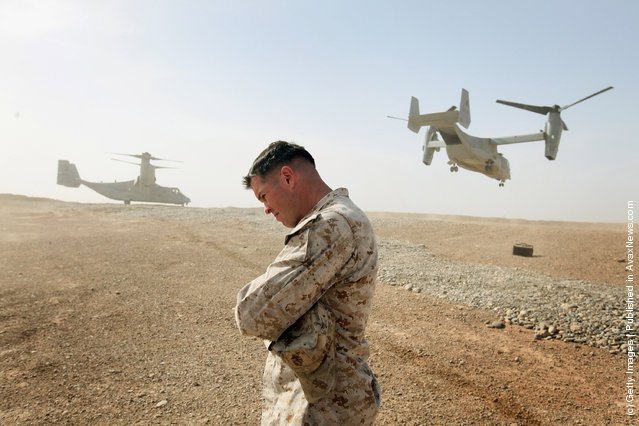
Maj. Matt O'Donnell of Glenelg, MD shields himself from rotor wash as Ospreys carrying the delegation of U.S. Secretary of Defense Leon Panetta leaves on March 14, 2012 at Forward Operating Base Shukvani, Afghanistan

Maj. Matt O'Donnell of Glenelg, MD shields himself from rotor wash as Ospreys carrying the delegation of U.S. Secretary of Defense Leon Panetta leaves on March 14, 2012 at Forward Operating Base Shukvani, Afghanistan. Panetta is also scheduled to meet with President Karzai during his two-day visit to Afghanistan. The trip comes as the Taliban has vowed revenge following this past weekend's killing spree by a U.S. soldier who is accused of killing 16 civilians in Afghanistan. Most of those killed were children and women. (Photo by Scott Olson/Getty Images)
Details
16 Mar 2012 10:34:00
Amazing Photos by Yann Arthus-Bertrand. Part Four

Yann Arthus-Bertrand (born March 13, 1946 in Paris) is a French photographer, journalist, reporter and environmentalist.


Part One Part Two Part Three

Details
24 Sep 2012 16:52:00


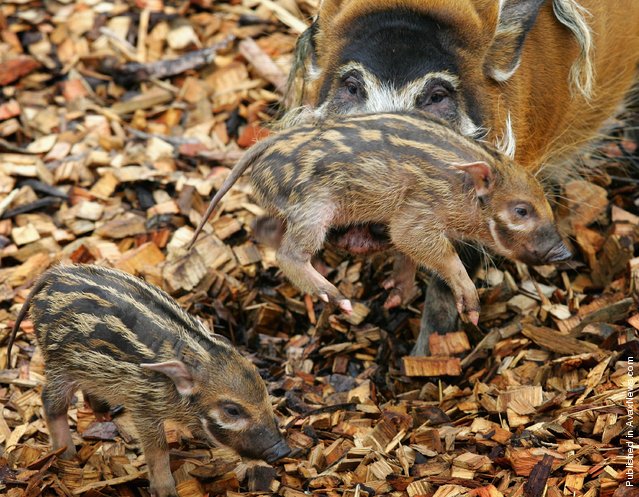
“The Red River Hog (Potamochoerus porcus), also known as the Bush Pig (but not to be confused with P. larvatus, common name “Bushpig”), is a wild member of the pig family living in Africa, with most of its distribution in the Guinean and Congolian forests. It is rarely seen away from rainforests, and generally prefers areas near rivers or swamps.

Red River Hogs eat grass, berries, roots, insects, molluscs, small vertebrates and carrion. They are capable of causing damage to plantations. Red River Hogs typically live in herds of 6-20 members led by a dominant boar. Sows rear 3-6 piglets at a time.”

Photo: Two 17 day old red river hoglet twins forage for food next to their mother Bahiti at London Zoo on August 23, 2007 in London, England. Red River hoglets inhabit the forests and swamps of West and Central Africa. The recent additions to the London Zoo pig pen have been eagerly awaited by zoo keepers. (Photo by Chris Jackson/Getty Images)
Details
18 Mar 2011 15:15:00


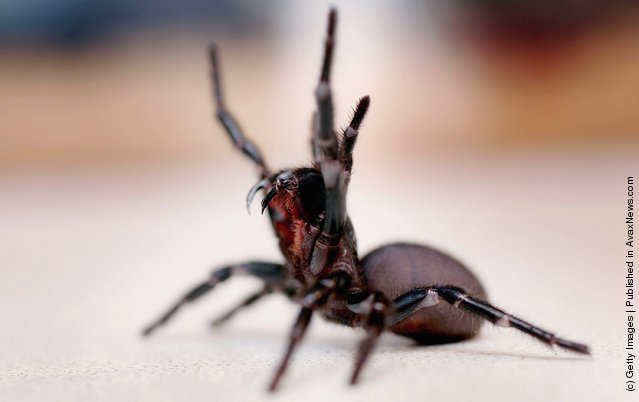
A Funnel Web spider is pictured at the Australian Reptile Park January 23, 2006 in Sydney, Australia. The Funnel Web is one of Australia's deadliest animals, with a venom that is packed with at least 40 different toxic proteins. A bite from a Funnel Web causes massive electrical over-load in the body's nervous system. Finally, fatalities occur from either heart attack or a pulmonary oedema, where the capillaries around the lungs begin to leak fluid and the patient effectively drowns. Death can come as quickly as two hours after a bite if no medical treatment is sought. Due to advances in anti-venom, there has been no death from a Funnel Web bite in Australia since 1980. Australia is home to some of the most deadly and poisonous animals on earth. (Photo by Ian Waldie/Getty Images)
Details
25 Apr 2011 07:49:00