Loading...
Done
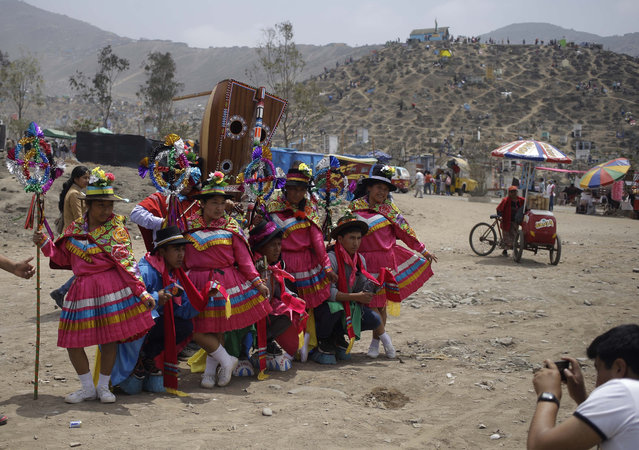
A group of dancers pose for a photo before their performance at the Nueva Esperanza cemetery in the shantytown Villa Maria, in Lima, Peru, Tuesday, November 1, 2016, as part of the Day of the Dead festivities. The holiday honors the deceased and coincides with All Saints Day, and All Souls Day celebrated on Nov. 1 and 2. Dancing, drinking alcohol, and eating with the deceased are part of Day of the Dead celebrations. (Photo by Martin Mejia/AP Photo)

A group of dancers pose for a photo before their performance at the Nueva Esperanza cemetery in the shantytown Villa Maria, in Lima, Peru, Tuesday, November 1, 2016, as part of the Day of the Dead festivities. The holiday honors the deceased and coincides with All Saints Day, and All Souls Day celebrated on Nov. 1 and 2. Dancing, drinking alcohol, and eating with the deceased are part of Day of the Dead celebrations. (Photo by Martin Mejia/AP Photo)
Details
02 Nov 2016 11:56:00
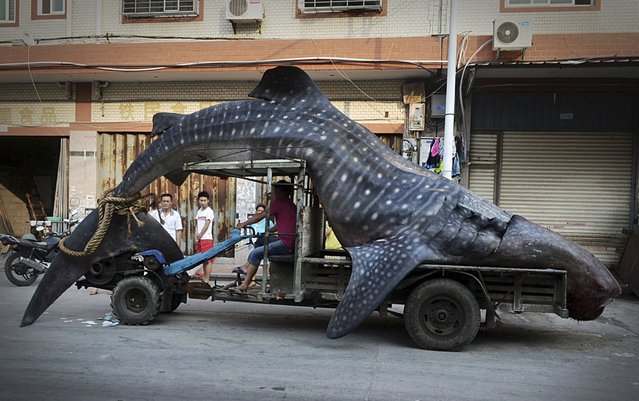
A fisherman transports a dead whale shark after it was caught in fishermen's net, in Yangzhi county, Fujian province August 1, 2014. According to local media, the whale shark is five-metre-long and weighs over 2 tonnes. (Photo by Reuters/Stringer)

A fisherman transports a dead whale shark after it was caught in fishermen's net, in Yangzhi county, Fujian province August 1, 2014. According to local media, the whale shark is five-metre-long and weighs over 2 tonnes. (Photo by Reuters/Stringer)
Details
05 Aug 2014 12:15:00
Details
11 May 2012 03:39:00
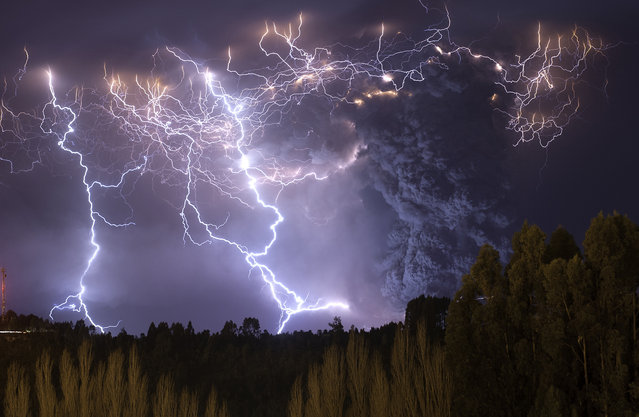
The eruption of Cordon Caulle began on June 4, 2011, located in the Region of Los Rios in Chile. For about 12 months, people and animals became accustomed to living with the daily fall of ash, which also caused problems in the air traffic in South America. The explosions and lightning during first days of the eruption could be seen from hundreds of miles around. This photograph was taken on the second night of eruption from the town of Lago Ranco. (Photo and caption by Francisco Negroni/National Geographic Traveler Photo Contest)

The eruption of Cordon Caulle began on June 4, 2011, located in the Region of Los Rios in Chile. For about 12 months, people and animals became accustomed to living with the daily fall of ash, which also caused problems in the air traffic in South America. The explosions and lightning during first days of the eruption could be seen from hundreds of miles around. This photograph was taken on the second night of eruption from the town of Lago Ranco. (Photo and caption by Francisco Negroni/National Geographic Traveler Photo Contest)

ATTENTION! All pictures are presented in high resolution. To see Hi-Res images – just TWICE click on any picture. In other words, click small picture – opens the BIG picture. Click BIG picture – opens VERY BIG picture.
Details
23 Jun 2013 11:24:00
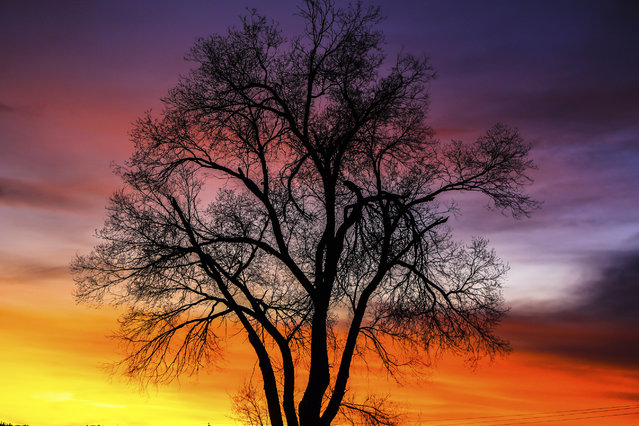
This photo shows sunset in Eagle, Colo., Sunday, November 3, 2019. Daylight saving time ended, making sunset around 5 p.m. this time of year in Colorado. (Photo by Chris Dillmann/Vail Daily via AP Photo)

This photo shows sunset in Eagle, Colo., Sunday, November 3, 2019. Daylight saving time ended, making sunset around 5 p.m. this time of year in Colorado. (Photo by Chris Dillmann/Vail Daily via AP Photo)
Details
22 Nov 2019 00:03:00
Galapagos – Rocking the Cradle: Four major ocean currents converge along the Galapagos archipelago, creating the conditions for an extraordinary diversity of animal life, April 25, 2016. The islands are home to at least 7,000 flora and fauna species, of which 97 percent of the reptiles, 80 percent of the land birds, 50 percent of the insects and 30 percent of the plants are endemic. The local ecosystem is highly sensitive to the changes in temperature, rainfall and ocean currents that characterize the climatic events known as El Niño and La Niña. These changes cause marked fluctuations in weather and food availability. Many scientists expect the frequency of El Niño and La Niña to increase as a result of climate change, making the Galapagos a possible early-warning location for its effects. (Photo by Thomas P. Peschak for National Geographic/World Press Photo)

Galapagos – Rocking the Cradle: Four major ocean currents converge along the Galapagos archipelago, creating the conditions for an extraordinary diversity of animal life, April 25, 2016. The islands are home to at least 7,000 flora and fauna species, of which 97 percent of the reptiles, 80 percent of the land birds, 50 percent of the insects and 30 percent of the plants are endemic. (Photo by Thomas P. Peschak for National Geographic/World Press Photo)
Details
16 Apr 2018 00:01:00


A model showcases designs by Antonia Paris during the Women's RTW 3 catwalk during Rosemount Australian Fashion Week Spring/Summer 2011/12 at Overseas Passenger Terminal on May 5, 2011 in Sydney, Australia. (Photo by Stefan Gosatti/Getty Images)
Details
09 May 2011 10:02:00
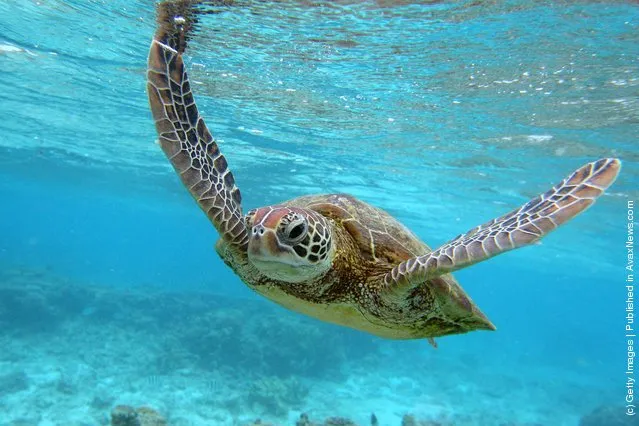
A Hawksbill sea turtle is seen swimming in Lady Elliot Island, Australia

“The Great Barrier Reef is one of the most important sea turtle habitats in the world, with Lady Elliot Island being a key part of that habitat. Every year between November and March the green and loggerhead turtles lumber up the same beach on which they were born more than 50 years ago. These turtles nest on Lady Elliot Island up to nine times in a season, laying between 80 and 120 eggs per clutch. About eight weeks later, young hatchlings leave their nests and head towards the ocean (January to April)”. – Wikipedia

Photo: A Hawksbill sea turtle is seen swimming on January 15, 2012 in Lady Elliot Island, Australia. (Photo by Mark Kolbe/Getty Images)
Details
02 Feb 2012 11:28:00