Loading...
Done
Paint All The Memes

Paint All The Memes

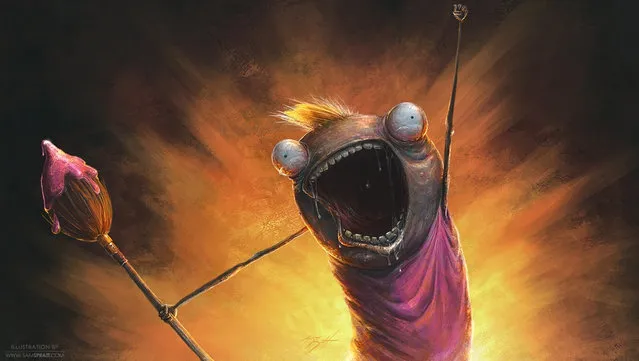
“The Art of Internet Memes” is a fun collection of illustrations that were inspired by what Sam Spratt calls the visual vernacular of web 2.0. The collection re-imagines a variety of popular internet memes with classical fine art sensibilities. Spratt has brought life to these internet characters be recreating them in three dimensional form. See more from the collection on his website here.
Details
10 Jul 2012 14:26:00
The Adventures of BeetleCam

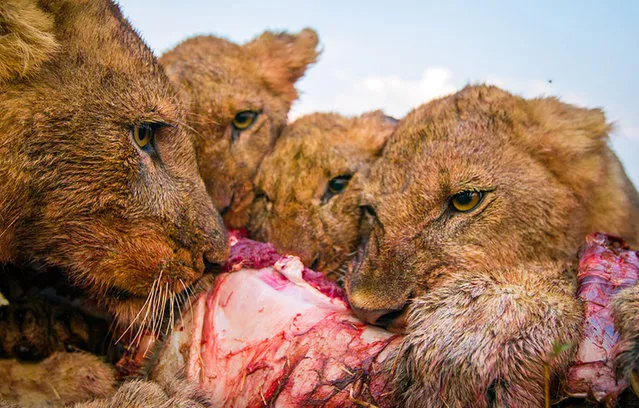
In 2009 we embarked on a project to get unique close-up, ground level photographs of African wildlife. To achieve this I built BeetleCam; a remote controlled buggy with a DSLR camera mounted on top. Matt and I travelled to Tanzania and used the buggy to get groundbreaking photographs of elephants and buffalo. However, we lost a camera and BeetleCam was almost destroyed in our only encounter with a lion.

We returned home and published “The Adventures of BeetleCam”. The story quickly went viral, appearing all over the web, in print and on television networks worldwide. However, we weren’t entirely satisfied… just imagine what we could get with a lion-proof BeetleCam!
Details
09 Nov 2012 10:01:00
Shi Yongxin, abbot of the Shaolin Temple, works on the computer

“The popularity of the Internet in China has driven the explosive growth of profitable Web companies and made fortunes for some Chinese entrepreneurs despite government controls on what the public can see online. The number of mainland Internet users rose to 513 million in December, up 12 percent from a year earlier, the government-sanctioned China Internet Network Information Center said”. – AP Business Writer

Photo: Shi Yongxin, abbot of the Shaolin Temple, works on the computer April 8, 2005 in Dengfeng, Henan Province, China. (Photo by Cancan Chu/Getty Images)
Details
16 Jan 2012 13:19:00
Porcelain Figurines By Martin Klimas

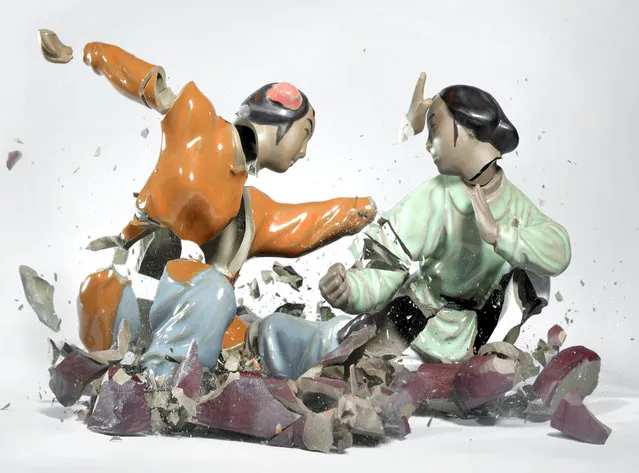
From a height of three meters, porcelain figurines are dropped on the ground, and the sound they make when they hit trips the shutter release. The result: razor-sharp images of disturbing beauty—temporary sculptures made visible to the human eye by high-speed photography technology. The porcelain statuette bursting into pieces isn't what really captures the attention; the fascination lies in the genesis of a dynamic figure that replaces the static pose. In contrast to the inertness of the intact kitsch figurines Klimas started out with, the photographs of their destruction possess a powerfully narrative character.
Details
21 Apr 2014 12:59:00
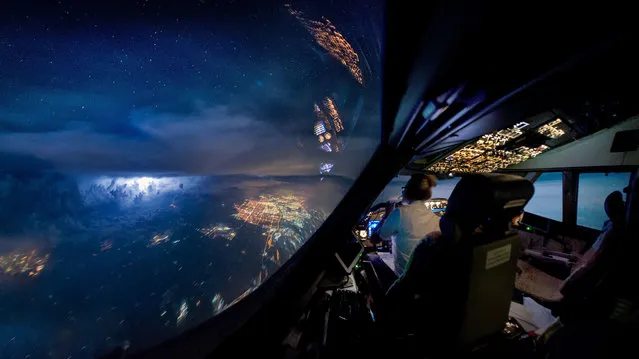
An incredible view of Thunderstorms light up the insides of clouds near a beautiful sky line. This is truly heavenly weather as pictures taken from an airplane cockpit reveal what pilots see from above. It looks like at cruising altitude the weather really hots up, with the flight deck revealing some amazing scenes. Thunderstorms light up the insides of clouds, lightening streaks across the sky like cracks in a windscreen, the northern lights sweep uninterrupted across the sky and the galaxy stretches on forever. The pictures were captured by senior first officer Christiaan van Heijst, a 33-year-old from the Netherlands, and his friend Daan Krans. (Photo by Christiaan van Heijst/Daan Krans/Caters News Agency)

An incredible view of Thunderstorms light up the insides of clouds near a beautiful sky line. This is truly heavenly weather as pictures taken from an airplane cockpit reveal what pilots see from above. It looks like at cruising altitude the weather really hots up, with the flight deck revealing some amazing scenes. Thunderstorms light up the insides of clouds, lightening streaks across the sky like cracks in a windscreen, the northern lights sweep uninterrupted across the sky and the galaxy stretches on forever. The pictures were captured by senior first officer Christiaan van Heijst, a 33-year-old from the Netherlands, and his friend Daan Krans. (Photo by Christiaan van Heijst/Daan Krans/Caters News Agency)
Details
22 Sep 2016 09:45:00
Hundreds of houses painted in bright colors in what organizers claim is Mexico's largest mural, is part of a government-sponsored project is called Pachuca Paints Itself, in the Palmitas neighborhood, in Pachuca, Mexico, Thursday, July 30, 2015. German Crew is the artist collective responsible for painting the mural project. Director Enrique Gomez, who goes by MYBE, said the crew has painted 1,500 square meters with 20,000 liters of paint. (Photo by Sofia Jaramillo/AP Photo)

Hundreds of houses painted in bright colors in what organizers claim is Mexico's largest mural, is part of a government-sponsored project is called Pachuca Paints Itself, in the Palmitas neighborhood, in Pachuca, Mexico, Thursday, July 30, 2015. German Crew is the artist collective responsible for painting the mural project. Director Enrique Gomez, who goes by MYBE, said the crew has painted 1,500 square meters with 20,000 liters of paint. Working hand-in-hand with residents, muralists have painted the facades of 200 homes bright lavender, lime green, incandescent orange – hues more commonly found in a bag of Skittles than in the drab, cement-and-cinderblock neighborhoods where many of Mexico's poor live. The project aims to bring the community together and rehabilitate the area. (Photo by Sofia Jaramillo/AP Photo)
Details
03 Aug 2015 12:02:00
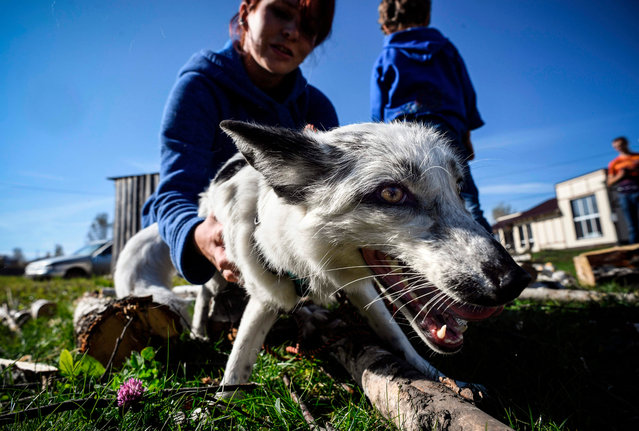
Tatyana Abramova, 33, plays with her home fox Plombir at her countryside house outside Siberian city of Novosibirsk on September 12, 2020. The official start of the Soviet experiment to better understand the domestication of animals by humans began in 1959, and was initiated by geneticists Dmitri Beliaiev and Lioudmila Trout on a farm in Akademgorodok, the scientific center of excellence in Siberia. Their primary objective was to domesticate foxes, to understand how the ancestor of wolves, another canine, evolved into a loyal and loving dog. And understand what this domestication tells us about the genetic evolution of species. (Photo by Alexander Nemenov/AFP Photo)

Tatyana Abramova, 33, plays with her home fox Plombir at her countryside house outside Siberian city of Novosibirsk on September 12, 2020. The official start of the Soviet experiment to better understand the domestication of animals by humans began in 1959, and was initiated by geneticists Dmitri Beliaiev and Lioudmila Trout on a farm in Akademgorodok, the scientific center of excellence in Siberia. Their primary objective was to domesticate foxes, to understand how the ancestor of wolves, another canine, evolved into a loyal and loving dog. And understand what this domestication tells us about the genetic evolution of species. (Photo by Alexander Nemenov/AFP Photo)
Details
25 Oct 2020 00:05:00
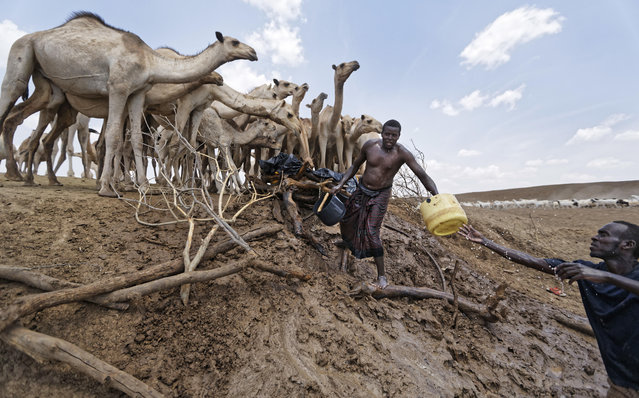
Camel herders scoop up water in plastic buckets from one of the few watering holes in the area, to water their animals near the drought-affected village of Bandarero, near Moyale town on the Ethiopian border, in northern Kenya, Friday, March 3, 2017. The U.N. humanitarian chief, Stephen O'Brien, toured Bandarero village on Friday and called on the international community to act to “avert the very worst of the effects of drought and to avert a famine to make sure we don't go from what is deep suffering to a catastrophe”. (Photo by Ben Curtis/AP Photo)

Camel herders scoop up water in plastic buckets from one of the few watering holes in the area, to water their animals near the drought-affected village of Bandarero, near Moyale town on the Ethiopian border, in northern Kenya, Friday, March 3, 2017. The U.N. humanitarian chief, Stephen O'Brien, toured Bandarero village on Friday and called on the international community to act to “avert the very worst of the effects of drought and to avert a famine to make sure we don't go from what is deep suffering to a catastrophe”. (Photo by Ben Curtis/AP Photo)
Details
05 Mar 2017 00:03:00