Loading...
Done
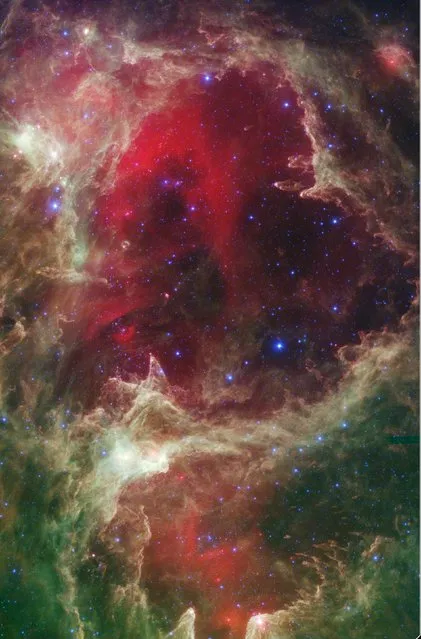
An infrared portrait from NASA's Spitzer Space Telescope which shows generations of stars is seen in this undated NASA handout image released February 14, 2013. In this wispy star-forming region, called W5, the oldest stars can be seen as blue dots in the centers of the two hollow cavities (other blue dots are background and foreground stars not associated with the region). Red shows heated dust that pervades the region's cavities, while green highlights dense clouds. (Photo by NASA/Reuters/JPL-Caltech/Harvard-Smithsonian/Handout)

An infrared portrait from NASA's Spitzer Space Telescope which shows generations of stars is seen in this undated NASA handout image released February 14, 2013. In this wispy star-forming region, called W5, the oldest stars can be seen as blue dots in the centers of the two hollow cavities (other blue dots are background and foreground stars not associated with the region). Red shows heated dust that pervades the region's cavities, while green highlights dense clouds. (Photo by NASA/Reuters/JPL-Caltech/Harvard-Smithsonian/Handout)
Details
03 Mar 2013 08:44:00
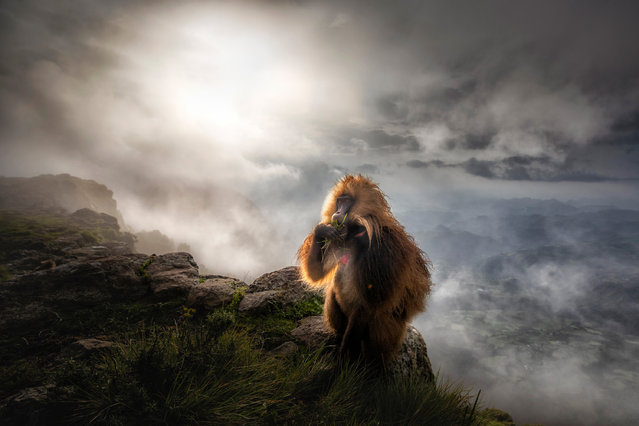
Highly commended, mammals: Gelada after the storm – Marco Gaiotti (Italy). “Gelada baboons are the only monkey species in the world that feed on grasses. They are native to the tableland of Ethiopia. Every morning large family groups wander from their sleeping places in the steep rock face, up to 1,000 metres high, to the feeding grounds at the tablelands. This image clearly depicts their feeding strategy: they pull out bunches of grass, sort the stalks and then lift them to their mouth. This shot was taken towards the end of the rainy season after a heavy storm”. (Photo by Marco Gaiotti/2019 GDT European Wildlife Photographer of the Year)

Highly commended, mammals: Gelada after the storm – Marco Gaiotti (Italy). “Gelada baboons are the only monkey species in the world that feed on grasses. They are native to the tableland of Ethiopia. Every morning large family groups wander from their sleeping places in the steep rock face, up to 1,000 metres high, to the feeding grounds at the tablelands. This image clearly depicts their feeding strategy: they pull out bunches of grass, sort the stalks and then lift them to their mouth. This shot was taken towards the end of the rainy season after a heavy storm”. (Photo by Marco Gaiotti/2019 GDT European Wildlife Photographer of the Year)
Details
31 Oct 2019 00:03:00
Some of the best entries so far in the 2016 Insight Astronomy Photographer of the Year competition. There are two weeks left to enter, and the winners will be announced in September. Here: Aurora over Laksvatn Fjord, Laksvatn, Norway. The aurora borealis dances in the skies over the town of Laksvatn, with the Milky Way to the left. The image is a single shot with no compositing, only post-processing to bring out the aurora, and some colour corrections. (Photo by Matt Walford/National Maritime Museum)

Some of the best entries so far in the 2016 Insight Astronomy Photographer of the Year competition. There are two weeks left to enter, and the winners will be announced in September. Here: Aurora over Laksvatn Fjord, Laksvatn, Norway. The aurora borealis dances in the skies over the town of Laksvatn, with the Milky Way to the left. The image is a single shot with no compositing, only post-processing to bring out the aurora, and some colour corrections. The photographer Matt Walford said: “I love the way the northern lights look like they are just wistfully dancing over the fjord, framed by the mountains on either side”. (Photo by Matt Walford/National Maritime Museum)
Details
01 Jul 2016 12:13:00
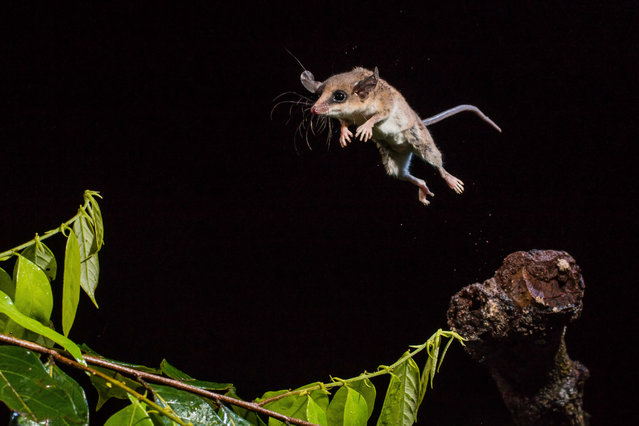
Tropical acrobatics by Adrià López Baucells in Manaus, Brazil. An unidentified South American marsupial, although the characteristic black markings on its face indicate it may be a mouse opossum. These small creatures are nocturnal and feed on bugs, fruit and bird eggs. (Photo by Adrià López Baucells/2019 Royal Society of Biology Photography Competition)

Tropical acrobatics by Adrià López Baucells in Manaus, Brazil. An unidentified South American marsupial, although the characteristic black markings on its face indicate it may be a mouse opossum. These small creatures are nocturnal and feed on bugs, fruit and bird eggs. (Photo by Adrià López Baucells/2019 Royal Society of Biology Photography Competition)
Details
10 Oct 2019 00:03:00
TV host/blogger Louise Roe attends The Weinstein Company's Academy Awards viewing and after party in partnership with Grey Goose at TAO Los Angeles at TAO Hollywood on February 26, 2017 in Los Angeles, California. (Photo by Rachel Murray/Getty Images for The Weinstein Company)

TV host/blogger Louise Roe attends The Weinstein Company's Academy Awards viewing and after party in partnership with Grey Goose at TAO Los Angeles at TAO Hollywood on February 26, 2017 in Los Angeles, California. (Photo by Rachel Murray/Getty Images for The Weinstein Company)
Details
05 Mar 2017 00:06:00
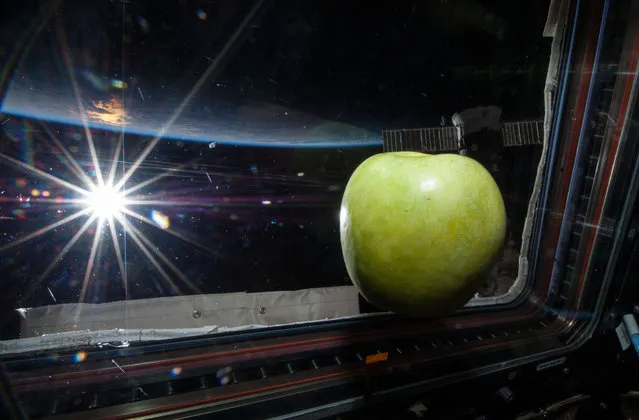
Viewing The Earth From Space

Despite any political differences between the United States and Russia, the space agencies of the two countries continue their cooperative work in Earth's orbit, aboard the International Space Station. Apart from the research being done in microgravity, ISS crew members continue to send back amazing images of our home world, photographed from low Earth orbit. Gathered here are recent images of Earth from aboard the ISS, and from a handful of other NASA satellites.
Details
01 Jun 2014 12:36:00
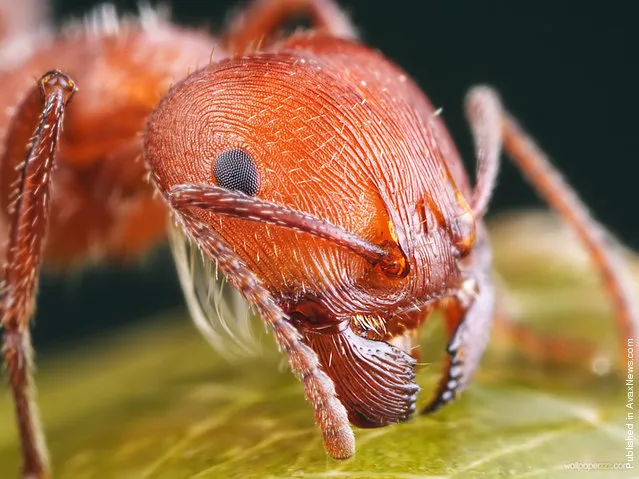
Ants

Once upon a time a myth was born that insects, unlike animals, are just a machines that not capable of learning and survive only based on their instincts. That myth has become the widespread opinion. Of course, this opinion is indeed erroneous, like many other widespread opinions. Let us try to find out which part is a myth and which part is true.
Details
30 Oct 2011 11:34:00
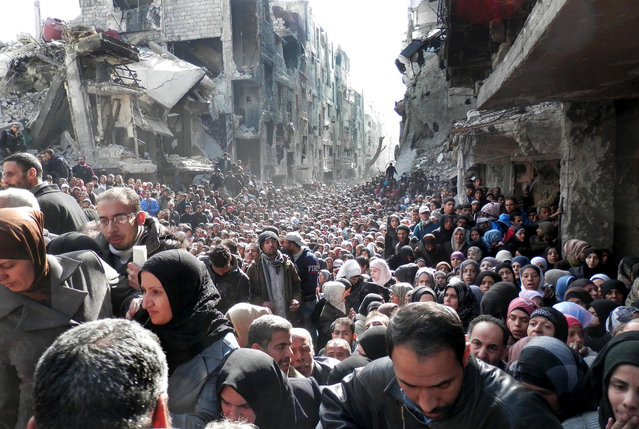
In this January 31, 2014 file photo released by the United Nations Relief and Works Agency for Palestine Refugees in the Near East (UNRWA), shows residents of the besieged Palestinian camp of Yarmouk, queuing to receive food supplies, in Damascus, Syria. That year, the U.N. was able to deliver food to about five percent of people in besieged areas including Yarmouk, while today estimates show the organization is reaching less than one percent. (Photo by UNRWA via AP Photo)

In this January 31, 2014 file photo released by the United Nations Relief and Works Agency for Palestine Refugees in the Near East (UNRWA), shows residents of the besieged Palestinian camp of Yarmouk, queuing to receive food supplies, in Damascus, Syria. That year, the U.N. was able to deliver food to about five percent of people in besieged areas including Yarmouk, while today estimates show the organization is reaching less than one percent. (Photo by UNRWA via AP Photo)
Details
07 Feb 2016 06:36:00