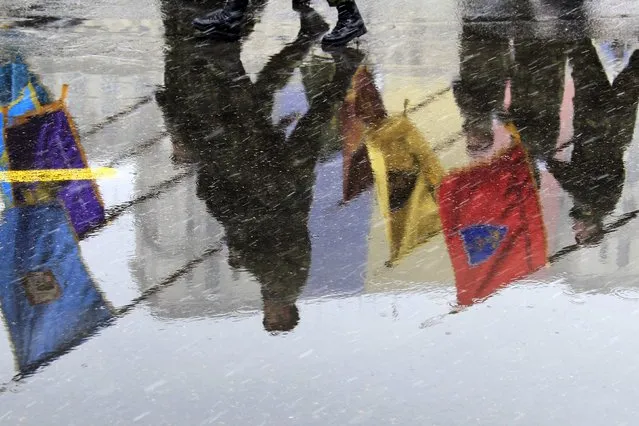
Soldiers are reflected in a puddle during a military parade during the celebrations for Romania's National Day in Bucharest December 1, 2014. (Photo by Radu Sigheti/Reuters)
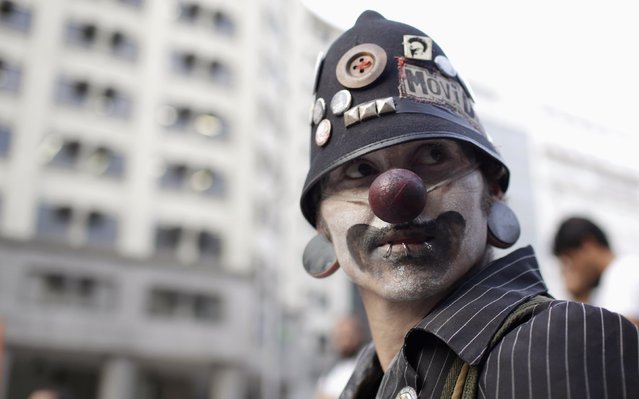
A demonstrator attends a protest against fare hikes for city buses in Rio de Janeiro January 16, 2015. Amid a marked economic downturn and high inflation, bus fares went up in Sao Paulo, Brazil's largest city, from 3 to 3.50 reais, and in Rio, the former capital, from 3.0 to 3.40 reais. (Photo by Mauro Pimentel/Reuters)
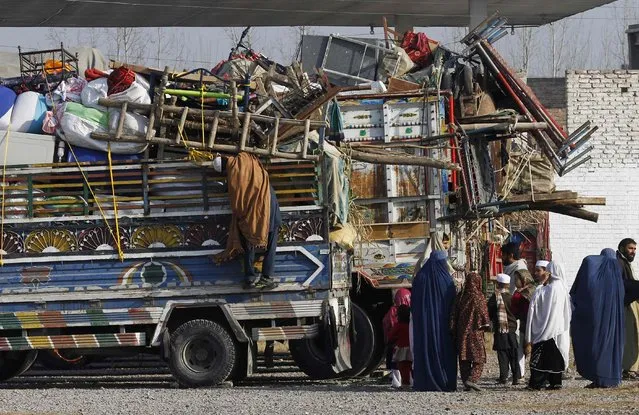
An Afghan refugee family stands by trucks loaded with their belongings as they wait to go back to Afghanistan with others, at the United Nations High Commissioner for Refugees (UNHCR) office on the outskirts of Peshawar February 13, 2015. Afghan immigrants ordered out of Pakistan in what officials say is a bid to root out militants are, some analysts say, scapegoats being used to distract attention from the authorities' failure to end violence. (Photo by Fayaz Aziz/Reuters)
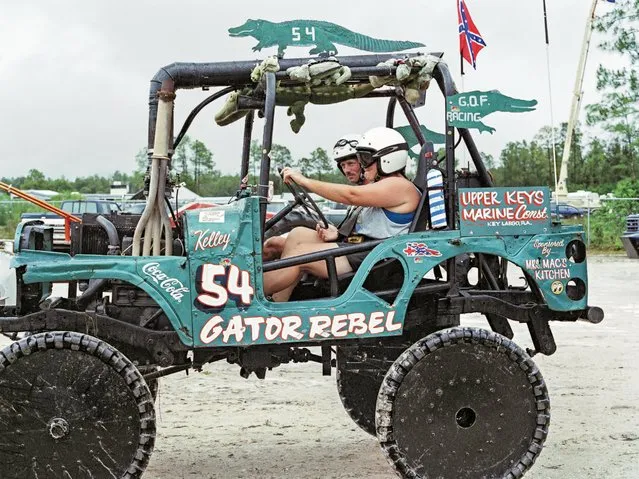
The Mile O' Mud is a 7/8-mile oval track with a 1/8-mile diagonal lane slashed through the center. The racing lanes are approximately 60 feet wide. On average, the muddy water is four to six feet deep, with three strategically placed holes. The largest hole, located in front of the grandstand, is the treacherous “Sippy Hole”, named for the legendary driver “Mississippi” Milton Morris, Swamp Buggy King 1955, who repeatedly got stuck in it. (Photo by Malcolm Lightner)
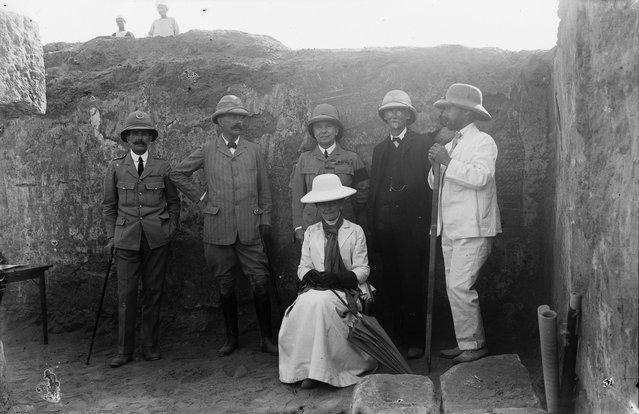
The city of Meroë laid undiscovered for two millennia before British archaeologist John Garstang excavated it in the early 20th century. Garstang took the radical decision to document his discoveries with photography – and immortalised an ancient world. “Meroë: Africa’s Forgotten Empire” is being shown until 14 September at Garstang Museum of Archaeology, Liverpool. Here: A group visiting the excavations at Meroë, including (from left) Midwinter Bey, director of Sudan Railways; Lord Kitchener; General Sir Francis Reginald Wingate, Sirdar of the Egyptian Army; Professor Archibald Sayce; John Garstang; and Lady Catherine Wingate, 1911. (Photo by Garstang Museum of Archaeology)
Street musicians with their faces covered with animal masks play to earn some money in central Vienna, Austria, November 8, 2015. (Photo by Vasily Fedosenko/Reuters)
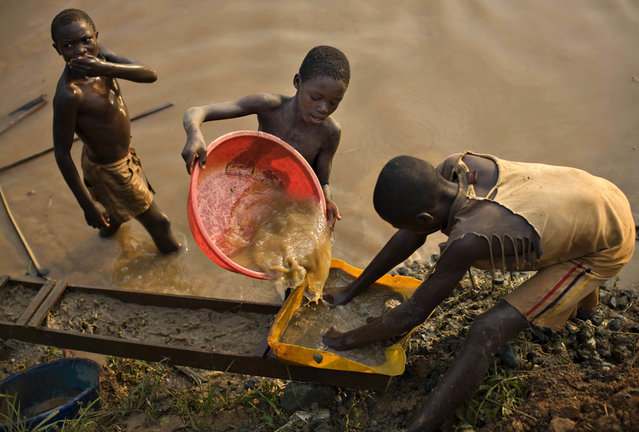
Boys pan for gold on a riverside at Iga Barriere, 25 km (15 miles) from Bunia, in the resource-rich Ituri region of eastern Congo February 16, 2009. Ituri is one of many areas of the country to have experienced bitter ethnic conflict between rival tribes in recent years. Massacres have left tens of thousands dead. It is this fighting that led U.S. authorities to take the unprecedented step of naming Congo in section 1502 of the Dodd-Frank financial regulation act, which says U.S.-listed companies that source gold, tungsten, tantalum and tin from Congo or its neighbours must assure the U.S. stock exchange regulator that their business is not helping fund conflict. (Photo by Finbarr O'Reilly/Reuters)